The life-saving power of data in Nigeria’s vaccination campaigns and health services
Strengthened information systems empower UNICEF-trained health workers and boost children’s access to health services

Zahariyya Hamza, a 31-year-old mother of six, is one of the nearly 20,000 volunteer community mobilizers (VCM) trained by UNICEF to keep Nigeria polio-free. But their role and mission go far beyond vaccinating newborns and children under five years of age.
“We follow-up with mothers right from the first trimester of their pregnancies and try to address their fears or misconceptions about medication, antenatal care and immunization programmes,” Zahariyya explains. “It is not easy at first, but over time they see the benefits of our maternal and neonatal and child health services and become change agents themselves, encouraging others.”
Childcare during naming ceremonies
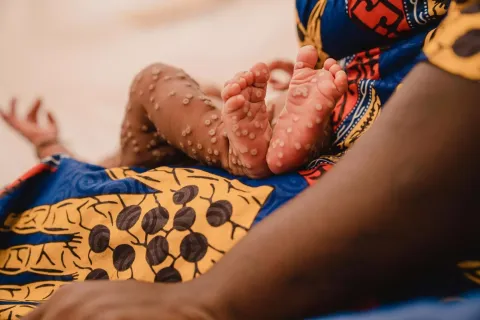
In the Marna settlement of the Keita local government area, Zahariyya is well known to many families. For more than eight years, she has been vaccinating children, and dispensing and counselling families on childcare practices during naming ceremonies, a traditional northern Nigerian cultural event organized by parents to celebrate the birth and announce the name of their newborns to their communities.
A key health promotion strategy of the VCM network has been capitalizing on existing community events and cultural activities to raise awareness and encourage behaviour change. Over four million newborns have received their first dose of the oral polio vaccine (OPV), in addition to more than 12 million doses given to children under five years of age present at the ceremonies over the past four years.

Reaching hardest to reach children and families
The network has been instrumental in polio eradication and strengthening community health systems by ensuring equitable and timely distribution of vaccines. Real-time data reporting of operational and logistical challenges and close case-by-case follow-up with vaccine-hesitant families and children who missed vaccination helped ensure that no-one is left behind.
The network is deployed in some of the hardest to reach, conflict-affected, urban poor and remote rural areas and has played a significant role in reaching zero-dose, under-served and displaced children and families. Over the last five years, Nigeria has made significant progress in ensuring higher levels of children’s equitable access to health and routine immunization services, as reflected by the 10 per cent increase in its DTP3 vaccination coverage from 44 (2015) to 57 per cent (2020).
Digitilizing health information systems
The strengthening of information health systems and establishment of digital solutions have been central to this success. Until recently, the programme was using multiple paper-based registries to record maternal and child medical information, which often did not reach decision makers in time. This manual data collection and analysis resulted in thousands of children missing vaccination campaigns, especially in hard-to-reach, conflict-affected and urban poor areas.
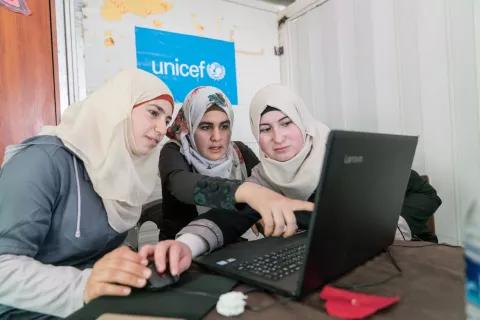
Since 2016, over 2,000 VCM network supervisors use Open Data Kit (ODK) to collect detailed information on newborns, mothers and children under the age of five. ODK is as an open source software for collecting, managing, and using real-time data in resource-constrained environments. They also use the software to register every child that missed vaccination during a polio campaign and assign people to follow-up until the child is vaccinated. In addition, ODK enables the VCM network to track routine immunization defaulters, conduct house-to-house awareness-raising visits, organize community dialogues on immunization and work with community influencers to address the concerns of vaccine-hesitant parents.
Increasing health coverage with digital solutions
Real-time data reporting has allowed decision-makers to follow-up on unvaccinated children, forecast needs for supplies and assign health workers to conduct house to house awareness raising visits.
“The digitalization efforts resulted in enormous efficiency gains, and considerably strengthened vaccine monitoring, community ownership and oversight and local accountability. These investments have been pivotal to support the Nigerian health authorities to increase the access and quality of their immunization and health coverage rates,” says Peter Hawkins, UNICEF Representative in Nigeria.
In the global arena, UNICEF is leading efforts to digitalize governments’ supply chains at all geographical levels (central, regional, district) and improve the ability of countries to track, identify shortages and forecast needs for supplies. These efforts are fundamental to empower health-managers and workers in their day-to-day work.