Warehouses and logistics
UNICEF’s worldwide logistics network brings life-saving supplies to children who need them, where they need them and when they need them.
When emergency strikes, UNICEF can reach children in need with lifesaving supplies within a matter of hours. This is possible thanks to a network of more than 300 warehouses around the world and UNICEF staff on the ground. UNICEF deploys the same logistics infrastructure to deliver supplies that support long‑term development initiatives for children.
UNICEF coordinates one of the world’s largest end-to-end humanitarian and development supply chains, procuring and delivering billions of dollars’ worth of essential supplies for children in over 160 countries every year.
At the centre of this work is UNICEF’s global supply and logistics hub in Copenhagen, complemented by a supporting global hub in Dubai.
The UNICEF global supply and logistics hub in Copenhagen
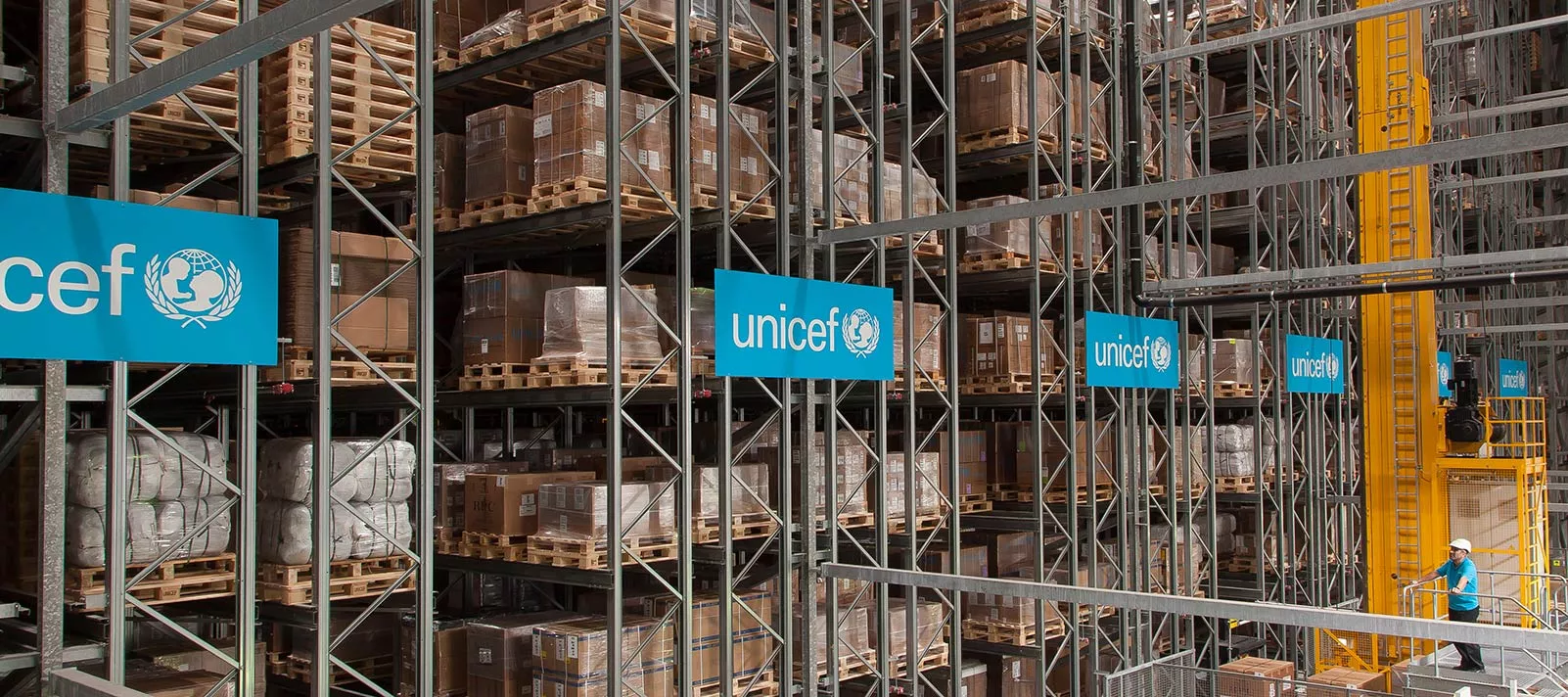
The UNICEF global supply and logistics hub in Copenhagen is home to the world’s largest semi-automated humanitarian warehouse. Spanning more than 20,000 m² – roughly the size of three football pitches – it can store up to 36,000 pallets and uses state-of-the-art semi-automated systems to manage the storage and retrieval of supplies. The hub has several packing lines where pre-packed kits are assembled. Established in 1962, the global supply and logistics hub is a donation from the Government of Denmark.
Global transportation of supplies
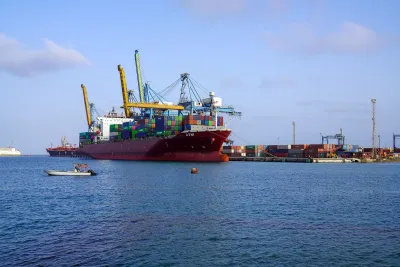
Despite the sheer scale of the global supply and logistics hub in Copenhagen, only 4 per cent of UNICEF’s supplies are shipped from the Copenhagen hub. Instead, UNICEF delivers the vast majority of supplies directly from manufacturers to the destination countries. This means better flexibility, speed, cost-efficiency and sustainability, While supplies for UNICEF’s regular programmatic activities are mainly transported by sea, most emergency shipments and vaccines are transported by air.
UNICEF coordinates a highly complex vaccine logistics operation, delivering 3 billion vaccine doses every year, enough to immunize nearly half of the world’s children. Because vaccines require secure cold chains and have strict expiration dates, nearly all are transported by air directly from manufacturers, with only a small number moved by road. To further improve sustainability and cut cost, UNICEF is piloting vaccine shipments by sea.
Last-mile delivery
Across the world, UNICEF country and field office staff plan, coordinate and oversee the movement and storage of supplies from ports of entry, via warehouses, to their final destinations into the hands of children and those who care for them.
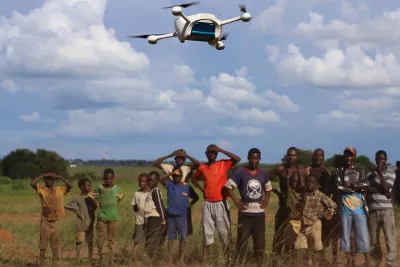
Reaching children in remote, mountainous, rural and island communities with poor infrastructure often requires long and challenging journeys. Together with partners, UNICEF employs a wide range of transportation methods from bicycles and carrying by foot to boats, trucks and even drones.
Strengthening national public supply chains
UNICEF also cooperates with governments to strengthen national public supply chains.