Shipping vaccines by sea
Timely delivery of the right products and services today can change children’s lives for a better tomorrow.
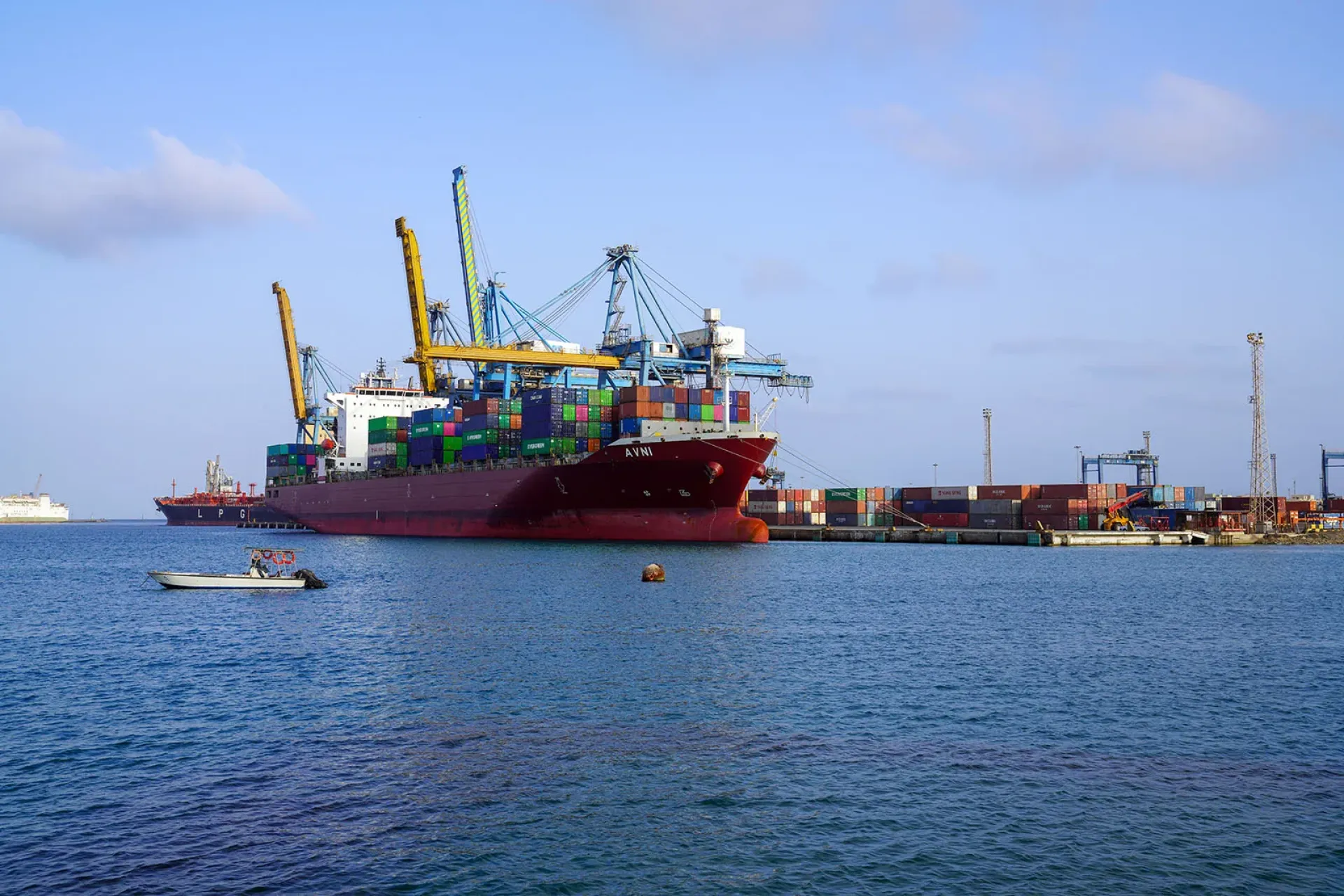
While UNICEF transports the vast majority of its supplies for children by sea, vaccines are almost always transported by air because it is faster. Speed is an important factor since vaccines have limited shelf life. However, transportation by air is costly.
In addition, due to limited airline capacity, deliveries of vaccines often have to be split into several shipments, and this further adds to operational costs. Air freight also has a significant carbon footprint.
To bring down costs, and to reduce emissions, UNICEF is piloting shipping of vaccines by sea to countries that have well-situated ports.
Vaccine shelf life and getting the timing right
Sea freight has traditionally not been used for vaccines because it involves longer transit times and is more susceptible to delays. This increases the risk that vaccines arrive with limited expiration dates. However, when the complete route, customs clearance and timing are well planned and implemented, several vaccines have shelf lives that are long enough for sea freight to be a feasible option.
The role of the shipping industry and vaccine manufacturers
When vaccines are transported by air, the short transit time allows for vaccines to be kept cool in relatively simple insulated shippers that are similar to household cool boxes, though larger.
For longer journeys, vaccines cannot be kept cool by insulation alone. Instead, they must be actively cooled in temperature-controlled refrigerated containers that require uninterrupted electricity to keep the right temperature.
In recent years, the shipping industry has expanded solutions for vaccines shipments. This means UNICEF can monitor the temperature of vaccines while in sea transit in near real time and can quickly take action if needed.
Reducing costs, emissions and waste
Sea freight can be significantly more cost-effective than air freight. Depending on origin, destination, volume and other factors, shipping costs can be reduced by 50 per cent on average through sea freight. Sea freight can also reduce greenhouse gas emissions by up to 90 per cent compared to air freight. In addition, as insulated shippers are not used, packaging waste – which otherwise ends up in the countries receiving the vaccines – is significantly reduced.
For these reasons, and despite the challenges, UNICEF is piloting transporting vaccines by sea. In 2025, UNICEF carried out its first maritime vaccine shipment. Pneumococcal conjugate vaccines arrived safely and on time from Belgium to Côte d'Ivoire, confirming that the technical setup developed is robust and ready for use.
With policies and controls in place – including supplier requirements, temperature monitoring and incident management – and with strong support from freight forwarders and logistics carriers, UNICEF is moving from the proof-of-concept phase towards wider implementation in more countries.
Readiness in receiving countries
The countries that are most suitable for maritime vaccine shipments are increasingly adapting their systems to receive vaccines by sea through earlier planning and budget cycles, readiness of the portside cold chain, streamlined customs processes, and fast-track procedures that mirror those used in airports. These capacity-building efforts support smooth and temperature-controlled delivery from port to central distribution facilities in countries.
While shipment of vaccines by sea is not suitable in all situations, and while there is a long way to go to before all vaccine shipments that could be done by sea have convert from air, this initiative marks a beginning and is paving the way for broader adoption across both supplier and countries.