Safe injection equipment
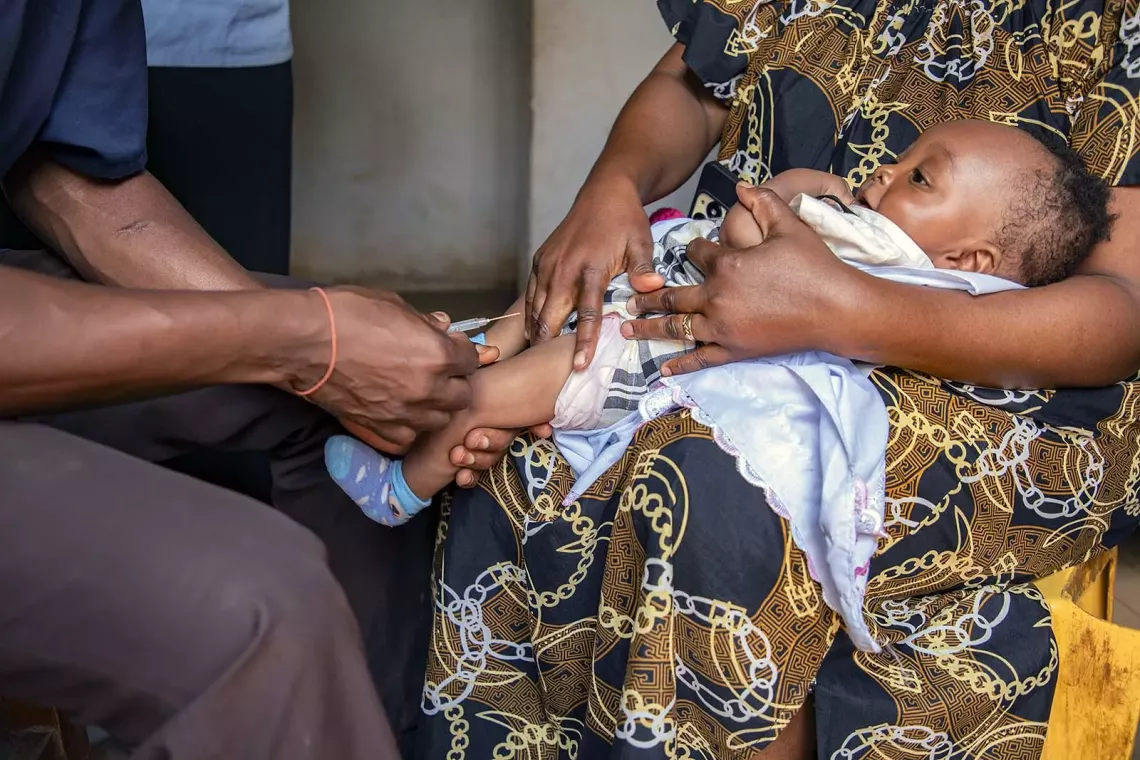
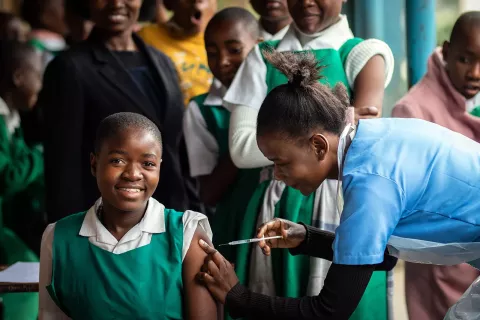
UNICEF’s supply of safe syringes enables the effective administration of vaccines, protecting children against life-threatening diseases.

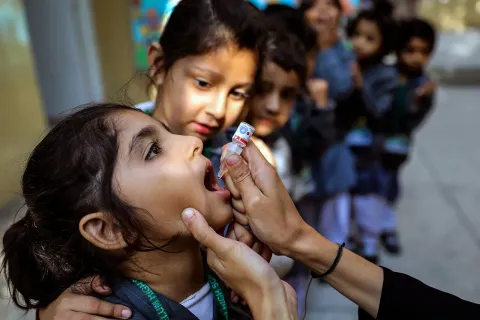
UNICEF immunizes nearly half of world’s children against measles, polio and other preventable diseases, giving them a chance to grow up healthy.
Most childhood vaccines are administered with a syringe. Until the late 1990s, reusable syringes were commonly used, exposing children to significant risk of bloodborne diseases, such as Hepatitis B and HIV.
Safe immunization for all
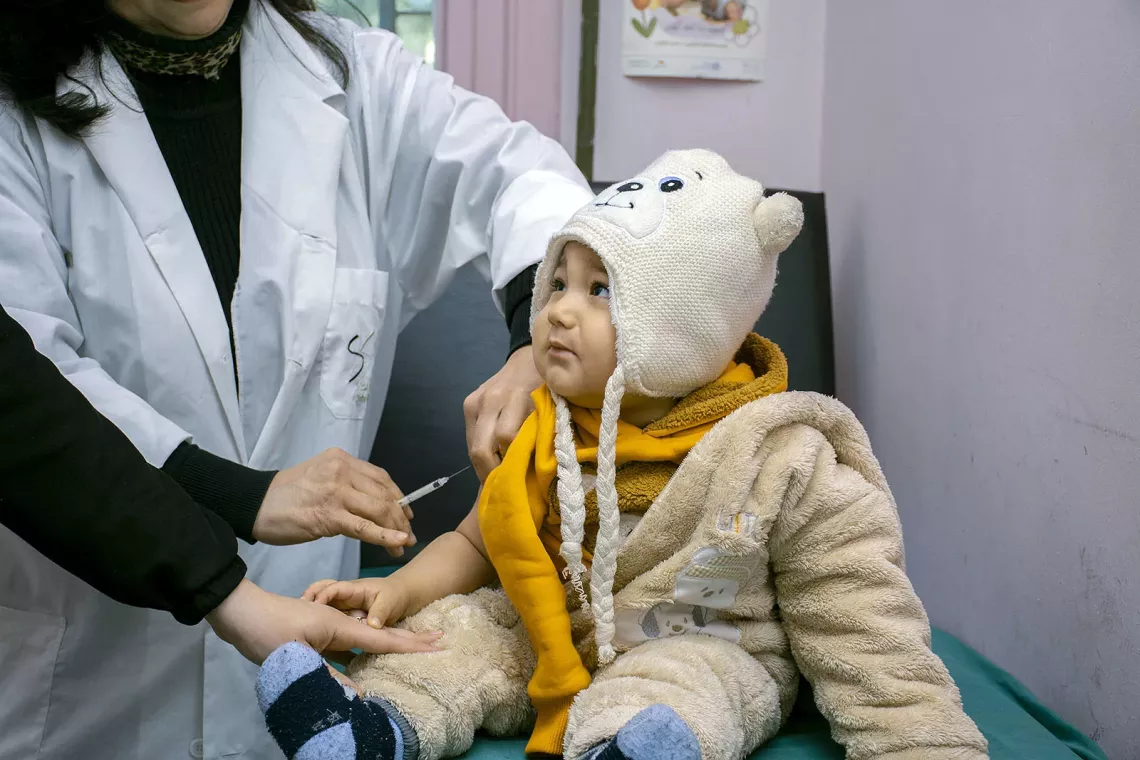
To address these risks, UNICEF takes a holistic approach to immunization by supplying not only vaccines, but also safe injection equipment. This includes quality-assured auto-disable (AD) syringes, designed for single use only, eliminating any risk of infection from contaminated needles. In all UNICEF-supported vaccination programmes, only AD syringes are supplied to ensure that every vaccine dose is safely administered.
As the world’s largest vaccine buyer, UNICEF procures 40 per cent of AD syringes available in the global market, delivering an average of 800 million AD syringes for childhood vaccinations across more than 90 countries every year.
UNICEF also delivers re-use prevention syringes that are used to add a liquid dilutant to vaccines transported in powder or crystal form, a process known as vaccine reconstitution. In addition, safety boxes are provided for used syringes to support their safe disposal.
While vaccines must be airlifted to maintain the cold chain, syringes and safety boxes can be transported by sea or land, which is more cost-effective and fuel-efficient. This longer transit time, however, requires careful planning months in advance when vaccination initiatives are coordinated.
To ensure that vaccination can proceed without delays while keeping children and communities safe from medical wastes, UNICEF delivers safety boxes and syringes at the same time. To reduce administration, logistics and shipment costs, UNICEF bundles the procurement and transport of syringes and safety boxes wherever possible.
Incentivizing local production of safe syringes
Nearly two-thirds of UNICEF-procured AD syringes are used to immunize children in sub-Saharan Africa. To bring the production closer to where these syringes are most needed and to meet growing regional demand, UNICEF works with partners to support Africa-based manufacturers to achieve the World Health Organization approval, which is a prerequisite for UNICEF to procure immunization products.
This initiative not only reduces transportation costs, carbon emissions and delivery times. It also encourages more African manufactures to enter competitive markets, which in turn supports financial viability and sustainability of local production.
From 2026, over half of UNICEF’s procured syringes are set to be produced by Africa-based manufacturers, up from less than 10 per cent in 2023. This marks a major step toward the goal of reaching 60 per cent in the coming years, further strengthening production capacity and supply resilience in Africa.