Mid-upper arm circumference (MUAC) measuring tapes
A simple yet innovative measuring tool for detecting malnutrition in children and mothers.
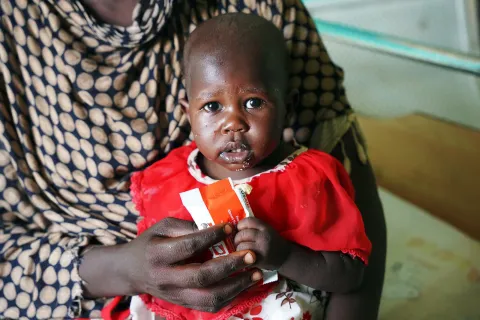
Around the world, more than 40 million children under the age of five suffer from wasting, a form of acute malnutrition. It can hinder children’s long-term growth and development, and can be deadly without early detection and timely treatment.
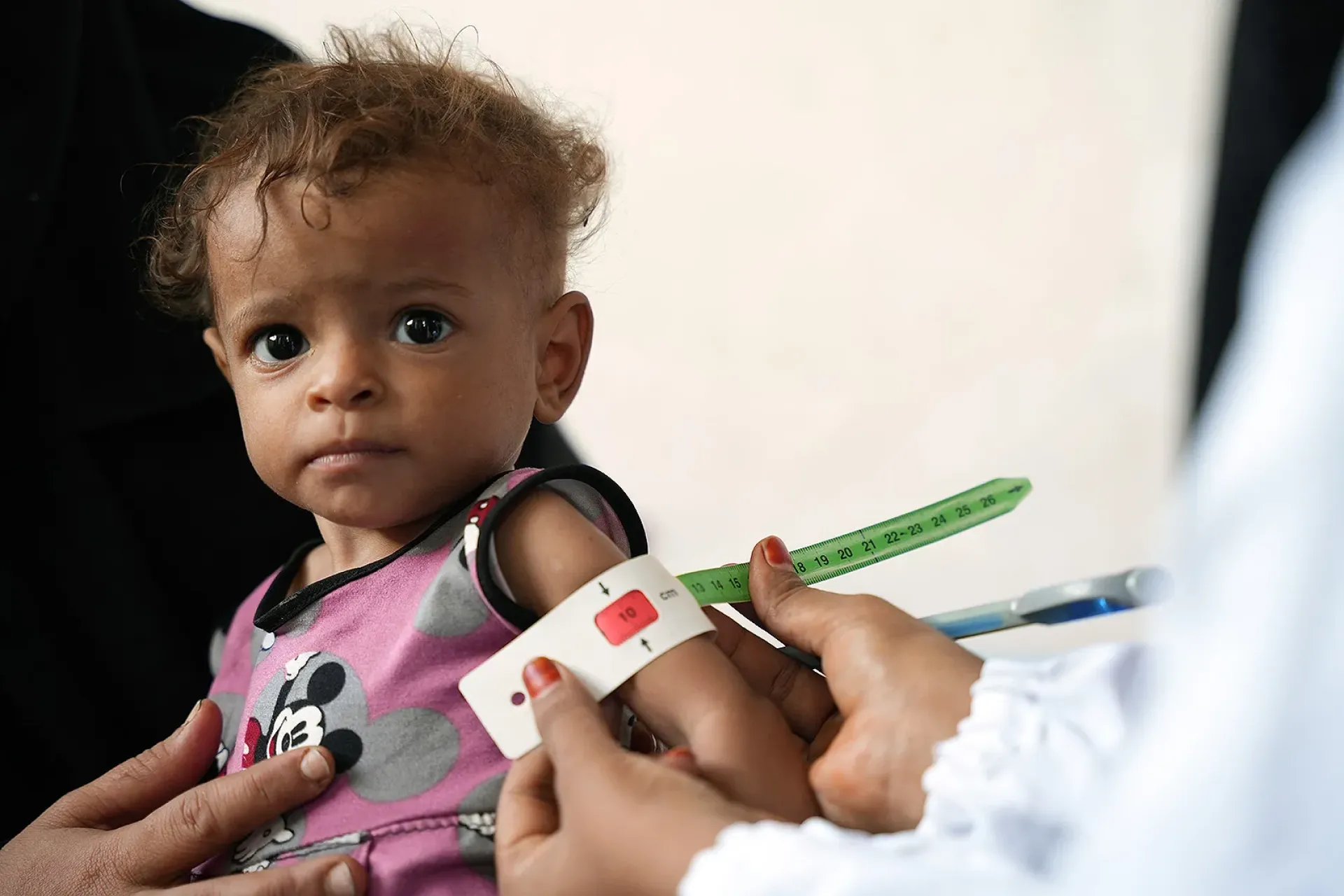
To help detect malnutrition in children aged six months to five years, UNICEF procures and delivers mid-upper arm circumference (MUAC) tapes – a simple, low-cost tool that can be used with minimal training to identify children at risk. UNICEF also provides a double-sided MUAC tape to help detect malnutrition in infants under six months, and in pregnant and breastfeeding women.
MUAC tapes are simple alternatives to traditional assessment methods based on weight and height measurements, which are not always feasible in low-resource settings such as in humanitarian crises and in remote areas.
MUAC tape results are used alongside other clinical, diagnostic and anthropometric indicators to help decide when a child needs nutritional care.
Traffic-light colours signal malnutrition
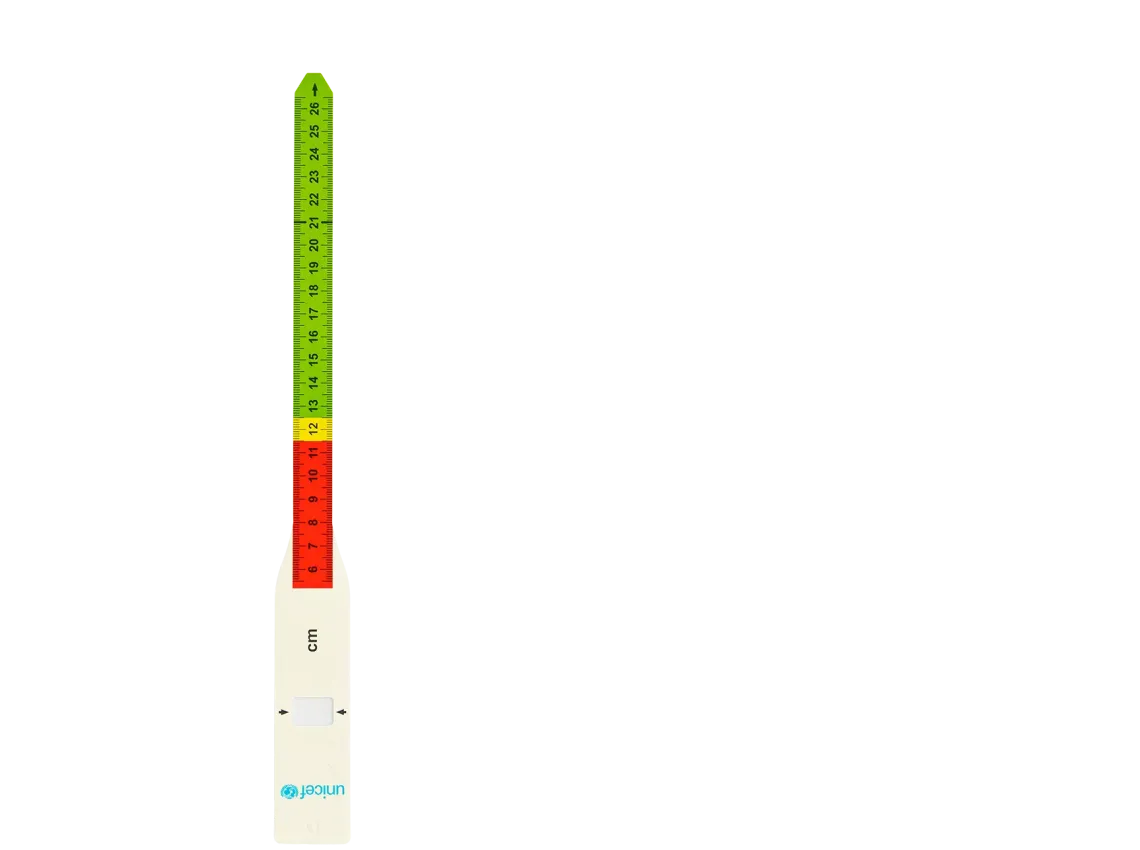
The MUAC tape is wrapped around the mid‑upper arm of the child to assess the malnutrition risk. The traffic‑light colours on the tape give an immediate visual indication:
- Green indicates that the child is unlikely to be acutely malnourished.
- Yellow suggests that the child may be moderately malnourished, and may need nutritional support and follow-up.
- Red means that the child is likely suffering from severe acute malnutrition, is at high risk of dying, and requires urgent referral and immediate treatment, including the ready-to-use therapeutic foods.
On average, UNICEF delivers more than 30 million MUAC tapes on an annual basis, allowing community health workers to screen hundreds of millions of children across nearly 60 countries. Costing just $0.06 each, MUAC tapes are one of the most affordable, high-impact supplies that UNICEF delivers to save children’s lives.
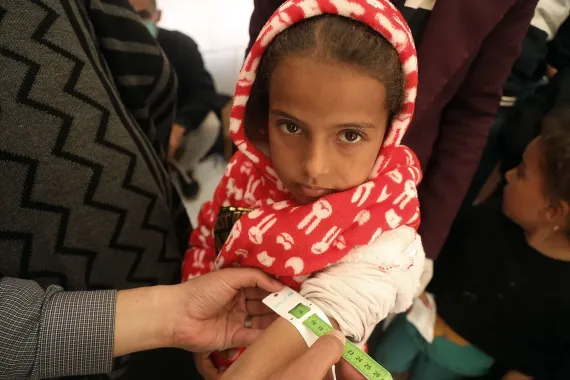
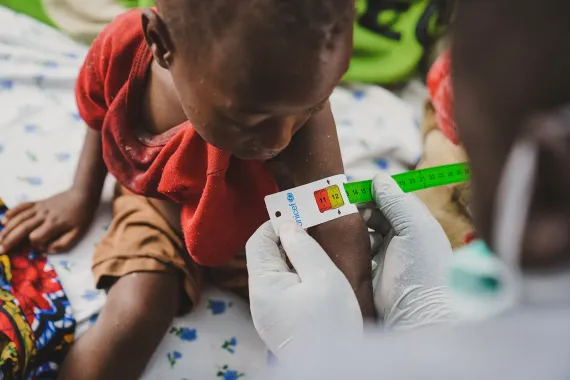
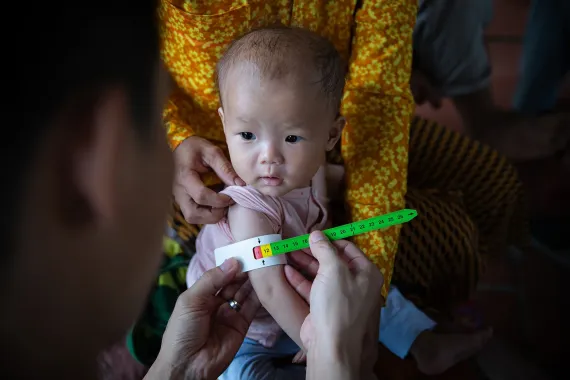

In line with new WHO guidelines, UNICEF has developed a MUAC tape that adds orange as a fourth colour. Orange indicates high-risk moderate acute malnutrition, where the child requires close monitoring and nutritional support, including therapeutic foods. The roll-out of the four-colour MUAC tape has commenced and is progressively expanding.
Mother-infant MUAC tape
Aligned with WHO guidelines, UNICEF has developed a mother-infant MUAC tape to support the rapid screening of malnutrition in very young children aged six weeks to six months, as well as in pregnant and breastfeeding women.
Like the MUAC tape used for children aged six months to five years, the mother-infant MUAC tape is colour-coded. On one side, green indicates that the infant is unlikely to be at risk of poor growth and development, while violet signals that the child is at risk and should be referred to a health facility for further assessment, including for acute malnutrition, underweight and other medical or feeding problems.
Marked in millimetres, the mother-infant tape can also be used by trained health workers to measure children’s head circumference, helping to identify potential neurodevelopmental concerns.
The reverse side of the tape measures the arm circumference of pregnant and breastfeeding women, helping early identification of maternal undernutrition, in line with national standards. This supports both women and their children, as a mother’s nutritional status is closely linked to her child’s growth and development.
Printing MUAC tapes locally
To expand access, UNICEF makes MUAC tape designs available for local printing where quality standards can be met. This helps reduce delivery times, costs and carbon emissions linked to long-distance transport.
In some countries, MUAC tape is also known as Shakir strip or Shakir tape.