Localization
UNICEF fosters local manufacturing of essential supplies in the countries where children need them, ensuring that access to life-saving supplies is both equitable and timely.

The challenge
Major inequities in access to life-saving supplies worldwide – not least during global crises – have exposed critical weaknesses in over-reliance on global supply chains.
By supporting national and regional production and procurement, and by strengthening these end-to-end supply chains, UNICEF is progressively bringing supply closer to demand. This includes fostering local manufacturing of essential supplies in the countries where children need them the most, helping to ensure that children’s access to life-saving supplies of global quality standards is both equitable and timely.
Enhancing the resilience and efficiency of supply chains also supports emergency preparedness, economic stability, community resilience, and poverty reduction. Localization also aligns with environmental sustainability efforts, reducing carbon emissions that are generated by international transport.
The solution
UNICEF promotes local and regional manufacturing and procurement of supplies for children on all continents.
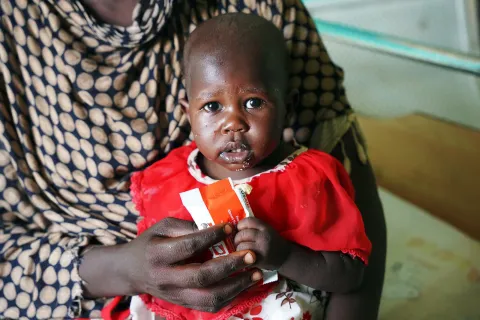
For instance, UNICEF has worked to diversify the supply of ready-to-use therapeutic food (RUTF) – a life-saving treatment for children who suffer from severe acute malnutrition – from a single European supplier in 2000 to over 20 different suppliers today. Over half of the RUTF that UNICEF delivers is sourced from low- and lower-middle-income countries.
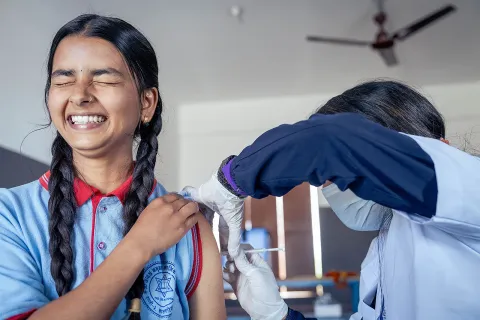
Another example is syringes, which are used for administering vaccines for children. From 2026, over half of UNICEF’s procured syringes are set to be produced by Africa-based manufacturers, up from less than 10 per cent in 2023. This shift is expected to reduce shipping time by two to three months compared to procuring from outside of the continent.
African WHO prequalified manufacturers
In addition, in line with UNICEF’s vaccine security principles, UNICEF is committed to include new regional suppliers of World Health Organization (WHO) prequalified vaccines that are eligible under the African Vaccine Manufacturing Accelerator (AVMA) in its tenders.
Provisional estimates of demand to be realized by African manufacturers by 2035 is informed by analyses undertaken by partners, and assumes inclusion of pipeline vaccine products in Africa eligible for AVMA; all vaccines meeting WHO prequalification requirements in the timeframe communicated by manufacturers as of 2025; the price offered is competitive and sustainable; and products are in demand by African Union member states.
Based on this assessment, UNICEF commits that, leading up to 2035, 20 per cent of UNICEF’s demand from Africa for at least eight vaccines could be satisfied by African WHO prequalified manufacturers. This continues to be dependent on African countries’ choice and thus timelines could be accelerated, and volumes could be higher, based on demand and availability on an antigen specific basis.