What we’ve achieved for children in Asia and the Pacific

UNICEF was born out of the ashes of World War II. We’re no strangers to crises.

A smiling girl sitting in the classroom
UNICEF/Jabatan Penerangan Malaysia

Since then, Asia and the Pacific has witnessed dramatic improvements in children’s health, education and life prospects. But the years have also been marked by brutal conflicts and devastating natural disasters in which children too often suffered. 

Throughout, UNICEF has never wavered from our mission: To reach every child in need, protect children’s rights and help every child thrive.

Standing side by side with children since 1948

UNICEF’s very first regional office opened in Bangkok in 1948. Since then, our work has always been driven by hope. 

From the mountains of Nepal to the reefs of Tonga, the valleys of Pakistan to the scattered isles of the Philippines, millions of children are alive today thanks to our work with partners.

Innovating. Collaborating. Never giving up. 

Across 36 countries and territories, we’ve reached places few could reach and made what once seemed impossible, possible. 

Here’s just some of the ways we’ve changed children’s lives. 

More children than ever are living to see their fifth birthday 

a local health worker receives training, supported by UNICEF and the Republic of Korea, to care for a premature newborn in the Neonatal Care Unit (NICU) at Angkor Hospital for Children in Siem Reap, Cambodia. a local health worker receives training, supported by UNICEF and the Republic of Korea, to care for a premature newborn in the Neonatal Care Unit (NICU) at Angkor Hospital for Children in Siem Reap, Cambodia.
 three-month-old Cornellia is held by her mother, Benalyn, 32, while being vaccinated in Lae, Papua New Guinea.  three-month-old Cornellia is held by her mother, Benalyn, 32, while being vaccinated in Lae, Papua New Guinea.
A woman health worker gives a boy an anti-tuberculosis BCG vaccination, while other children and women wait their turn, at a school in Bulacan province. A woman health worker gives a boy an anti-tuberculosis BCG vaccination, while other children and women wait their turn, at a school in Bulacan province.

Left to Right: A health worker cares for a premature baby in rural Cambodia. Cornellia (3 months) is cradled by mum, Benalyn, as she gets her first vaccines in remote Papua New Guinea. UNICEF joins local efforts to shield children from tuberculosis, Philippines, 1952. 

We’ve helped children and their mothers get the healthcare they need, when they need it. 

As the world’s largest vaccine distributor, we’ve defied distance, disaster, and danger to deliver life-saving vaccines to children to shield them from deadly diseases.  

The result? Vaccination rates have skyrocketed, and child deaths have plummeted.

Between 2000 and 2024, the percentage of children vaccinated against polio increased from 70 per cent to 90 per cent. DTP vaccination rose from 70 per cent to 90 per cent, vaccination against measles1 increased from 69 per cent to 92 per cent, and vaccination against tuberculosis rose from 79 per cent to 92 per cent. 

In 2020, UNICEF helped lead the historic COVID-19 vaccine response as part of the COVID-19 Vaccine Global Access Facility (COVAX), ensuring fair access to lifesaving vaccines at unprecedented speed and scale.

Since 2000, under-five mortality in the region has plummeted from 72 to 27 deaths per 1,000 live births.

Stories of hope

A perilous journey to save lives

What if the journey to deliver vaccines posed a risk to your life?

Go to UNICEF Pacific Islands

On your bike

To reach every last child with routine immunization, vaccinators in remote parts of Afghanistan are getting on their bikes - literally.

Go to UNICEF Afghanistan

Protecting children and mothers with vaccine

Through the timely distribution of vaccines and a strengthened cold chain system

Read now

A future without cervical cancer

National programme offers free immunization to students and out-of-school girls

Go to UNICEF Indonesia

We’ve helped families on the frontlines of conflicts and disasters survive and rebuild their lives

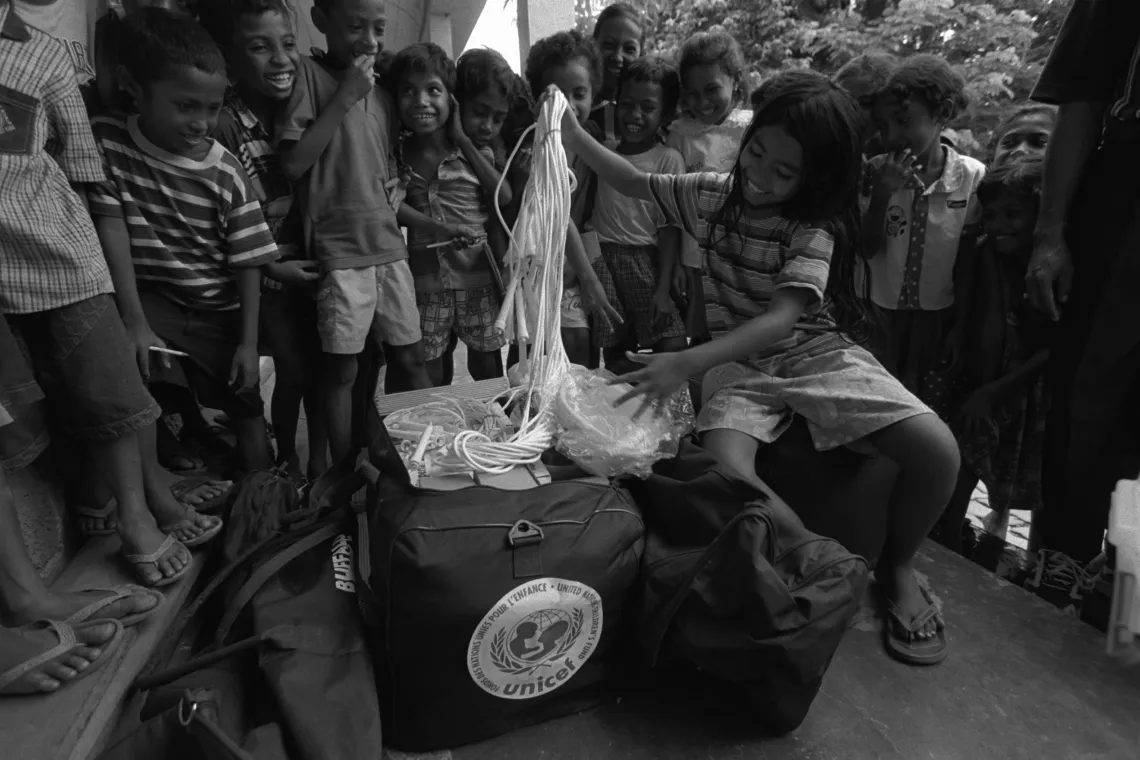
 girl, surrounded by other children, smiles as she unpacks the contents of a UNICEF 'edukit'  girl, surrounded by other children, smiles as she unpacks the contents of a UNICEF 'edukit'
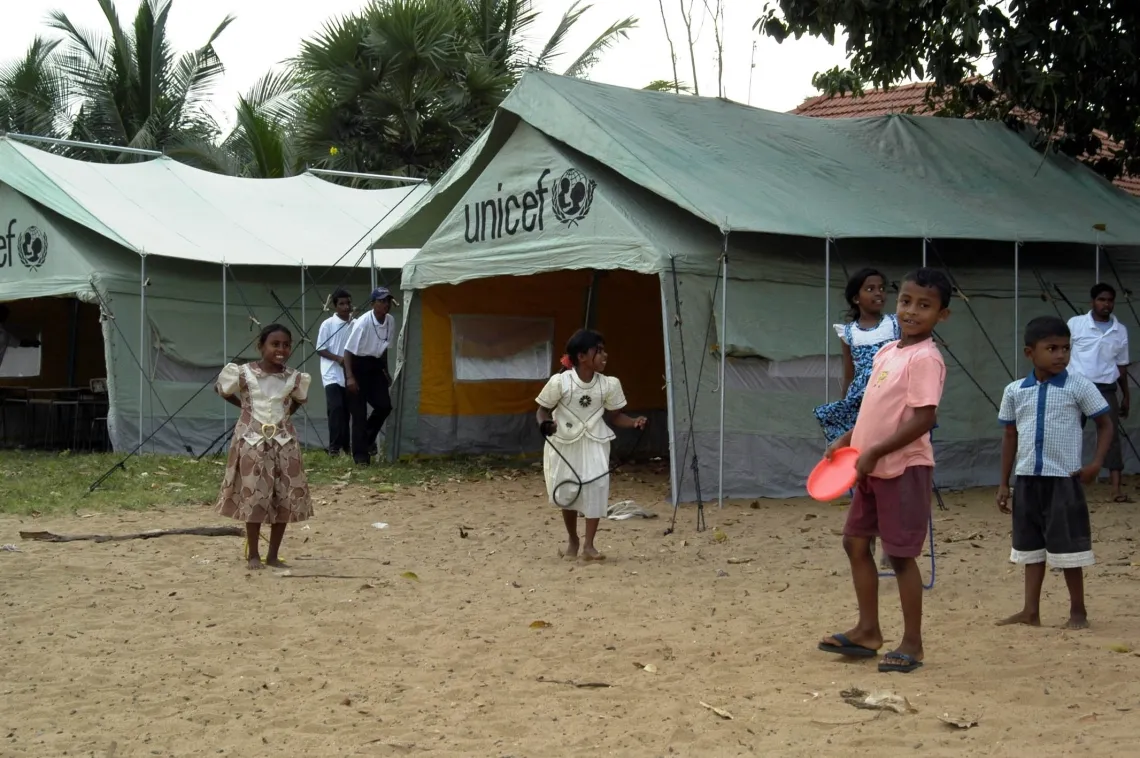
Items from hygiene kit are kept ready for distribution to affected villages of Laputta Township, where UNICEF provided emergency supplies.  Laputta Township is one of the hardest hit townships when Cyclone Nargis swept Myanmar. Items from hygiene kit are kept ready for distribution to affected villages of Laputta Township, where UNICEF provided emergency supplies.  Laputta Township is one of the hardest hit townships when Cyclone Nargis swept Myanmar.
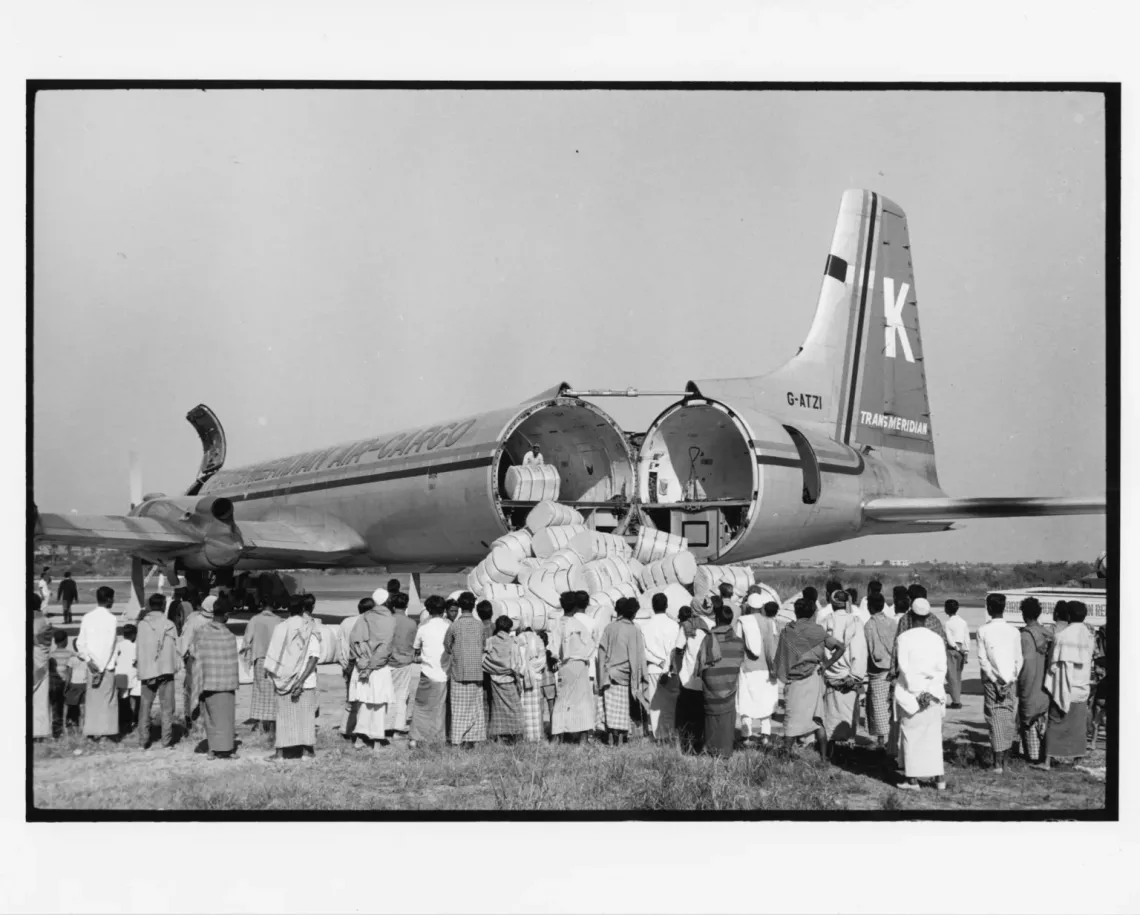
unloading cargo from a plane, Bangladesh 1972 unloading cargo from a plane, Bangladesh 1972

Clockwise from left: East Timor 1999, a girl helps unpack the contents of a UNICEF 'edukit' containing educational and recreational materials. Emergency supplies on the way to Laputta Township, Myanmar in 2008, in the aftermath of Cyclone Nargis. Unloading a transport plane carrying urgently needed food, medicine, shelter and clean water supplies to assist children and women in Bangladesh in 1972.

We’ve stayed and delivered for families through some of the worst conflicts and disasters to hit the region. 

From armed conflicts to tsunamis, earthquakes and typhoons, UNICEF is among the first to reach families and children when homes are swept away, schools reduced to rubble and communities are left struggling to recover.

In the 1960's and 1970's, we provided aid for conflict-affected children and families in Viet Nam and Cambodia. In 1972, we rolled out our largest aid operation to date in Bangladesh, reaching four million children with badly needed shelter, food, water and sanitation.

During the 1999 Timor Leste crisis, UNICEF ran large-scale vaccination campaigns, provided school supplies and set up Child-Friendly Spaces.

When the Indian Ocean Tsunami struck in 2004, we delivered lifelines: clean water, medical care, nourishing food, and safe spaces for children, reuniting families and shielding the most vulnerable from harm.

In 2008, just 24 hours after Cyclone Nargis devastated Myanmar, we were there, with emergency shelter, vital healthcare, and cash assistance to help the hardest-hit families begin to rebuild. Similarly, when Super Typhoon Haiyan tore through the Philippines in 2013, we responded with 100 tons of critical supplies.

In 2022, when catastrophic floods submerged nearly one third of Pakistan, UNICEF supported millions with emergency drinking water, hygiene kits, mobile health camps, and temporary learning spaces.

And in Afghanistan, UNICEF has carried out extensive humanitarian relief for decades, using all means available to deliver supplies to the most remote areas.

As conflicts escalate and climate-driven disasters become more frequent and severe, the need has never been greater. And neither has our readiness to respond. 

Stories of hope

From crisis to recovery

One year on, take a look at UNICEF's critical role in providing shelter, medicines and education to children and families impacted by 2022’s floods

Go to UNICEF Pakistan

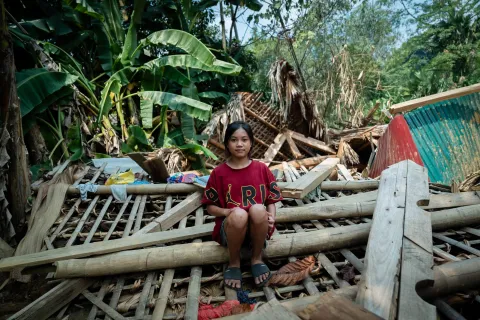
Typhoon Yagi’s path of destruction beyond physical damage

On 7 September 2024, children in northern Viet Nam were confronted with the greatest cataclysm of their lifetimes. Their lives turned upside down.

Go to UNICEF Viet Nam

When Laughter Returns

Helping Children Heal After the Earthquake in Myanmar

Go to UNICEF Myanmar

From tremors to recovery

Safe water brings hope to families in Afghanistan

Go to UNICEF Afghanistan

We’ve fought to get millions more people safe drinking water and sanitation

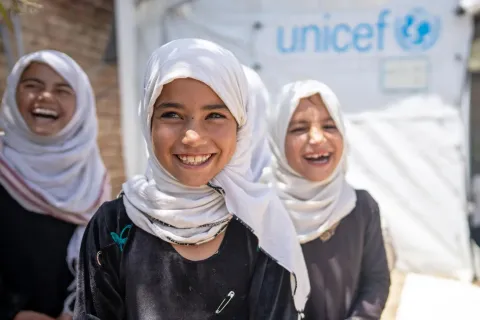
Three girls, holding cups of water, smile and laugh at a UNICEF-provided water point at the Baan Nai Rai School in the village of Baan Nai Rai in the southern Pang Nga Province. Three girls, holding cups of water, smile and laugh at a UNICEF-provided water point at the Baan Nai Rai School in the village of Baan Nai Rai in the southern Pang Nga Province.
Kim Sovantei (left), 6, and Tin Chantha, 6, wash their hands with other students at the newly installed Water, Sanitation and Hygiene (WASH) station at Sre Chhouk Primary School in Sre Chhouk Village, Rolous Meanchey Commune, Sambo District, Kratie Province, Cambodia. Kim Sovantei (left), 6, and Tin Chantha, 6, wash their hands with other students at the newly installed Water, Sanitation and Hygiene (WASH) station at Sre Chhouk Primary School in Sre Chhouk Village, Rolous Meanchey Commune, Sambo District, Kratie Province, Cambodia.

Left to Right: Thailand, 2005: Three girls enjoy a new water point, built in their school by UNICEF, after the tsunami devastated their village.   Clean hands, bright smiles: Kim and Tin, both 6, use new water facilities, supported by UNICEF, at their school in rural Cambodia, 2024. 

Safe drinking water and sanitation have transformed health, dignity, and daily life for millions against life-threatening illnesses.

Between 2000 to 2024, access to basic water increased from 80 percent to 94 percent.

In 2000, only 40 per cent of people in Asia and the Pacific had toilets that got rid of waste, that they didn’t share with other families. Today, 87 per cent do.

And toilets have improved in schools too! Between 2015 and 2023 alone, the percentage of schools with toilets that are available, private, functional, and separate for boys and girls climbed from 64 per cent to 77 per cent.

Stories of hope

Piped water for Cambodia’s hardest-to-reach

Climate-resilient community piped water is a lifeline for remote families, improving health and freeing up time so they can better support their livelihoods

Go to UNICEF Cambodia

Dignity, Safety, Security, and Comfort – Everything Makereta

Access to safe and dignified menstruation

Go to UNICEF Pacific Islands

Safe Water, Bright Future

How access to safe water is quietly transforming childhoods across South Asia’s most fragile places.

Read now

"Now we have water all the time"

How a new UNICEF-supported water system, built in partnership with the Islamic Development Bank, changed 31,000 lives in central Afghanistan

Read now

The number of children suffering from stunted growth and development has dropped significantly

Little Domino, at a child care institution in Philippines, niches his cup of milk while others of his play ,ages are just getting in line for their daily free ration. Little Domino, at a child care institution in Philippines, niches his cup of milk while others of his play ,ages are just getting in line for their daily free ration.
 Kaikai's father feeds his two-year-old son, Kaikai, lunch. Kaikai and his parents benefit from the early childhood development (ECD) programme, supported by UNICEF, China  Kaikai's father feeds his two-year-old son, Kaikai, lunch. Kaikai and his parents benefit from the early childhood development (ECD) programme, supported by UNICEF, China
Mira, 8 (far right) has two siblings and an older brother. She eats twice daily, usually having rice, fried or plain omelette, and occasionally water spinach. She loves going to school, and her favorite food is egg. Her mother packs her lunch. Mira, 8 (far right) has two siblings and an older brother. She eats twice daily, usually having rice, fried or plain omelette, and occasionally water spinach. She loves going to school, and her favorite food is egg. Her mother packs her lunch.

Left to Right: Little Domino drinks his daily milk from UNICEF — hope for malnourished villages in the Philippines, 1949. Kaikai (2) enjoys a nutritious lunch in China. Mia (8) has her height measured as part of UNICEF's fight to improve nutrition for undocumented children in Malaysia. 

To grow up healthy, children need the right nutrition at every stage of childhood. We’ve helped pregnant women stay nourished, championed breastfeeding and quality first foods, provided vitamin supplements, improved foods in schools, and brought urgent treatment to severely malnourished children. 

And the results are powerful. Since 2000, stunting in the region has declined from 39 to 25 per cent, plunging from 129 million children to 71 million, giving more children the chance to grow, thrive, and reach their full potential.

New national nutrition policies and initiatives, such as Bhutan’s Golden 1,000 Days, Philippines’ Multisectoral Nutrition Project, India’s Eat Right schools and trans-fat caps, and Sri Lanka’s traffic light labelling are all helping protect child nutrition from birth through adolescence. Meanwhile, regional initiatives like Fix My Food are helping to ensure healthy and nutritious food is widely available, affordable, and appealing. 

Stories of hope

Mother Support Group helps improve the nutritional status

Improving the nutritional status of children and mothers in the Special Administrative Region Oe-cusse (RAEOA)

Go to UNICEF Timor-Leste

Child's right to food for a better life and a better future

World Bank and UNICEF's support to the Philippine Government

Go to UNICEF Philippines

Karnali leads the way

How a remote province in Nepal is winning the fight against anaemia

See now

Fix My Food!

A Youth Initiative for Healthier Food in Laos

Go to UNICEF Lao People's Democratic Republic

We’ve worked tirelessly to protect children from violence, neglect, exploitation and child marriage

In 1980 in Kampuchea [now Cambodia], a boy in a camp for people displaced by civil conflict shows one of his drawings, which reflects some of the trauma he has experienced. Children who have been uprooted by man-made or natural disasters often bear serious psychological scars. In 1980 in Kampuchea [now Cambodia], a boy in a camp for people displaced by civil conflict shows one of his drawings, which reflects some of the trauma he has experienced. Children who have been uprooted by man-made or natural disasters often bear serious psychological scars.
A teen boy and woman are walking A teen boy and woman are walking

Left to right: Kampuchea (now Cambodia), 1980: A boy displaced by conflict shares his story through art. Viet Nam 2015, with support from his case manager and the Youth Union, Khuong turned his life around — trading petty trouble for vocational training, a steady job, and a hopeful future.

For too many children, home isn’t always safe, school isn’t a refuge, and the online world is full of threats. Abuse, trafficking, bullying, and sexual exploitation leave deep, lasting scars on a child’s body and mind. And every year, millions of girls lose their childhoods and futures to early marriage. 

Across Asia and the Pacific, UNICEF has worked with governments to strengthen child protection systems from laws and social services to skills of frontline social workers, helping countries develop comprehensive national frameworks to prevent and respond to violence against children at scale. Following advocacy from UNICEF and partners, Thailand banned corporal punishment in all settings, including at home and in every setting that provides care to children, through a landmark legal amendment.

We’ve also run positive parenting programmes, supported community engagement and advocated for investments in social protection systems that help prevent violence before it happens. Because quick fixes don’t protect children, strong systems do.

Stories of hope

A girl turns her life around by not quitting

Preeti from Chhattisgarh fights against the odds

Read now

Painting with purpose

Art brings children into safe spaces and closer to critical services in Bangladesh

Go to UNICEF Bangladesh

New parenting push aims to break the cycle of violence

With violence against children at crisis levels, a new initiative in Morobe Province is helping parents

Go to UNICEF Papua New Guinea

Restoring Children’s Hope and Lives Through Social Work

Social workers protect and serve children and their families

Go to UNICEF Indonesia

More children are in and finishing school

Teach and students in classroom Teach and students in classroom
Sidapond examines the soil in her hands during research that she is doing with her friends. This soil research project has brought soils from the rice terraces of Ban Mae Salap, in Mae Hong Son province, where her friends live. Sidapond examines the soil in her hands during research that she is doing with her friends. This soil research project has brought soils from the rice terraces of Ban Mae Salap, in Mae Hong Son province, where her friends live.
UNICEF/UNI643337/Roisri
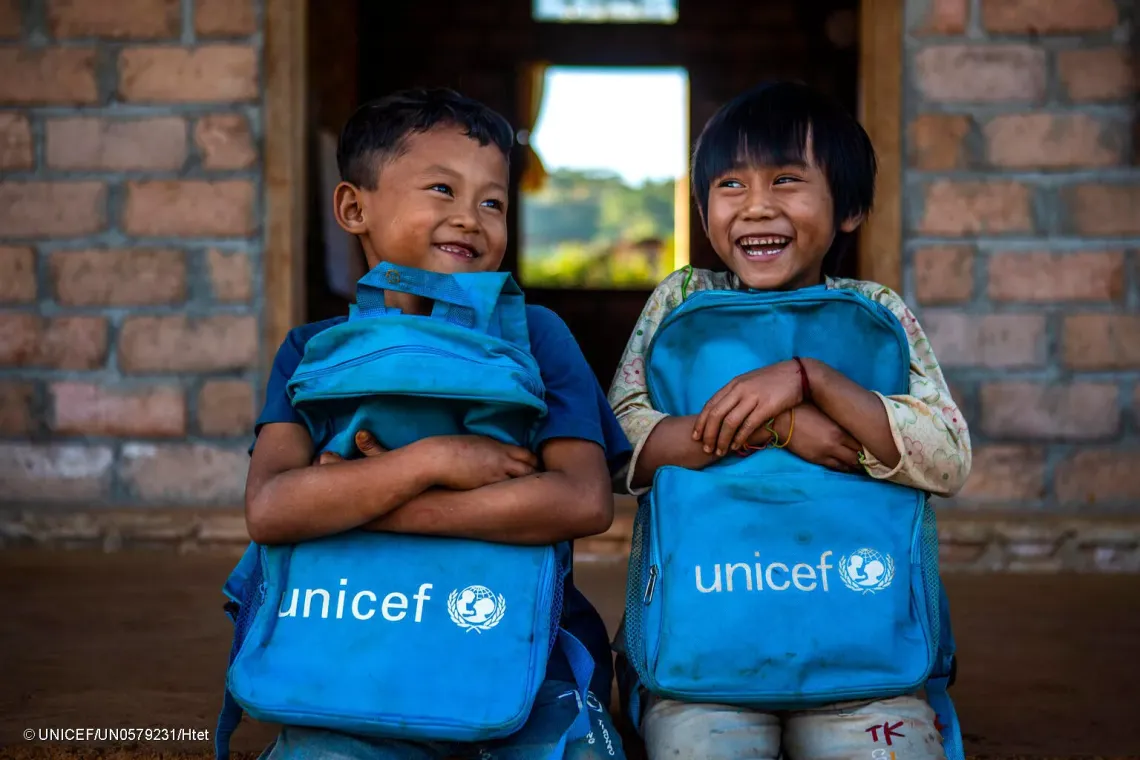
Aung Khin and Kham Li, both 7, hold UNICFE backpacks in front of their classroom at Pan lone hostel, Namtu township, Northern Shan State of Myanmar on 16 December 2021. Aung Khin and Kham Li, both 7, hold UNICFE backpacks in front of their classroom at Pan lone hostel, Namtu township, Northern Shan State of Myanmar on 16 December 2021.

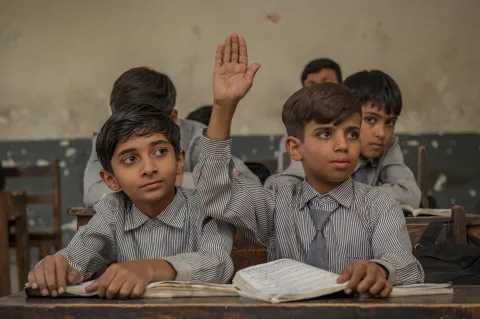
Left to Right: Malaysia 1968, children immersed in the magic of learning. Teenage girls in Thailand learn STEM at school. Aung Khin and Kham Li, both 7, hug their new backpacks as they head back to school during the COVID-19 pandemic in Myanmar.

When children gain knowledge, they gain power:  to stay healthy, escape poverty, and fuel progress. 

And hope is rising in our classrooms. Lower secondary school completion in the region has jumped to 85 per cent. Millions more children are learning.

From 2010 onwards, programmes focused on foundational learning, teacher training, and curriculum reforms to strengthen classroom learning outcomes.

Today, almost all children of primary school age in the region — 93 per cent — are attending school. We’ve trained teachers, improved schools, providing learning materials, helped children learn through digital technology and set up safe classrooms during emergencies to help children keep learning. We’ve also helped countries build climate-resilient schools and integrate climate change education and green skills into curricula.

Children who faced the biggest challenges — poverty, disability, and distance — are now getting the education they would have missed out on, opening doors to a better future. 

Stories of hope

Early grade reading and numeracy for young learners

The Ministry of Education, Youth and Sports, supported by the Capacity Development Partnership Partners, organised tailored teacher training

Go to UNICEF Cambodia

A tent full of dreams

Maryam is reclaiming her right to learn and looking towards the future by continuing her education at a UNICEF Accelerated Learning Centre in Afghanistan

Read now

Learning work skills revives hopes for the future

Urmi is now learning how to use the computer and picking up skills to build a better future for herself, her family, and her community.

Read now

We’ve helped countries give the poorest children a fairer chance

In 1946 in China, a homeless child rescued from the streets in the town of Hengyang, in the south-eastern province of Hunan, gives his name and former address to a clerk in one of the eight UNRRA shelters for famine refugees. In 1946 in China, a homeless child rescued from the streets in the town of Hengyang, in the south-eastern province of Hunan, gives his name and former address to a clerk in one of the eight UNRRA shelters for famine refugees.
 village doctor Zhao Yongsheng visits Li Xiuxiang and her one-and-a-half-year-old grandson, Wenfeng, at their home, teaching Li Xiuxiang how to play with Wenfeng.  village doctor Zhao Yongsheng visits Li Xiuxiang and her one-and-a-half-year-old grandson, Wenfeng, at their home, teaching Li Xiuxiang how to play with Wenfeng.
Since Sai Wai was 3 months old, he has had seizures that affected his development, and his family has struggled with debt from medical expenses. Since July 2023, thanks to UNICEF's disability grant, they have received bi-monthly cash assistance and support, providing Sai Wai with much-needed care. Since Sai Wai was 3 months old, he has had seizures that affected his development, and his family has struggled with debt from medical expenses. Since July 2023, thanks to UNICEF's disability grant, they have received bi-monthly cash assistance and support, providing Sai Wai with much-needed care.

Left to Right: 1946, Hengyang, China: A child gives his name to a clerk at a shelter for famine refugees. Wenfeng (18 months) is cared for by his grandma in rural China as his parents work in the city; she’s learning skills to help him thrive, thanks to new services launched by UNICEF and the Government. Sai Wai has faced seizures since being a baby; UNICEF’s support helps his family in Myanmar cope with medical bills.  

We’ve helped governments set up systems and safety nets to help the poorest children in the region, backed by sustainable financing, so support is built to last. 

Across the region, UNICEF has worked with governments and partners to strengthen child-focused budgets and expand access to essential services including health, education, nutrition, and social protection.

In 2015, based on the research and evidence, UNICEF supported the Royal Thai Government to introduce the Child Support Grant for the poorest families. Ten years on, the programme has helped lift children under 6 and their families out of poverty, reduce acute malnutrition and empower new mothers during the critical early years.

In China, our research and guidance spurred huge policy change for families, including expanded child grants, improved maternity insurance, and more affordable childcare.

And in one of the most disaster-prone regions in the world, we’ve been on hand to help get cash support to families hit by disaster. 

When Typhoon Yagi, the most powerful storm to strike Viet Nam in 70 years, submerged thousands of children’s homes, we got emergency cash support directly into the hands of nearly 4,000 people hit hardest, helping families survive and hold onto hope. 

In Nepal, UNICEF supported digital cash transfer systems under the “Rahat” initiative, enabling rapid and transparent emergency support for households affected by economic hardship and disasters. 

Stories of hope

Family Aid: Transforming Motherhood

Explore how Cambodia's Family Package brings hope and support to mothers, ensuring essentials like health care and education are accessible in rural areas.

Go to UNICEF Cambodia

Single mothers are breaking the poverty cycle in Cox’s Bazar

A UNICEF economic empowerment programme reunites children with their families

Go to UNICEF Bangladesh

More than just cash

A community rallies together to invest UNICEF's cash assistance in children’s education

Go to UNICEF Afghanistan

More girls are learning, leading, and shaping their futures

In 1968, a midwife trainee bathes a newborn baby in the Tower Lane Maternity Hospital in Rangoon. In 1968, a midwife trainee bathes a newborn baby in the Tower Lane Maternity Hospital in Rangoon.
UNICEF/UNI99956/unknown Burma (now Myanmar), 1968. A midwife trainee bathes a newborn baby in the Tower Lane Maternity Hospital in Rangoon. Midwives are trained in pre- and post-natal care, as well as in delivery techniques.
Zainab Jan (12) raises hand to answer the question asked by the teacher during her class in UNICEF-supported camp schools. Zainab Jan (12) raises hand to answer the question asked by the teacher during her class in UNICEF-supported camp schools.
UNICEF/DT2013-18707/Asad Zaidi
3 adolescent girls sit at a table around a tablet working on a project 3 adolescent girls sit at a table around a tablet working on a project
UNICEF/UNI799504/Tia Homsengphan UpShift Youth students brainstorming ideas on Air Quality at a secondary school in Laos (March 2025).

Asia and the Pacific is home to about 313 million adolescent girls, making it the region with the largest population of adolescent girls worldwide. With that comes an immense opportunity to unlock potential, build girls’ leadership and propel growth and development.

In 2022 alone, skills programmes such as UPSHIFT, Rupantaran, and Skills4Girls provided training to over 20 million adolescents, expanding their economic opportunities and benefiting families, communities and entire societies.

We also partner with girl-led organisations to strengthen adolescent girls’ leadership and agency and create safe spaces where girls can learn, grow, and influence decisions that affect their lives.

And among escalating disasters, UNICEF ensures that the various needs, roles, and vulnerabilities of women, men, girls, and boys are taken into consideration while responding to an emergency.

Stories of hope

Finding the courage to refuse child marriage

Adolescent girls learn life-skills to safeguard their future at UNICEF-supported multi-purpose centres in the Rohingya refugee camps.

Read now

Harnessing talent

Investing in services to help married, pregnant and parenting adolescent girls thrive

Read now

Youth Lead the Fight Against Child Marriage

Teenage girls in remote villages are stepping up to challenge child marriage, empowered by education and support from UNICEF & government.

Go to UNICEF Cambodia

Creating second chances for girls in Central Java

Communities and local government work together to get girls back on track

Read now

We’ve sounded the alarm on unseen harms to children

People and children are in the hall People and children are in the hall
Nattapong Saichumdee (Bank) is drinking a glass of water in his house. It was a hot summer day in Thailand during May, where the heatwave made outdoor activities almost impossible for many children, affecting their daily lives. Nattapong Saichumdee (Bank) is drinking a glass of water in his house. It was a hot summer day in Thailand during May, where the heatwave made outdoor activities almost impossible for many children, affecting their daily lives.
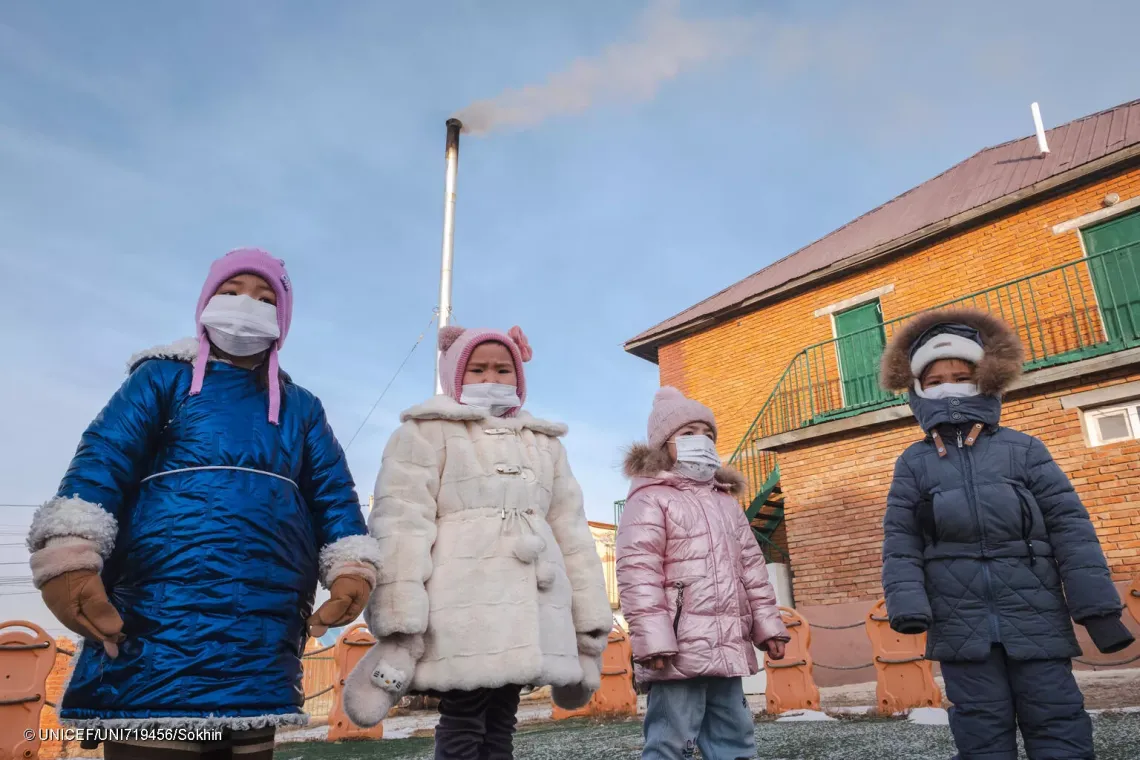
Children playing in the playground of their kindergarten in Nalaikh, Mongolia. Due to poor outdoor air quality caused by coal usage for heating during the harsh Mongolian winters, they must wear face masks. Their kindergarten also relies on coal for heating. Children playing in the playground of their kindergarten in Nalaikh, Mongolia. Due to poor outdoor air quality caused by coal usage for heating during the harsh Mongolian winters, they must wear face masks. Their kindergarten also relies on coal for heating.

Left to Right: Celebrating World Children's Day in Malaysia in 1965, championing every child’s right to be heard, safe, and educated. Bank shelters at home during a record-breaking heatwave in Thailand, May 2024. Children at kindergarten in Ulaanbaatar, Mongolia wear masks to protect them from toxic winter smog. 

We’ve helped the world learn about dangers to children’s health, happiness and futures — from air pollution to sugar-laced baby foods, from unethical formula-milk marketing to tech-facilitated harm. And we’ve supported children and youth to raise their voices on the issues that matter to them. 

Together, with our partners, we’ve brought attention to issues and proposed solutions for governments, decision-makers, businesses and parents to make real change for children at scale.  

Thanks to our powerful advocacy, 24 countries in the region put laws in place to ban manipulative formula-milk marketing and protect breastfeeding. Millions of mothers now have more freedom to choose how to feed their babies, guided by facts, not untruthful advertising.

COMMIT to better first foods for young children

Protecting the diets of young children in Southeast Asia

Learn more

#JagaBareng: Young people champion online safety campaigns

Working together for a safer internet for children

Go to UNICEF Indonesia

Protecting breastfeeding in Asia

Strengthening national legal measures to protect, promote and support breastfeeding

Read now

Why children must be at the heart of national climate plans

UNICEF calls for children’s needs to be included in countries’ Nationally Determined Contributions

Read now

Standing up for children's rights

UNICEF staff talk to Hoang Ngoc Lan, 6 years old.
UNICEF/UNI655280/Le Lijour Six-year-old Hoang Ngoc Lan finds a moment of comfort with UNICEF staff after losing her family to a devastating landslide caused by Typhoon Yagi in Viet Nam (September 2024).

We’re so proud of everything we've achieved for children, since starting work in Asia and the Pacific eight decades ago. But since then, the world has changed — and so have the challenges children face.  

One truth remains: we will never stop fighting for children.  

No matter the crisis, no matter the challenge, we’ll be there. Standing beside children and their families, delivering hope, protection, and the chance at a better tomorrow. 

With every hand that joins ours, with every voice that rises in solidarity, we can protect more futures and ensure that no child is left behind. No matter what tomorrow brings.