Emergencies
Every child has the right to be safe — even in a crisis
The challenge | What we're doing | What’s still at stake
For millions of children across Asia and the Pacific, emergencies are not exceptional events.
They are a recurring reality.
When crises strike, the consequences for children are immediate and devastating. Family and community networks collapse. Schools close. Health services are overwhelmed.
From extreme storms and floods to earthquakes and armed conflict, these shocks uproot families, disrupt schooling, strain essential services and increase risks of violence and exploitation with lasting impacts on children. For the most vulnerable, temporary shelters become permanent homes, and years of lost opportunity become a life sentence.
The Asia-Pacific region is the most disaster-prone region in the world, accounting for nearly half of all disasters and almost 75 per cent of global disaster deaths and affected people
The challenge in Asia and the Pacific
For too many children in Asia and the Pacific, emergencies are not isolated events. They are an unrelenting accumulation of setbacks from which full recovery never comes.
A flood destroys a family's home. Conflict forces them to flee. A disease outbreak closes the health clinic they depend on. In Asia and the Pacific, 22.1 million disaster displacements were recorded in 2025 alone, the highest globally. Conflict-related displacements have also displaced millions, including in Myanmar, Bangladesh and Afghanistan. Behind these numbers are children already living in poverty, already excluded from services, already vulnerable.
Conflict, displacement and refugee crises
Children do not start conflicts, but they pay the heaviest price for them. Across this region, armed conflict, political instability and protracted displacement are pushing millions of children to the edge.
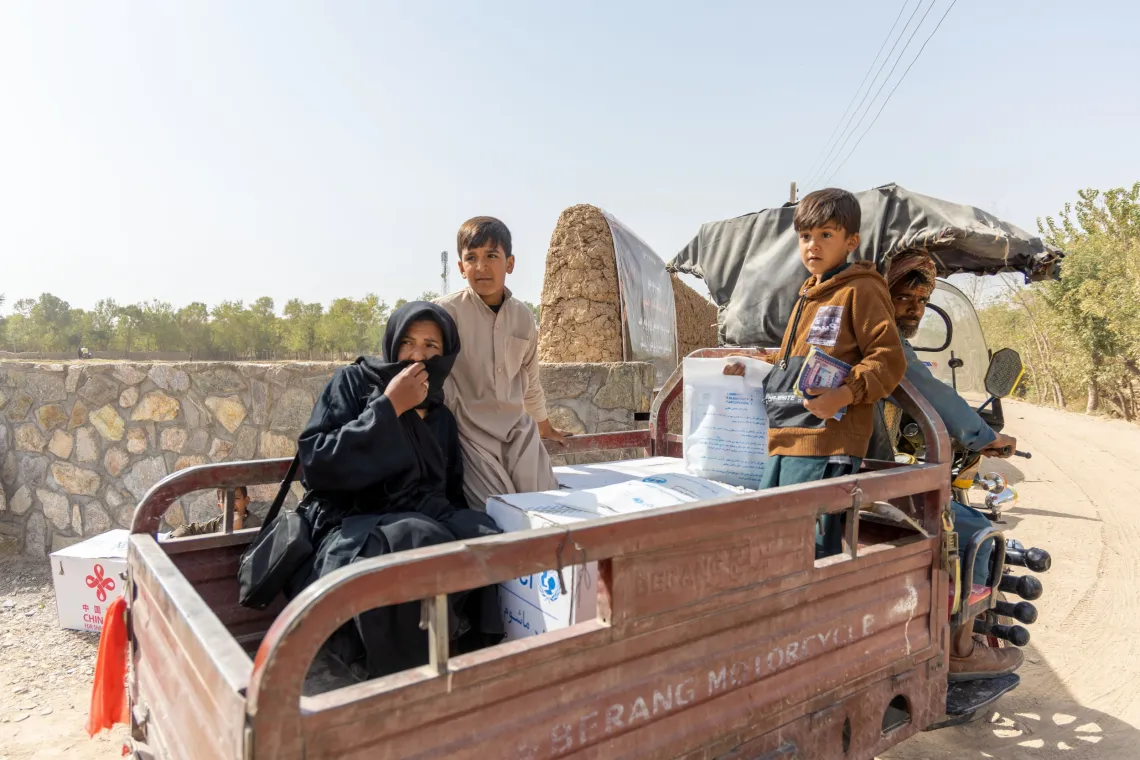
Afghanistan faces one of the world's most complex humanitarian crises. 11.6 million children are in need of humanitarian assistance. More than 2.9 million Afghans have returned from Iran and Pakistan in 2025 alone,2 further straining already limited services. At the same time, recurring drought, floods and earthquakes continue to drive widespread damage and displacement. Malnutrition remains at critical levels, reflecting how repeated shocks, chronic underinvestment and system erosion continue to endanger children’s survival. The rights and freedoms of women and girls have been progressively curtailed, limiting access to education, work and essential services and deepening vulnerabilities.
Bangladesh hosts approximately 1.2 million Rohingya refugees – more than half of which are children - in congested camps that are vulnerable to flooding, landslides, fires and disease outbreaks. These children continue to face disease outbreaks, malnutrition, inadequate educational opportunities, gender-based violence risks, child marriage and child labour. Underlying conditions of chronic poverty, malnutrition, poor diets and under-immunization mean that disease outbreaks can quickly become life-threatening for children.
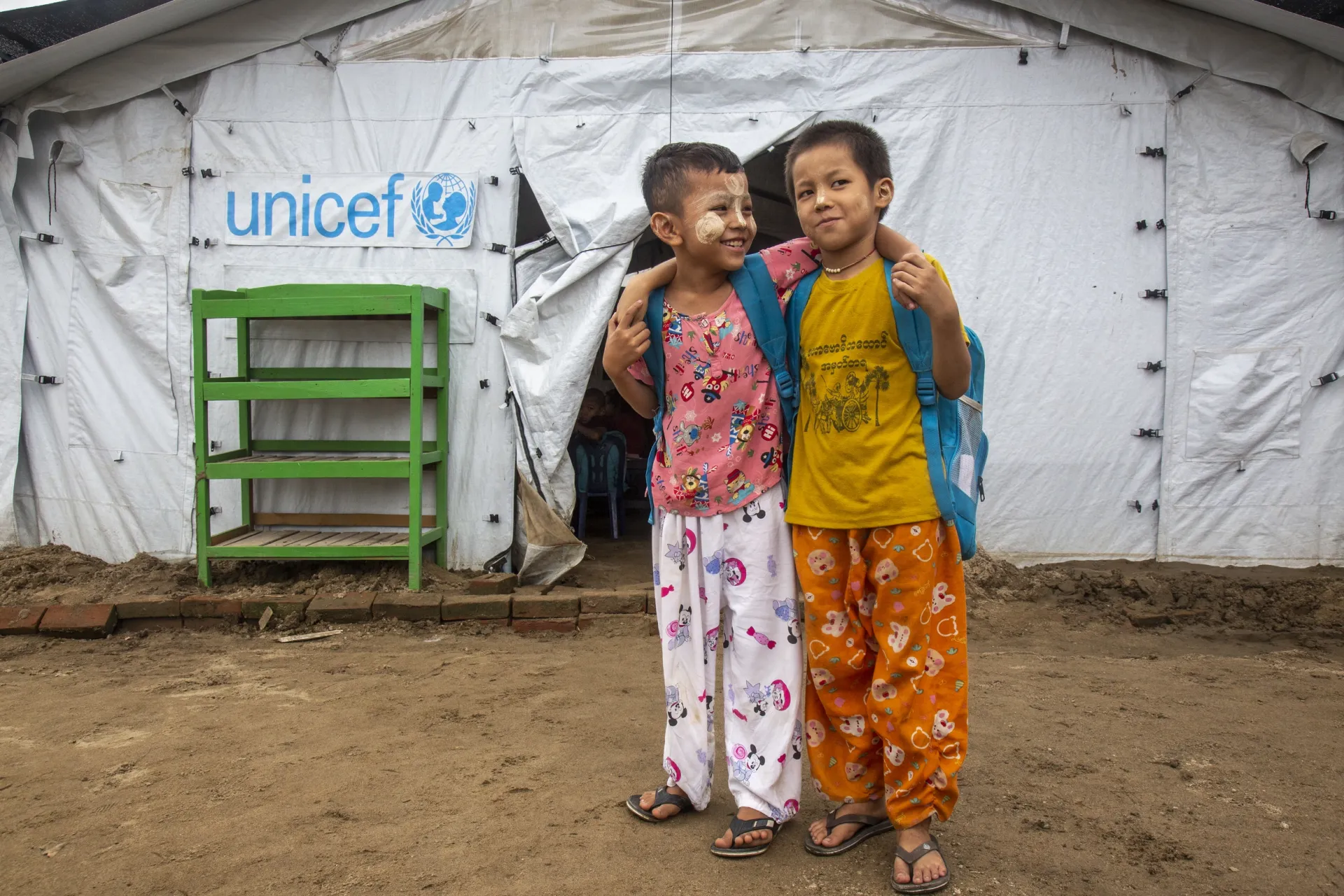
In Myanmar, conflict, insecurity, repeated displacement, public health emergencies and natural disasters have left millions of children without safe shelter, education, healthcare and protection services. In 2025, 6.9 million children were in need of humanitarian assistance. Over one million children are displaced, uprooted from their homes, schools and communities by conflict and insecurity. Myanmar remains the world’s most landmine-affected country.
For children caught in these crises – and many other crises in the region – displacement rarely means temporary hardship. It means years without stable schooling, without consistent healthcare, and without the safety that every child deserves.
Climate shocks and natural hazards
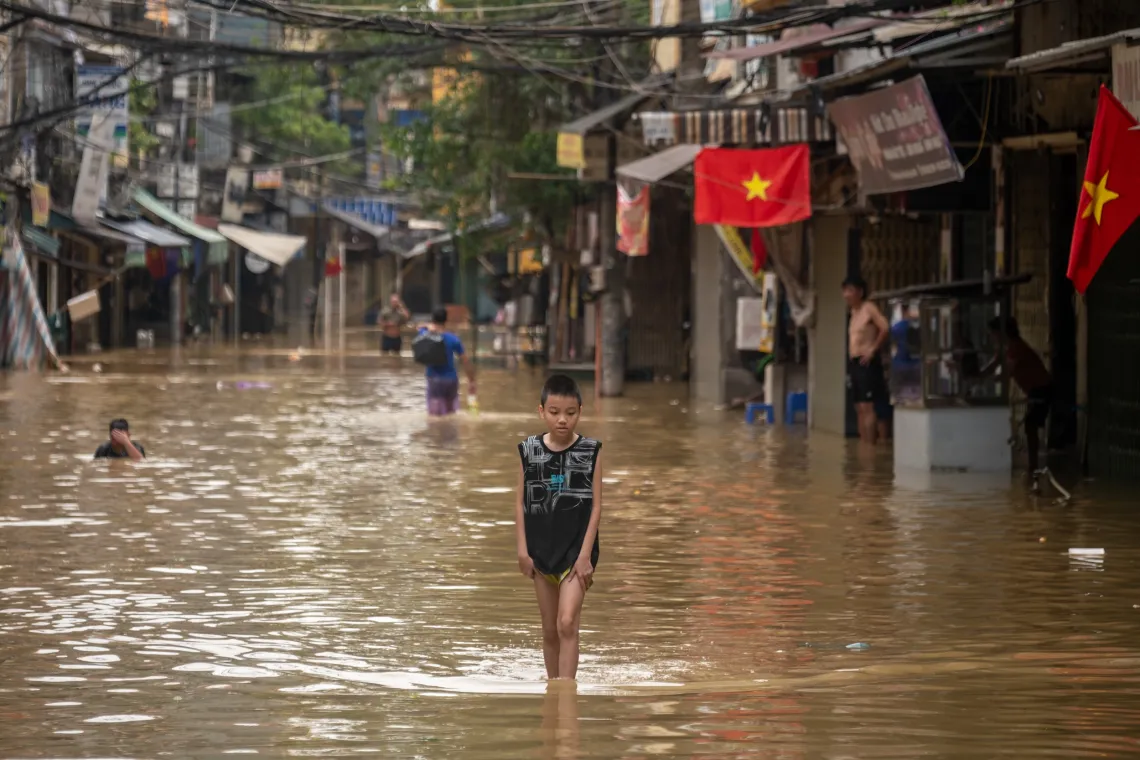
Asia and the Pacific sits on the very frontlines of extreme weather, climate shocks and natural disasters. Almost 75 per cent of the world's disaster victims live in Asia and the Pacific, and the frequency and intensity of shocks is only increasing.
The Philippines experienced 21 back-to-back typhoons in 2025, upending the lives of families still reeling from previous disasters. Severe floods in India, Nepal and Pakistan in 2025 killed thousands and displaced millions, destroying schools, health facilities and farmland. Deadly earthquakes have repeatedly struck the region, including Afghanistan, Myanmar, Philippines and Vanuatu. In Mongolia, the most severe dzud in 50 years struck between 2023 and 2024 — with extreme cold and ice devastating herder communities and affecting more than 80,000 children.
For children in small island nations such as Tuvalu, Kiribati, the Marshall Islands, and the Maldives, the situation is compounded by limited ability to cope. Small Island Developing States are uniquely vulnerable due to their small size, remoteness, highly dispersed populations, undiversified economies, dependence on external markets and extreme exposure to natural hazards - with children bearing the heaviest burden.
Public health emergencies
Long before COVID-19 exposed the fragility of health systems, disease outbreaks were a recurring threat to children's survival in Asia and the Pacific. The pandemic made clear just how quickly a health crisis can overwhelm communities already living on the edge.
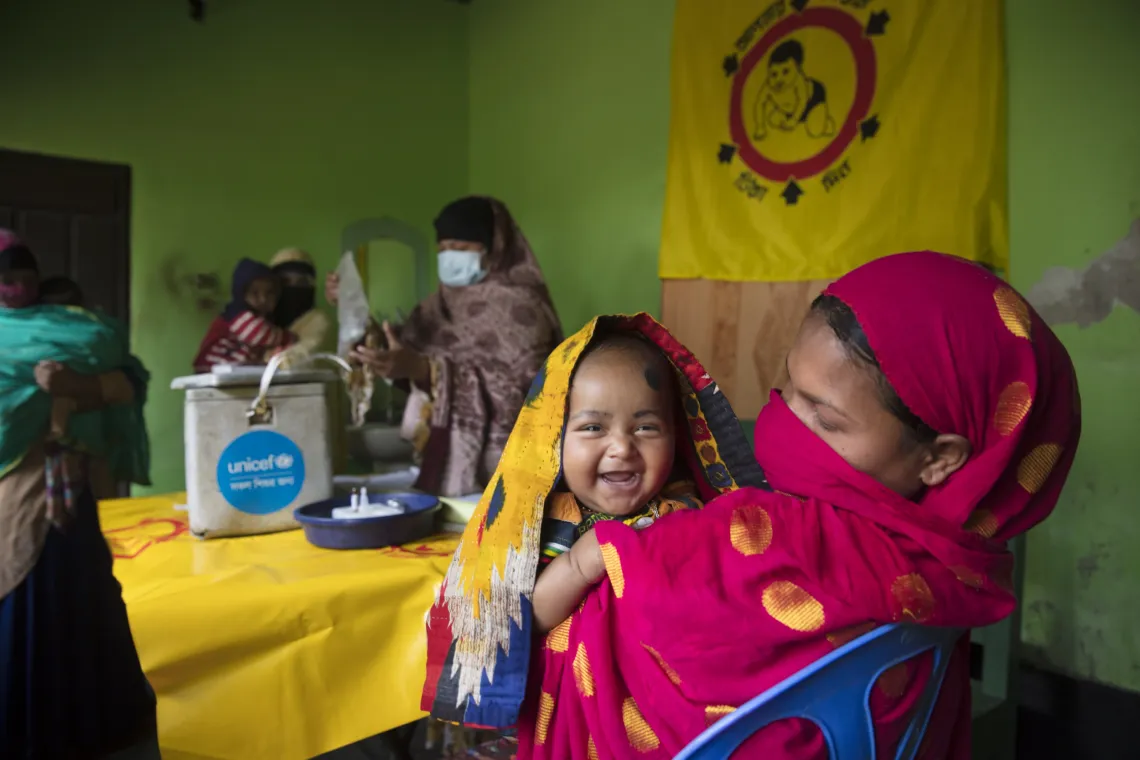
Dengue outbreaks regularly occur across Asia and the Pacific, while vaccine-preventable diseases are making a dangerous comeback across the region. Measles outbreaks regularly affect children in Bangladesh, India, Myanmar, Mongolia, Viet Nam, Lao PDR, Cambodia, the Philippines and Indonesia. Polio outbreaks in Afghanistan, Pakistan, Papua New Guinea, Indonesia and Lao PDR have all triggered emergency responses.
Malnutrition, a silent emergency in its own right in the region, further weakens children’s ability to fight off illness when disease outbreaks strike.
What we’re doing
When emergencies strike, UNICEF moves fast, guided by its Core Commitments for Children — a set of accountable, time-bound pledges to deliver life-saving support to children in crisis within the first hours and days of an emergency.
We partner with governments and authorities across the region to ensure that life-saving support reaches children quickly — from vaccines and treatment for severe malnutrition to safe water, emergency education and child protection services. In 2025 alone, UNICEF reached 22.5 million crisis-affected people in South Asia through life-saving health, nutrition, WASH, education and protection services. In East Asia and the Pacific, 1.2 million children were vaccinated against polio, 2.3 million children received vitamin A, and over 395,000 children continued learning in 2025.
At the heart of our response are community-based organizations and national NGOs, who play a critical role in helping UNICEF reach the most vulnerable. Community health workers are often the first to reach children and families in need, delivering vaccines, nutrition support and life-saving health messages deep into areas where no one else can go. We invest in training and supporting these frontline heroes, and in equipping parents and caregivers with the knowledge they need to protect their children before, during and after emergencies.
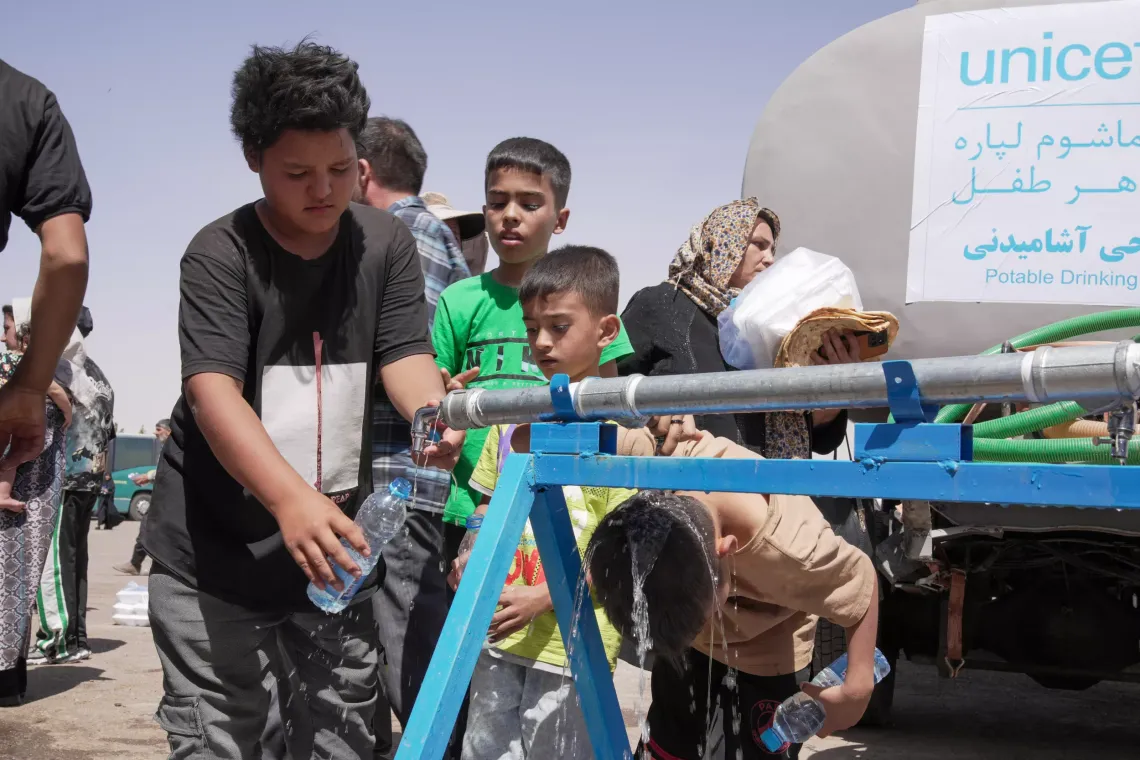
UNICEF also invests in preparedness and anticipatory action to reduce the impact of crises. With our partners, we support disaster risk reduction, climate change adaptation and peace building programmes, all aimed at increasing community resilience to future shocks. This includes supporting and equipping young people – who are among the most determined responders - with the knowledge and skills needed for disaster risk reduction, early warning and community outreach.
None of this is possible without partnership. UNICEF works with governments, civil society and the private sector to engage children, youth and communities in humanitarian action and disaster risk reduction, building the connections and the systems that keep children safe not just in the aftermath of a crisis, but for the years that follow.
What’s still at stake
Children do not cause conflicts, nor are they responsible for climate change. Yet they are the ones who lose their homes, their schools and sometimes their families, often before they are old enough to understand why.
As crises overlap and compound, progress unravels. And as needs grow, funding is shrinking. Funding cuts by donor governments are already limiting UNICEF's ability to reach millions of children in dire need. Myanmar remains the most underfunded humanitarian crisis in the world, while lifelines for Rohingya refugee children in Bangladesh – many of whom were born in refugee camps – continue to dry up. The humanitarian crisis in Afghanistan is only worsening, while girls and women are seeing their fundamental rights systematically eroded – and their access to services entirely cut off.
The one billion children of Asia and the Pacific cannot afford to wait. The resolve to protect them exists. What is needed now is the resources to match it.
Help UNICEF provide life-saving services
Work with UNICEF to make a difference