Water, sanitation and hygiene
Every child has the right to safe water and a clean environment

The challenge | What we're doing | What’s still at stake
Access to clean water, safe sanitation and good hygiene transforms a child's life.
It keeps children healthy, keeps girls in school and gives families the dignity and security they need to build better futures.
Yet across Asia and the Pacific, millions of children are still growing up without these most basic of rights. And for children, who are more susceptible to infectious disease than adults, the consequences of lacking clean water, safe sanitation and good hygiene can be fatal.
Hundreds of children under five die every day from diarrhoeal diseases that could have been prevented by basic water and sanitation services in their homes, health centres and schools. Poor quality drinking water and sanitation facilities also heighten risks of stunting
and anaemia. And in schools, a lack of clean water and sanitation facilities can lead to absenteeism and drop-out, especially among girls.
The challenge in Asia and the Pacific
Despite progress in Asia and the Pacific, deep inequalities remain, and the climate crisis is only intensifying the challenge. Rural communities, urban informal settlements and the poorest households continue to be left the furthest behind. In Asia’s rapidly growing cities, water and sanitation infrastructure is not keeping pace with urban expansion, leaving many children in informal settlements without basic services.
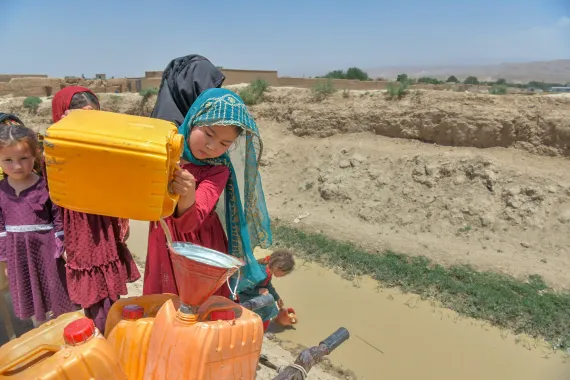
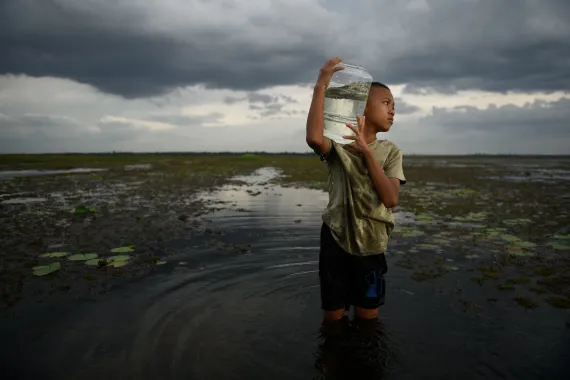
Extreme weather events such as cyclones regularly cause widespread damage to existing water, sanitation and hygiene infrastructure. Flooding also contaminates water sources, increasing children's exposure to waterborne diseases, while in low-lying coastal and island communities, rising sea levels cause saltwater to seep into freshwater sources. In other places, children and their families are at risk from droughts, declining water tables and worsening water quality.
Water
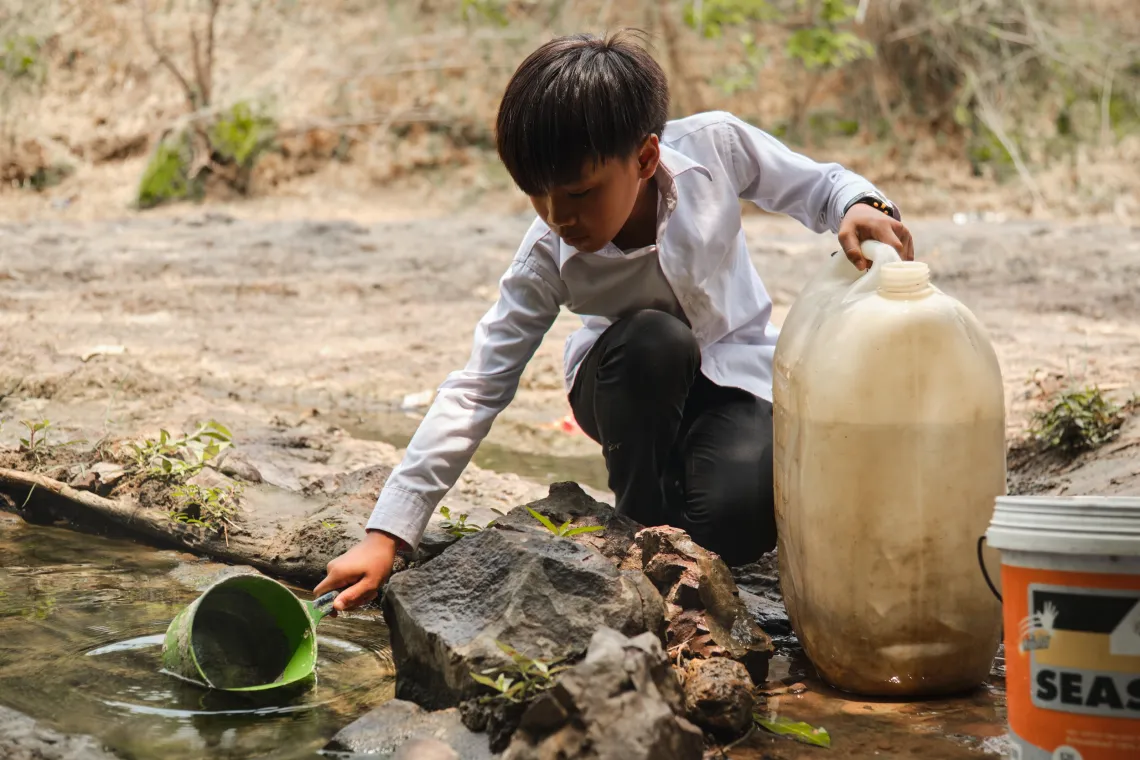
Across Asia and the Pacific, 232 million people still lack basic drinking water, while around 1.5 billion lack safely managed water — water that is available on premises when needed and free from contamination.
The challenge is particularly acute in the Pacific, where geography and climate make water supply scarce and costly to deliver, and where access remains especially limited in rural areas and outer islands — exposing families to heightened risks of waterborne diseases.
In South Asia, the burdens of water scarcity often fall on girls, who are often responsible for fetching water for their households – an everyday chore that robs them of precious hours for learning or pursuing livelihoods.
In East and Southeast Asia, children face threats not only from lack of access to water, but also from water that is unsafe, unreliable or contaminated. Climate-related flooding, saltwater intrusion and pollution are putting drinking water sources at risk — from the Mekong Delta to fast-growing cities and low-lying coastal and island communities — while remote and marginalized populations, including many ethnic minority and indigenous communities, remain the furthest behind.
Sanitation
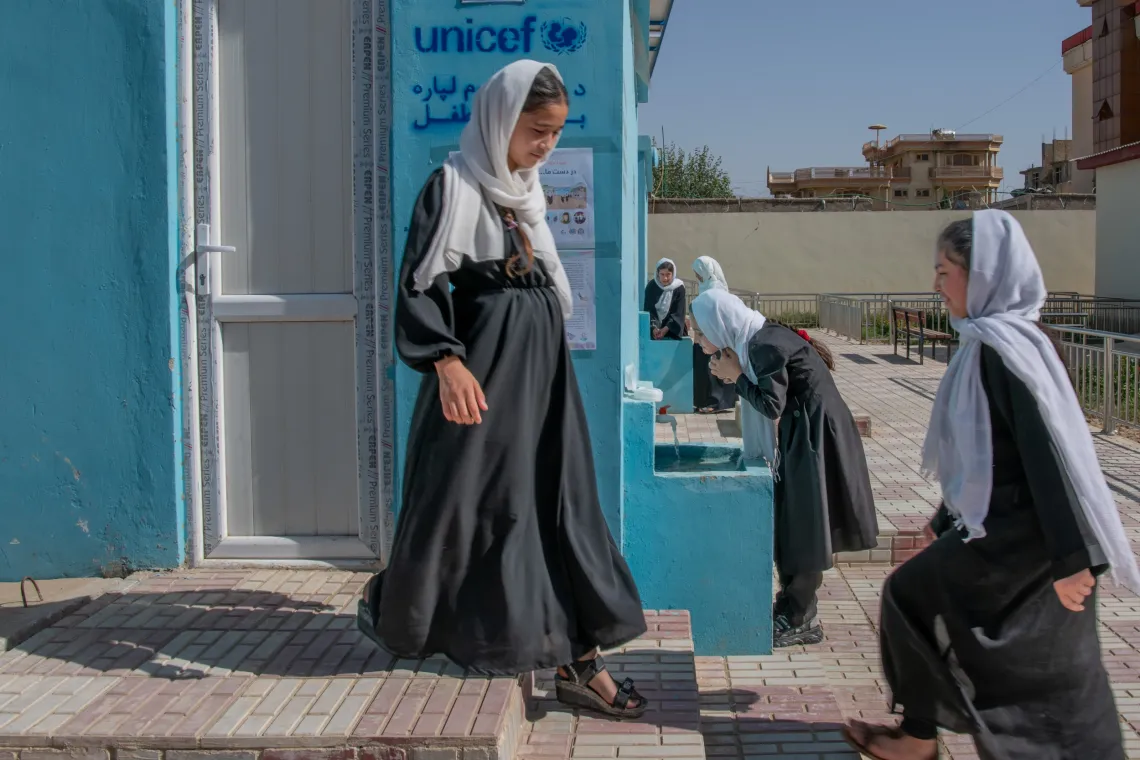
Across Asia and the Pacific, 138 million people still practise open defecation in fields, forests and bodies of water. Additionally, 1.5 billion people in the region use toilets whose waste is not safely treated or disposed of. This waste seeps into soils and waterways, contaminating water sources, spreading disease and putting children's lives at risk.
In South Asia, which is home to the largest number of people practicing open defecation, a lack of access to toilets remains a leading cause of child mortality, morbidity, undernutrition and stunting, and acts as a barrier to quality education for girls and boys.
In East and Southeast Asia, the challenge has shifted from toilet access to safe waste management. While more households now have toilets, waste in fast-growing towns and cities is often not safely contained, emptied or treated, with serious consequences for children's health and the environment.
Hygiene
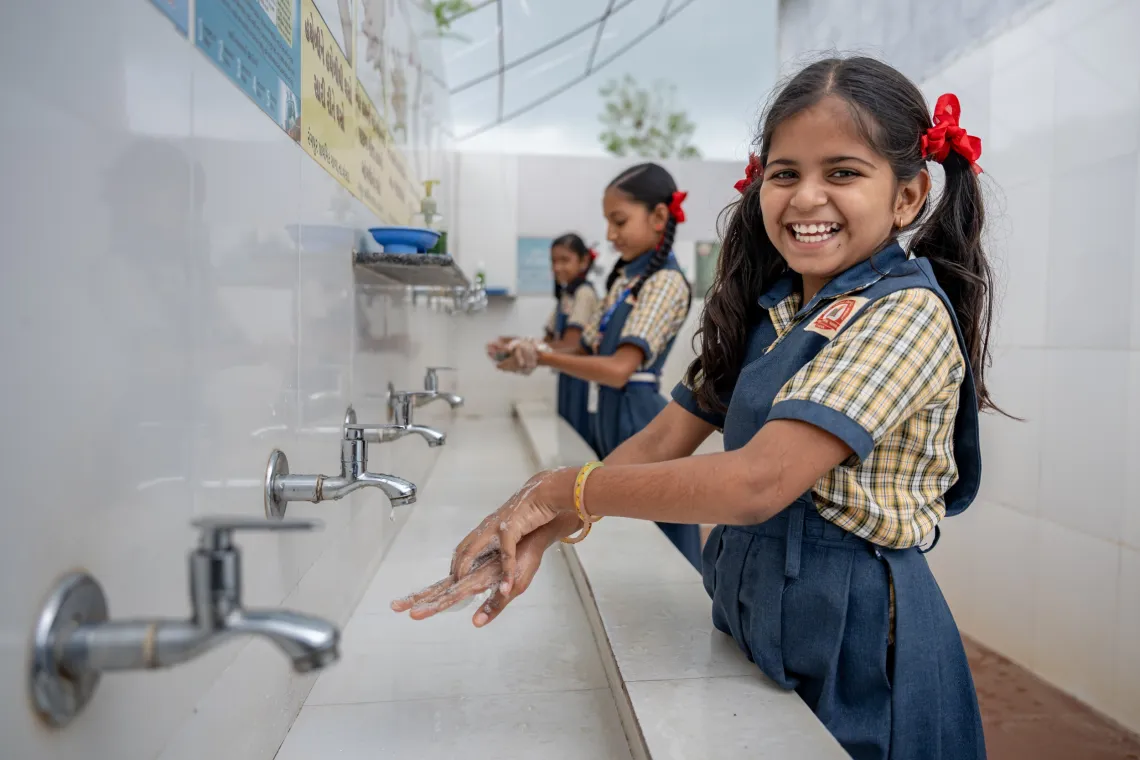
Good hygiene — particularly handwashing with soap at critical moments — is one of the simplest and most effective ways to prevent disease and save children's lives. It is directly linked to reduced stunting, improved newborn health and lower child mortality.
Yet across Asia and the Pacific, 468 million people still do not have access to a handwashing facility with soap and water at home.
For girls, hygiene is also about dignity. A lack of menstrual hygiene facilities in schools can also lead to higher absenteeism and dropout rates among girls.
What we're doing
UNICEF's Strategy for Water, Sanitation and Hygiene 2016-2030 guides our commitment to ensuring every child has access to basic water, basic sanitation and good hygiene — in times of stability and in times of crisis, in urban and rural communities, and across every country in the region.
UNICEF’s greatest value is in helping governments and partners build national systems that deliver water, sanitation and hygiene services at scale. UNICEF provides technical assistance to strengthen systems and coordination, shape gender-sensitive policies and standards and unlock financing. We also build data and evidence, advance climate-resilient approaches, prepare for and respond to emergencies, and drive behavior change.
Where service gaps are most acute — including in schools and health centres — UNICEF supports the delivery of water and sanitation facilities, so children stay healthy and hydrated. We design facilities to be accessible for children living with disabilities, and to support the menstrual hygiene needs of girls so they do not have to miss school.

Behaviour change is at the heart of our work. UNICEF encourages children to practise healthy behaviours such as washing hands with soap at key moments. Where open defecation persists, UNICEF focuses on increasing access to basic sanitation, while always promoting the sustained use of toilets and hygiene practices.
During humanitarian emergencies, UNICEF provides supplies for safely managed water and sanitation to affected areas and settlement camps, providing a first line of defense against disease and malnutrition. We also strengthen the capacity of local partners to prepare for and respond to crises.
What's still at stake
Despite decades of progress in water, sanitation and hygiene, the region is not moving fast enough. Gaps remain dangerously wide for children and families in low-income countries, fragile settings, rural communities and minority ethnic and indigenous groups. Without sharp acceleration, much of the region will miss the 2030 targets for universal water and sanitation — leaving behind the children who can least afford another delay.
The climate crisis is outpacing the region's ability to protect its gains. Floods, droughts and rising seas are putting water sources and sanitation systems at growing risk — hitting hardest precisely where services are the weakest.
Conflict and displacement in the region also threaten children’s access to safely managed water and sanitation. Children living in conflict zones are almost 20 times more likely to die from diarrhoeal disease than from violence itself.
The evidence is clear: when clean water, safe sanitation and good hygiene reach children, they survive, learn and thrive.
What’s at stake for children in Asia Pacific
Work with UNICEF to make a difference
Resources
- Drinking water data – UNICEF Data
- Technical documentation for WASH – Knowledge@UNICEF
- The Ripple Effect: Climate change and children’s access to water and sanitation
- Water, Sanitation and Hygiene, Climate and Environment Annual Results Report 2022
- Hand hygiene for all: Resource guide for business
- WASH Climate Resilience – Compendium of cases
- UNICEF’s Role in Leveraging Financing for WASH in South Asia
- Progress on household WASH
- Sustainable WASH hub