Dignity, Safety, Security, and Comfort – Everything Makereta needs during her menstrual cycle
Access to safe and dignified menstruation

Nabavatu Village, Labasa, Fiji – It’s early morning and sounds of laughter from little children sips through the tent. Makereta, 17, wakes up and sighs loudly – “It’s mid-month again,” she tells herself worriedly.
She quickly gets up and rushes to the nearby bathroom, only to mutter irritation under her breath as she sees the long line waiting outside.
The only other toilet and bathroom in the village is a little walk away near the river.
She runs towards it only to meet another line. Makereta stands in the line shaking her head in disappointment.
“I hope they are quick! It doesn’t help that men, women, boys, and girls all use the same bathrooms and toilets!” she says quietly to the next person.
“What’s the rush, Makereta?!,” screams a boy from the front of the line.
Makereta annoyed, stomps her feet and mutters “if only you knew!”
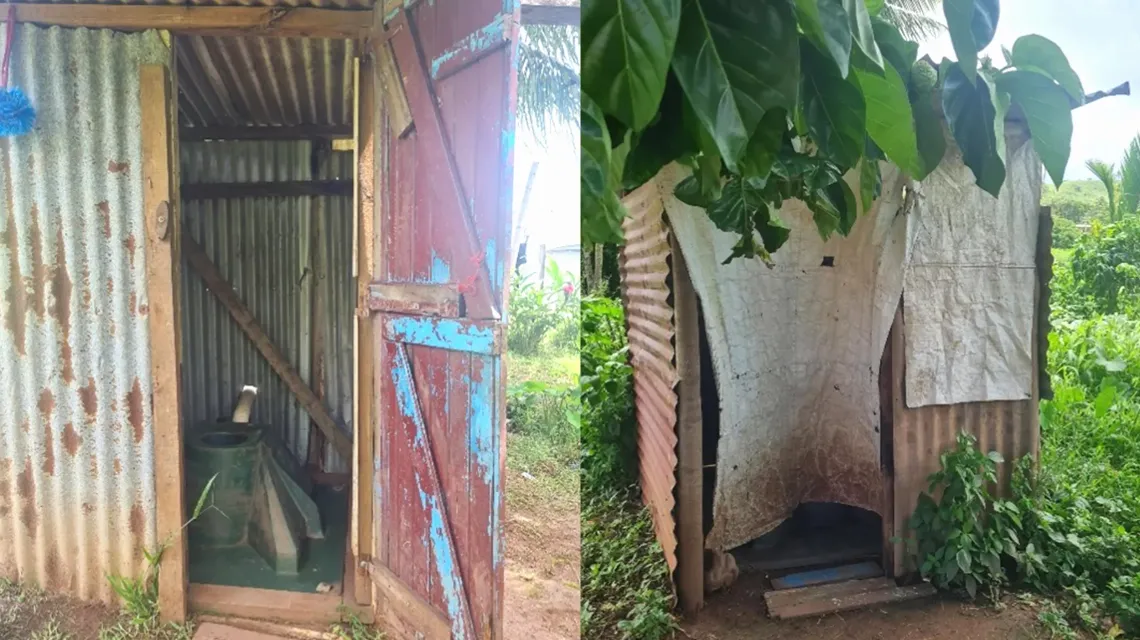
It’s finally her turn – she rushes in and draws the curtain screaming “please don’t come in” to the next person in the line and wishing she could get some privacy with a locked door instead.
She cleans herself and changes her menstrual sanitary pad – all while others in the line are asking her to hurry.
She’s finding it hard with a soggy wet and muddy flooring that came from the rain the night before, sipping in slowly through the tin-built structure of the bathroom.

Finally done, she wraps her used menstrual pad and looks at the plastic bag hanging from the top where she has to put the pad in.
“Others are also using this bathroom and the toilet – I can’t just leave my used pad here in this plastic,” she thinks and walks out holding the rolled used pad under her arm to dispose at home, making life harder as she needs to cross the playing field for the boys.
“What have you got there, Makereta – what are you hiding?” the boys ask her as she paces past the field.
“None of your business!” she responds.
It’s almost night and Makereta sits at the end of her tent-home wishing it took longer for the darkness to creep in.
In the middle of the night, Makereta wakes up to a full menstrual sanitary pad. She wants to carry on sleeping but needs to change.
She lays for a few more seconds before picking up her solar light, waking her grandmother and walking quickly to the toilet.
There is darkness all around her and she feels scared.
She hangs the solar light on top and tries to quickly change to a clean pad in the midst of again, a wet and muddy flooring.
As she lays back down on her mattress, she looks at her younger sister laying near her and thinks “I hope it gets better for you when your time comes.”
Makereta hopes for more privacy, safety, and security for all females in her community during their menstrual cycle.
UNICEF is working together with the Ministry of Health and Medical Services in Fiji to ensure girls like Makereta in Nabavatu Village can access clean, hygienic, and safe facilities, especially to ensure good health and comfort during their menstrual cycle.
A new set of four bathrooms and toilets have now been built for approximately 160 residents in the village, including about 60 women and girls who have been living in the temporary climate relocation sites at Nabavutu and living through this discomfort every month. In addition, repairs have also been made to existing four pan toilets.
These facilities are divided for separate use by females, males and those living with disabilities. The new toilets and bathrooms with clean running water are built with cement flooring and corrugated iron walling for protection from rain seeping in during adverse weather conditions. They also come with solid lockable doors for privacy as well as proper handwashing basins.
There is now solar light available in the new facilities with safe windows for ventilation and proper waste disposal management.
In addition, awareness and trainings on water, sanitation and hygiene have been carried out with the community on areas including hand hygiene, menstrual hygiene management and operation and maintenance on the new facilities.


Apart from the new facilities, water, sanitation, and hygiene kits have been handed over to families including soap, cleaning supplies, menstrual hygiene sanitary pads, and buckets for water storage. Psychosocial sessions have also been provided for children together with recreational kits. These include balls, skipping ropes, board games and books, amongst other items.
It’s that time of her period again - Makereta wakes up in her tent-home to the sounds of laughter from little children. Only this time, she has a big smile on her face and hops up ready to take on the day with dignity, safety, security, and convenience!
###
Nabavatu Village is currently based on a temporary site that had been relocated by the Government due to the impact of climate change. The families will be moved to a new permanent site in Nadoviri.
This project is funded through the global humanitarian thematic funds.