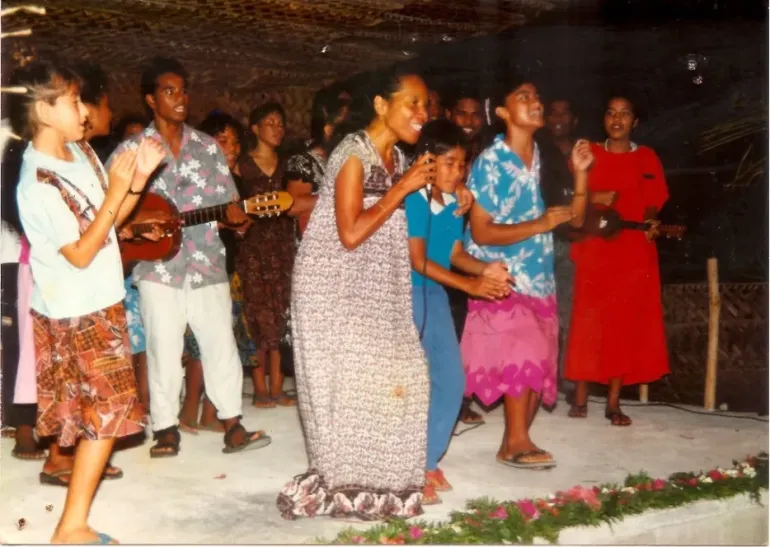
When I think back to my childhood, my first memories are not only of classrooms. They are of schools that felt open to the community, of swimming with friends, eating coconuts during recess, listening to stories, learning weaving, and watching boys learn to make rope from coconut husks and fish traps they later carried to the lagoon.
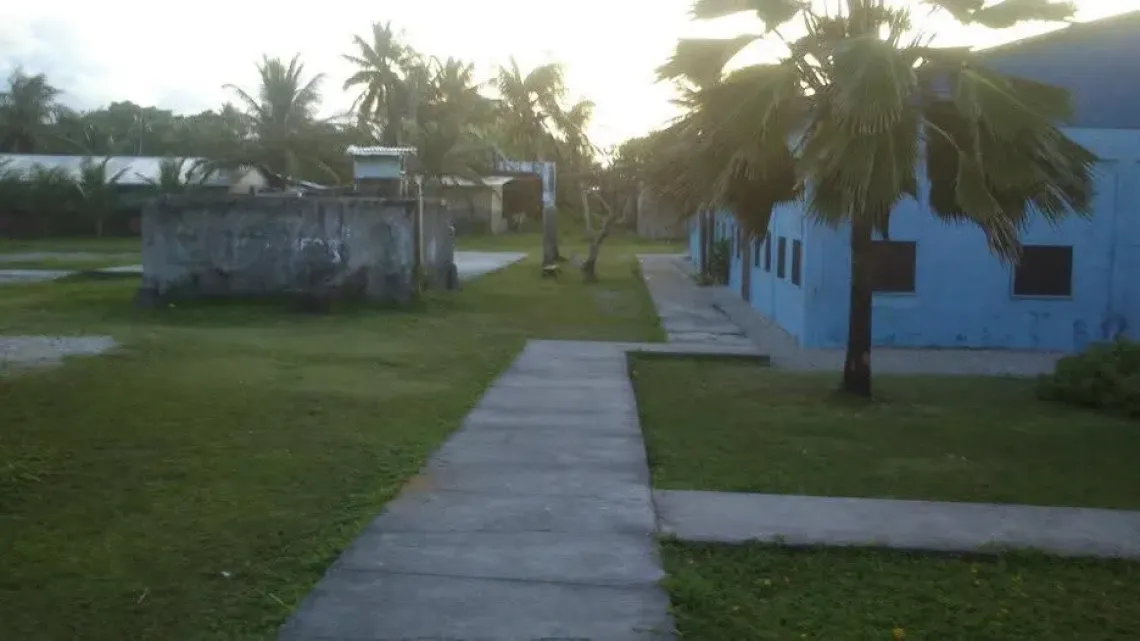
I was born and raised in Jaluit in the Marshall Islands, attended primary school there and in Pohnpei, and later completed high school in Majuro. At home and in my community, I grew up hearing and speaking Marshallese, English, Pohnpeian and some Kosraean. My childhood was shaped by many islands, languages, and identities with my childhood playground in the Jaluit High School classrooms and school buildings.
Much of my early learning happened through family, elders, neighbours and community life. My grandmother, my mother, and my aunts told stories from different islands about weaving baskets, preparing food, and passing on everyday knowledge through morning and after-school chores. “When I think about it, it’s all connected,” I reflected. “Whether it’s Marshallese or Pohnpeian or Kosraean… it was all there. I just didn’t realize it.”
But formal schooling did not always help me make sense of those connections. In high school, one of my biggest frustrations was learning U.S. government and history while not fully knowing my own.
“Why am I learning U.S. history when I don’t even know my history or U.S. government when I don’t know my government?”.
That question stayed with me.
Growing up in a diverse family, I struggled at times with identity. Was I Marshallese, Pohnpeian, Kosraean, Micronesian? Looking back, I now see that these identities did not need to be separated. They were connected. They had always been connected.
A programme like Wayfinding could have helped me understand that earlier.
Today, as the System Transformation Grant (STG) Coordinator for the Pohnpei State Department of Education, I am part of the Wayfinding work in FSM. Through the Global Partnership for Education (GPE)-funded System Transformation Grant, led by the FSM National Department of Education and State Departments of Education with support from UNICEF Pacific, I amhelping bring culture, language and traditional knowledge into everyday learning of children.
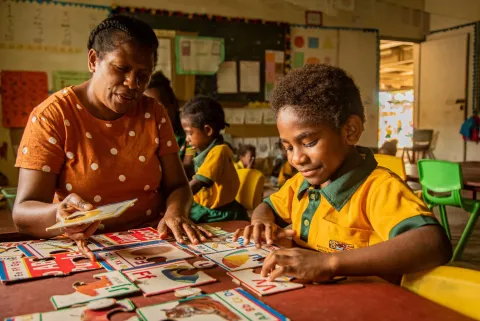
Through Wayfinding, we are trying to help children, educators, and community elders “recognize the value” of their cultures, languages and traditional knowledge. We are working to bring indigenous and traditional knowledge and concepts into the content students learn every day in school. I hope children experience learning as something seamless, connected to what they do at home, in their families, in their communities and in the classroom.
For me, this is about helping children grow with a stronger sense of who they are, where they come from, and how their learning connects to their families, communities, country, and the world. Learning is not only found in books. It is also found in everyday life: starting a fire, understanding the science and mathematics behind it, using the right language, words and gestures, to greet someone, and recognizing social studies in community relationships.
Learning is all around us. I often say. It’s everywhere.
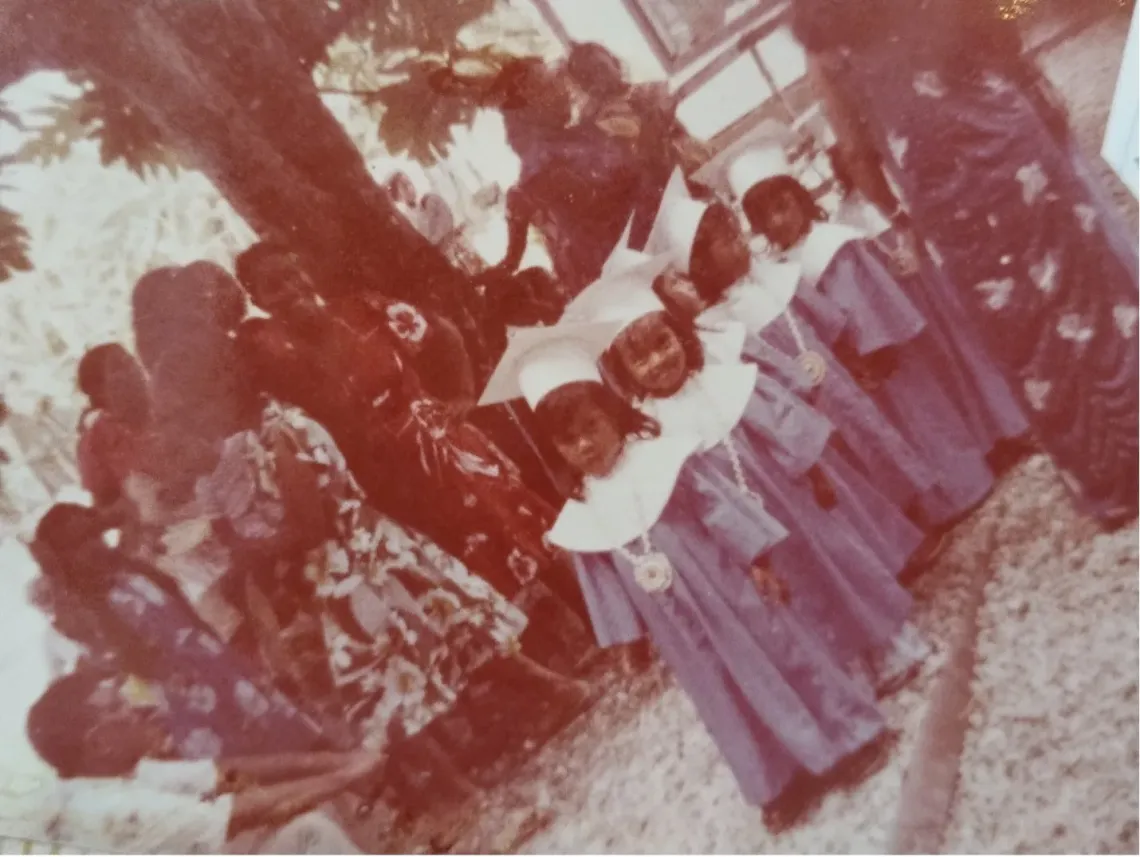
I believe wayfinding’s approach, which brings together communities and traditional knowledge holders, student engagement, curriculum, resources and teacher support, could also speak to other education systems across the Pacific. Through Wayfinding, FSM’s National Department of Education and State Departments of Education, with support from GPE and UNICEF Pacific, are taking forward a simple but powerful idea: children’s language, culture and everyday knowledge are not separate from education. They are part of learning itself, and part of helping children and young people grow with pride, confidence, and a stronger sense of belonging.