I looked ahead at the running field, closed my eyes, and took a deep breath.
“I can do this,” I said to myself.
I opened my eyes and gave it my all - running as fast as I could. But soon I started to lose my breath. Huffing and puffing, I couldn’t go on any longer. I stopped and bent over, hands on my knees.
I could hear boys laughing and making fun of me. I could hear the sports teacher walking towards me. But all I wanted to do was hide, so I ran away to the bench and sat there, angry with myself.
Yes, that was me 10 years ago.
My name is Praney Singh, and I am a Fix my Food* youth advocate.
Growing up in Sigatoka, some of my favourite childhood memories were the simplest ones - running around outside, spending time with my family, and going grocery shopping with my mum.
Those moments felt carefree and happy. But behind them, there was something I struggled with quietly for years.
I was overweight.
All the ‘cool kids’ at school were part of sports teams. I also wanted to be cool, but I couldn’t even pass the sports trials, let alone achieve my dream of being selected.
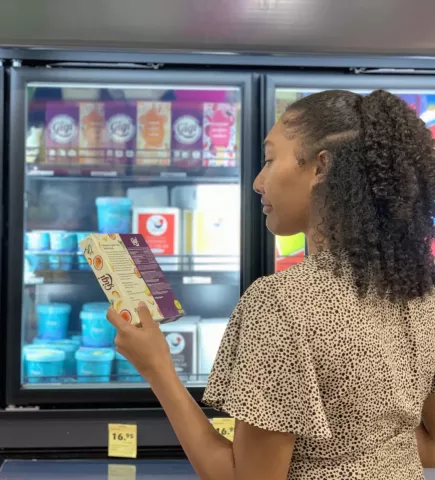
One thing I used to look forward to, though, was going to the grocery store. My mum would let us choose two items from the shelves and can you guess what I used to reach out for?
Cereals.
Yes, those sweet cereals. Why? They had those images of a strong, confident boy playing sports on the packaging. I used to think that if I ate cereal regularly, I could also be selected in my sports trials.
Looking back, I realise how persuasive the supermarket environment and food packaging really are. At the time, my parents and I didn’t know we were being influenced. I was just a child trying to feel accepted and confident.
As I got older, I slowly started learning more about health and nutrition. I realized that becoming healthier was not about believing advertisements or chasing an image on a cereal box. It was about making better food choices, being more active, and building healthier habits over time. The changes did not happen overnight, but slowly I began to feel stronger, healthier, and more confident in myself.

Joining the Fix My Food movement was a turning point for me.
It helped me understand that my story is part of a much bigger picture.
In Fiji, we are not just dealing with one nutrition issue, but we are facing what experts call a triple burden of malnutrition where undernutrition, micronutrient deficiencies, overweight and obesity all exist at the same time. A key driver of this crisis is the food environment children and young people navigate every day, where unhealthy food is often the easiest option.

This means young people are not always making choices freely but are being influenced by what is around us every single day.
For me, this movement is deeply personal.
No child should feel misled by advertising that makes unhealthy food look healthy.
No child should feel like they are ‘less than’ because of how they look or what they eat.
We all deserve a fair chance to grow up healthy and confident.
But that can only happen if the systems around us support us and do not confuse us.

To our leaders, parents, schools, communities - if we each make small changes, and if we keep pushing for healthier, fairer food choices, we can create a Fiji where every child eats well, feels strong, as well as has the chance to thrive.
Let’s fix our food together – let’s help another young child like Praney get selected in the sports team and achieve his or her dream.
###
Notes:
* ‘Fix My Food’, supported by UNICEF, is a youth-led advocacy initiative aimed at giving young people a platform to create a stronger voice for healthier food environment for every child. It also aims to advocate with governments and decision makers to implement actions that ensure every child’s right to healthy food, making sure it is:
- Available: Accessible in shops and stores close to where people live.
- Affordable: Priced so that everyone can afford it.
- Appealing: Presented in an attractive and engaging manner.
- Aspirational: Promoted in ways that encourage children and families to choose healthier options.
In the Pacific region, the initiative has started with engaging young people and key influencers to define solutions to unhealthy food environments. This aims to facilitate a shift in the narrative from focusing on individual dietary choices to addressing systemic food environment challenges.