Why is inclusive education so active in the Pacific?
This is a question I am often asked by those newly arriving in the Pacific region. It is a simple question, but one that made me reflect deeply on the unique drivers that shape inclusive education in this vast and diverse part of the world.
Is it the relatively high access to basic education?
Is it the presence of strong regional structures such as the Pacific Regional Inclusive Education Taskforce?
Is it driven by national commitments or by passionate individuals who champion inclusion every single day?
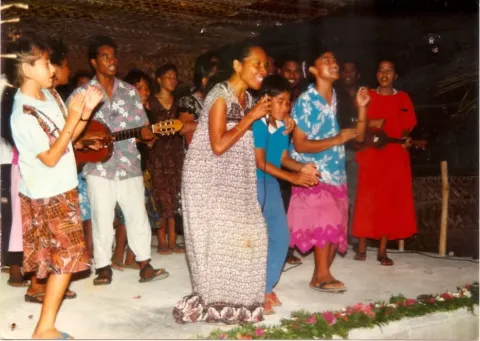
Or something deeper: the Pacific culture of togetherness that naturally aligns with the spirit of inclusion?
While these questions are rooted in the Pacific context, they hold relevance far beyond the region. Around the world, countries are grappling with how to build more inclusive, resilient and community-centred education systems. The Pacific offers valuable lessons that the other countries can learn from.
Inclusive education in the Pacific
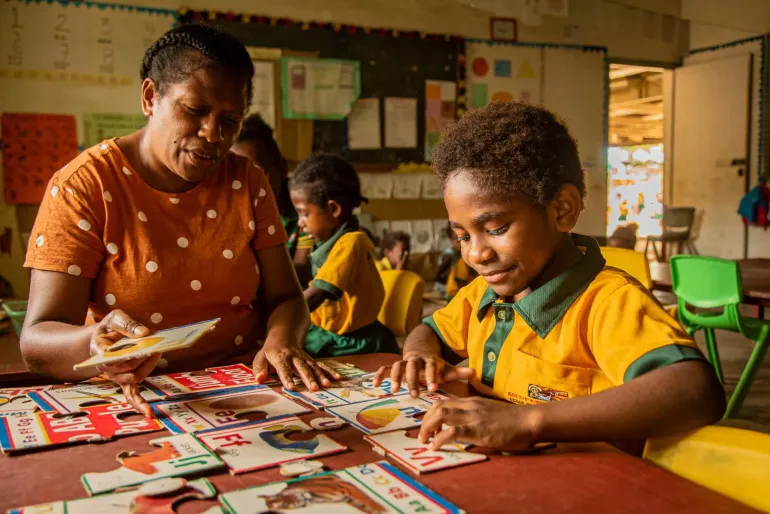
Inclusive education means every child, regardless of ability, background, gender, language or circumstance, have access to support to learn and grow to their fullest potential. It is supported by strong evidence showing that inclusion supports cognitive and social-emotional growth for all children (UNESCO, 2020; UNICEF Innocenti, 2021; OECD, 2022).
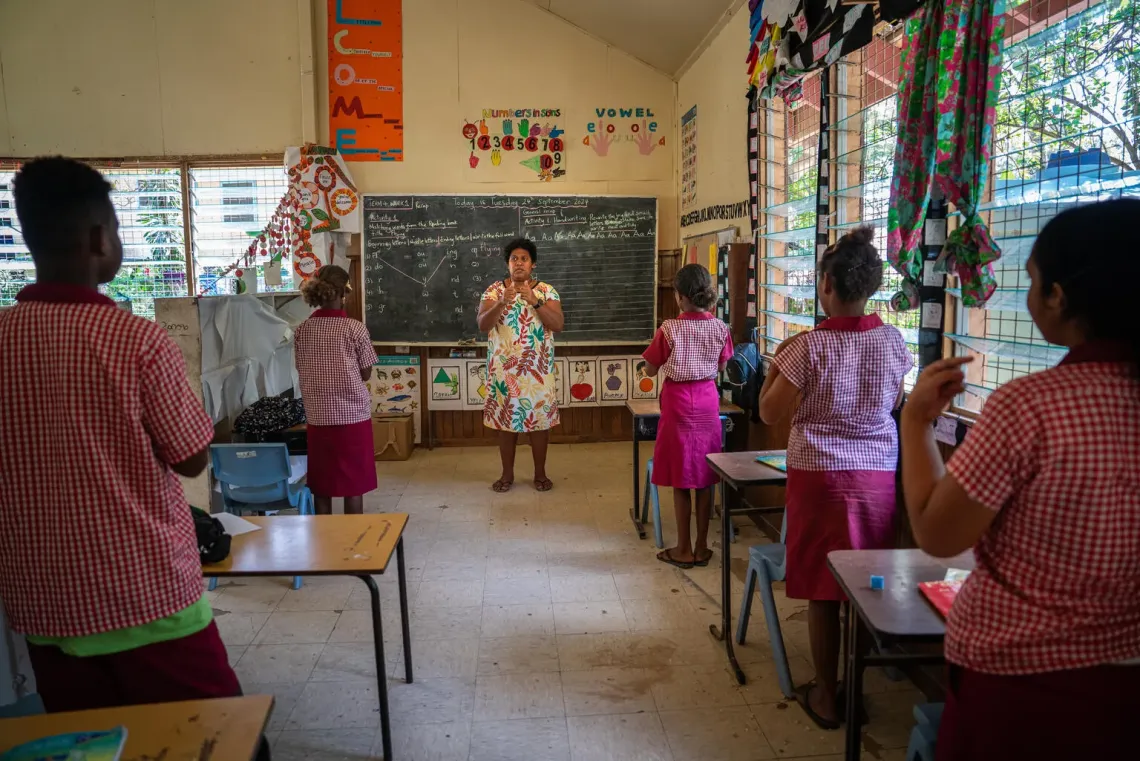
In the Pacific, inclusion is not just a national policy objective, but it has become a regional movement.
In 2019, Ministers endorsed the Pacific Regional Inclusive Education Framework to guide countries in creating more inclusive systems. Its implementation sits under the Pacific Regional Education Framework (PacREF), and is overseen by the Pacific Inclusive Education Taskforce, chaired by Ministers of Education from the Federated States of Micronesia, Niue and Solomon Islands, with UNICEF as secretariat.
In 2021, to understand the status of each country and the region as a whole, the Pacific Regional Review on Inclusive Education was conducted and a comprehensive report was produced which provided a baseline for inclusive education in the region. The Global Partnership for Education (GPE) KIX-funded Multiple Indicator Cluster Survey-Education Analysis for Global Learning and Equity (MICS-EAGLE) initiative provided valuable data which was cited in this report.
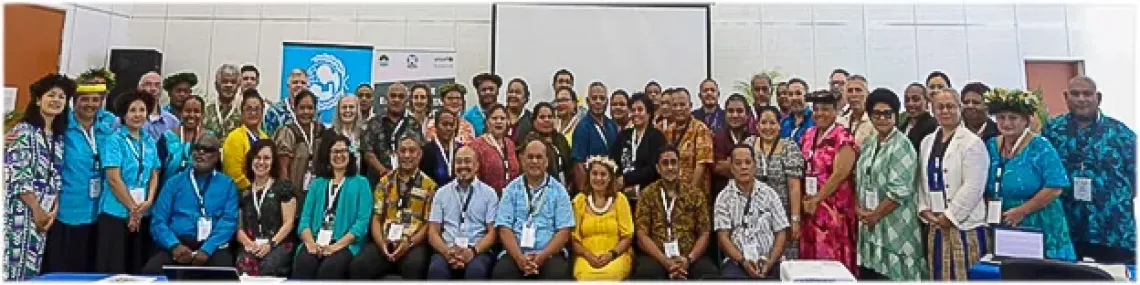
Four years later in 2025, Ministers endorsed a joint statement of regional priorities for inclusive education which were identified at the Inclusive Education Paiaudaud, a Forum supported through PacREF with funding support from the Global Partnership for Education (GPE), New Zealand Ministry of Foreign Affairs and Trade, Asian Development Bank (ADB) and collaborative efforts of partners including UNICEF, UNESCO, Institute of Education at The University of the South Pacific and The Pacific Community. These priorities now guide efforts through to 2030.
National-level commitments: momentum in action
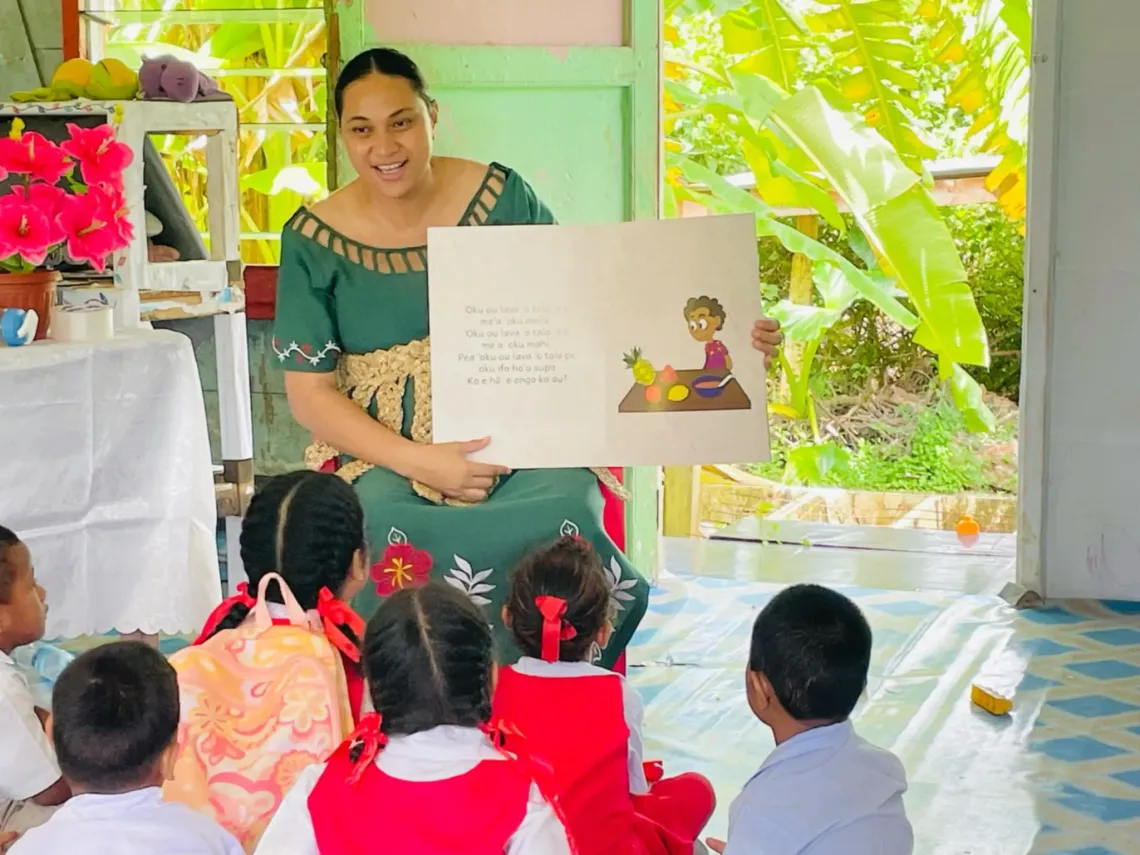
Across the region, countries have launched new inclusive education policies, conducted nationwide studies including on neurodivergent learners, strengthened teacher training and plans are underway to strengthen provision of assistive technology. Investments in disability-disaggregated data – strengthened through GPE-supported MICS-EAGLE analysis and assessments on improving EMIS disability indicators are underway, supporting better planning.
Challenges that persist
Yet significant challenges remain.
Recent MICS data show concerning rates of functional difficulties among young children, 7 percent in Samoa and 13 percent in Kiribati, yet even these figures likely underrepresent the true scale, given persistent gaps in disability-disaggregated data and limited early identification systems.
Geographic isolation, climate risks, small populations, limited awareness and stretched resources continue to make individualized support and system-wide implementation difficult.
The Pacific advantage: community, culture and collaboration
There is something profoundly Pacific at the heart of this movement.
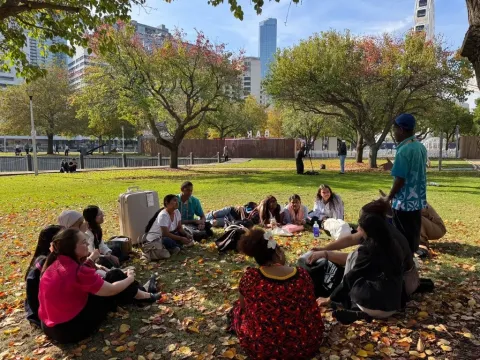
Strong community ties, collective decision-making, and talanoa – open, respectful dialogue, create an environment where inclusion is a shared responsibility.
As UNICEF Pacific's Education Advisor Gail Townsend shared, “The Pacific naturally embraces a social model of disability, where the whole community and society come together to ensure no child is left behind.”
This spirit of “Mafana“, a Pacific term of warmth, togetherness and shared spirit, also extends beyond the countries to the whole region.
Inclusive education in the Pacific is driven by a unique combination of strong cultural values, community–driven inclusion, coordinated regional leadership and national level commitments.
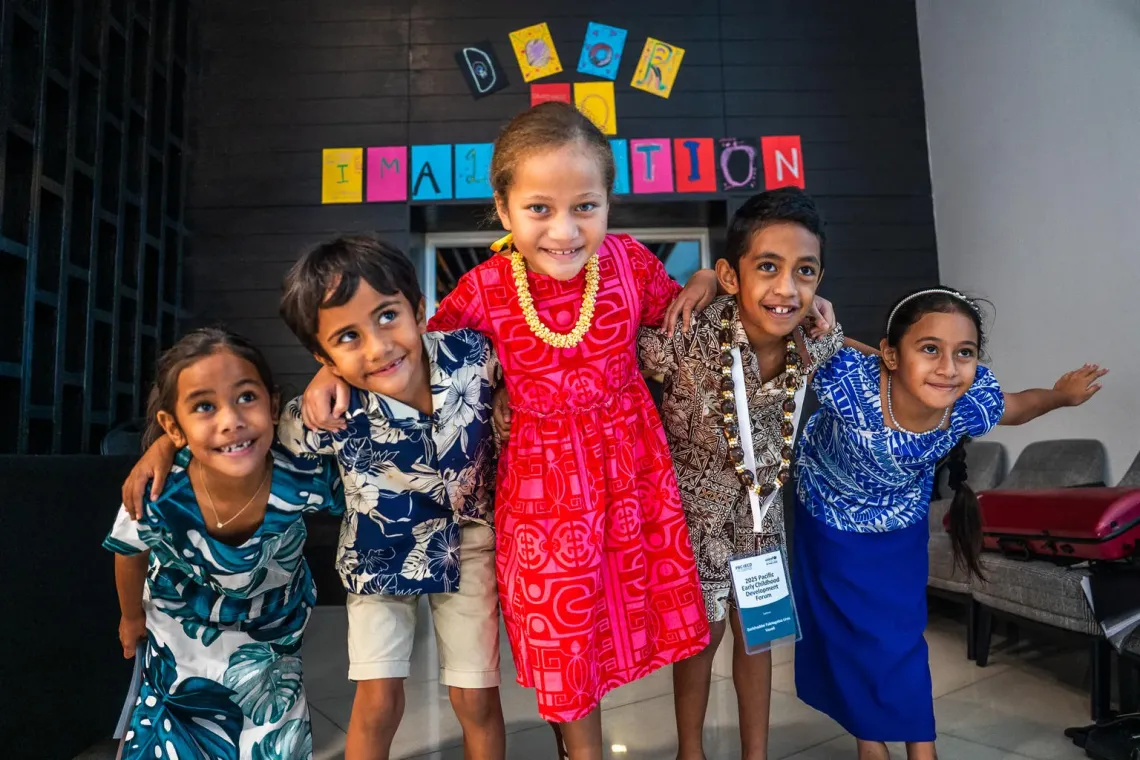
These features are not exclusive to the Pacific. They demonstrate how any region – large or small – can advance inclusion by building systems centred on community, collaboration and shared purpose.
One unique strength of UNICEF is its decentralized model, with country offices working closely with governments and partners, able to effectively adapt advocacy and programming approaches to each context. This positioning enables UNICEF to ensure relevance and build partnerships to achieve change in the most effective way in each context. In the Pacific, this means bringing the best of global evidence and frameworks to the table and embracing the application of the same within Pacific systems, structures and approaches.
The path ahead
Through multiple partnerships, UNICEF is supporting Pacific governments to embed inclusion across their education systems, from early childhood education through secondary, and spanning policy and system reform leading to classroom transformation.
Looking ahead, the region can continue leading globally by advancing its priorities by building stronger, evidence-based education systems, better policies, coordinated support services, reliable data, and well-prepared teachers.
So, “Why is inclusive education so active in the Pacific?”
The answer lies in the region itself: its values, its resilience, and its belief that every child matters. And ultimately, the Pacific reminds the world that inclusive education is not only a technical reform – it is a cultural commitment. The Pacific is well oriented to inclusion, but education systems are not historically designed for that. We’re all working together to transform systems to meet that core cultural value.