Why children must be at the heart of national climate plans
UNICEF calls for children’s needs be included in the Nationally Determined Contributions
A regional emergency?
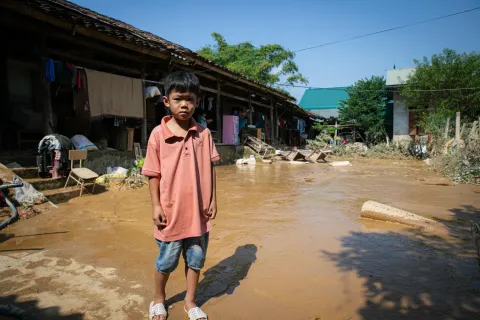
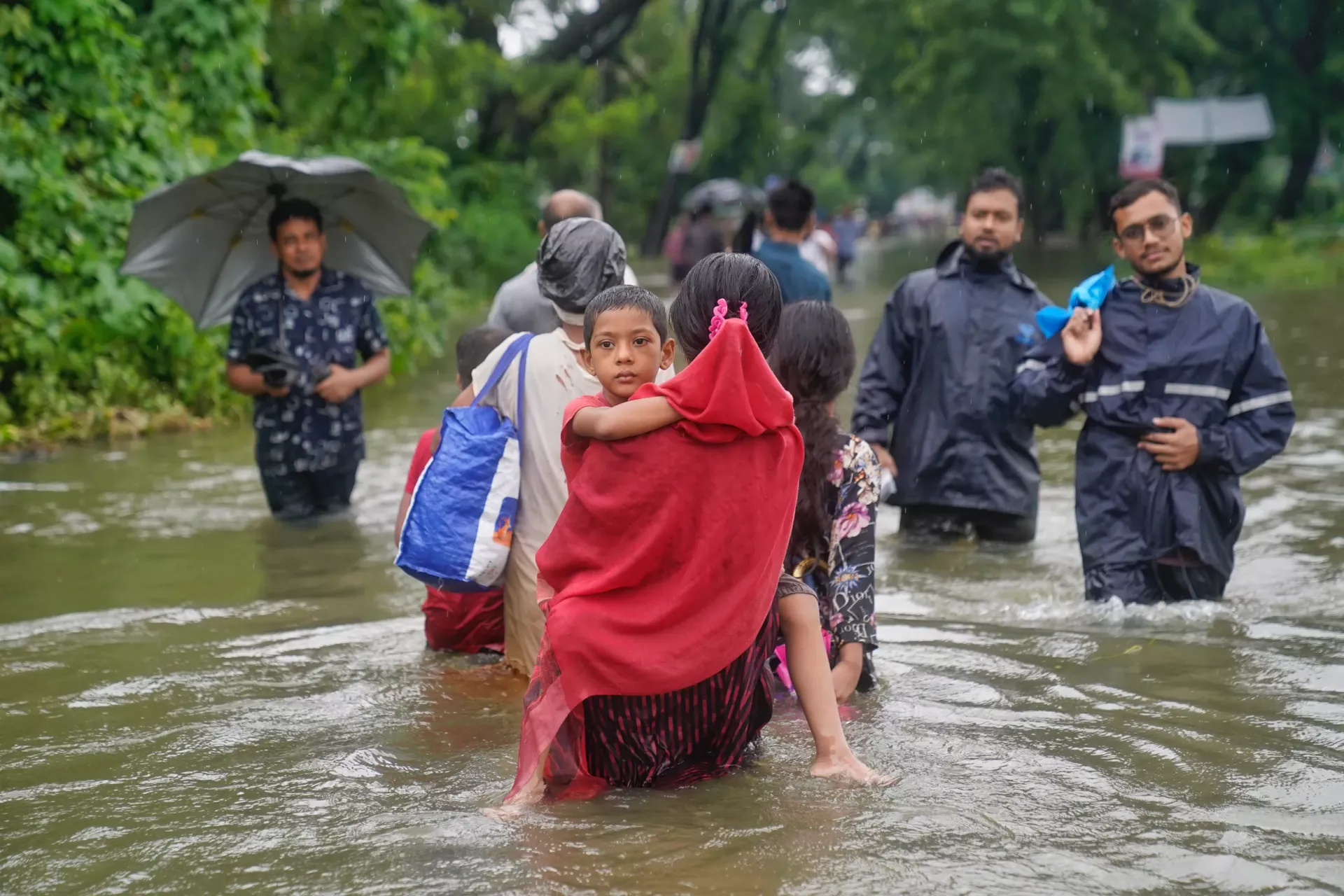
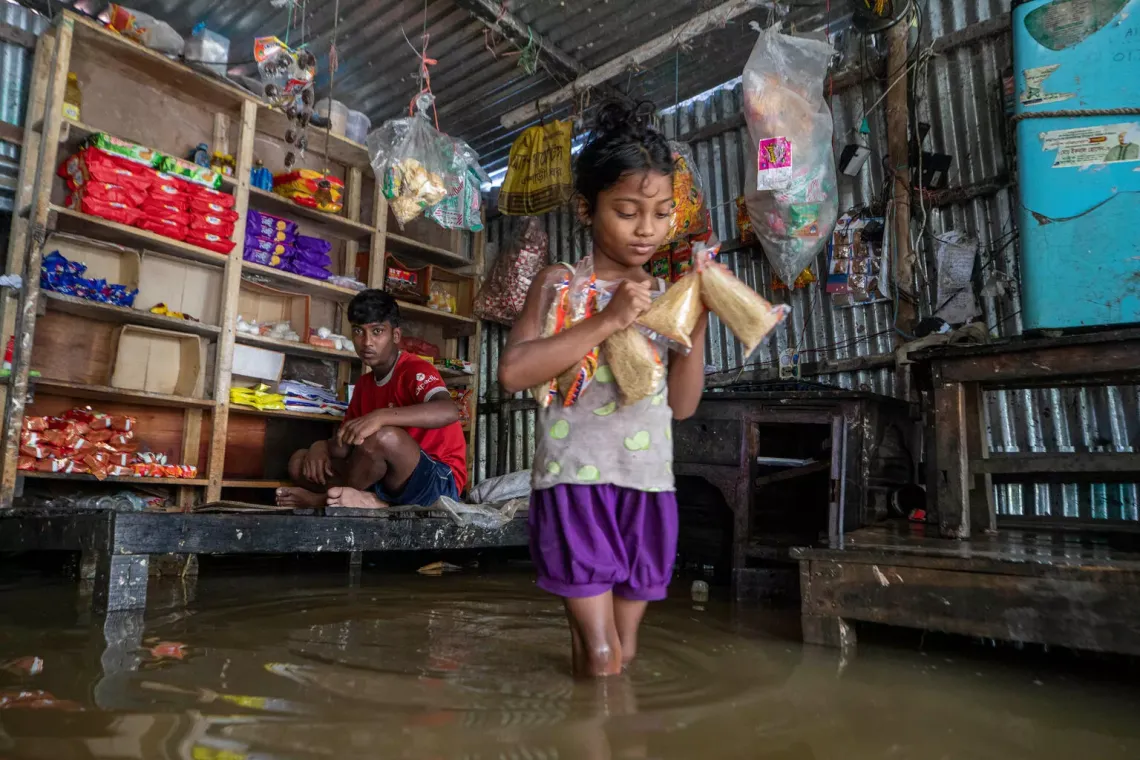
The 659 million young people aged 18 and under in South Asia inherited a climate crisis not of their making. Practically, this means that each one of them is affected by at least one climate-related hazard, shock, or stress. This includes heatwaves that cause schools to close, droughts that limit food supplies, and unseasonal floods that claim lives, wash away livelihoods and plunge families into poverty.
As alarming as it is unjust, it should be a regional emergency.
And, yet, to date, children have not only been absent from most political conversations about how to combat the climate crisis, in too many countries across the region, they are not even mentioned in national climate plans. This matters because if their needs are not clearly articulated, measures to address those needs will not be costed, actioned, or implemented.
We know that compared to adults, children are more vulnerable to the effects of climate change because their bodies, organs, immune systems, cognitive and other critical functions are developing.
For example, young children cannot sweat as much as adults so in a heatwave, they cannot regulate their body temperature. This can lead to dehydration and organ failure, high blood pressure and seizures.
Children also breathe faster than adults, inhaling more air – and, therefore, more pollutants.
Harm can begin even in the womb, leading to pregnancy-related complications, preterm birth, low birthweight, and stillbirth.
In short, the magnitude of the impact of climate change on children’s health in South Asia should ring alarm bells from Karachi and Kabul to Kathmandu and Kolkata.
The Convention on the Rights of the Child?
In 1989, governments made a promise to children around the world to protect their rights. They adopted the Convention on the Rights of the Child – the CRC – which enshrined, for the first time in international law, the recognition that children have the same human rights as adults, as well as extra rights so that they learn, grow, play, develop and reach their full potential.
As a result, more boys and girls than ever before have access to health, education, protection, and opportunities to participate.
Yet, today, a seemingly endless conveyer belt of crises threatens to roll back these hard-won gains. The climate crisis is at the forefront, jeopardising children’s rights to a clean, healthy and sustainable environment. There is no doubt that the climate crisis is a child rights crisis.
What are the Nationally Determined Contributions; why are they important?
In recognition of the urgent action required to limit the impact of climate change, including on children and young people, in 2015, 196 countries signed the Paris Agreement at the UN Climate Change Conference. Each country pledged concrete actions to limit the global temperature rise to 1.5 degrees Celsius and protect people from global warming.
Each country is required by the United Nations Framework Convention on Climate Change (UNCCC) to build national climate action plans; these include Nationally Determined Contributions (NDCs) which lay out nations’ commitments to reduce greenhouse gas emissions by 43% by 2030 and build communities’ resilience to climate change. These commitments are revised every five years. The next revision is scheduled for early 2025, and presents a crucial opportunity to articulate, cost, action and implement policies that will address the needs of children.
Nationally Determined Contributions are important because:
- Advocacy – they illustrate a country's strengths and areas for development which helps advocates to influence decision-makers and push for improved policies.
- Accountability – they require countries to commit to targets and report on progress publicly which makes it easier to hold leaders to account.
- Collaboration - they encourage collaboration between countries to combat climate change.
- Climate financing: they reaffirm the commitment of developed countries to provide financial assistance to vulnerable countries affected by the climate crisis.
- Technology and knowledge transfer – they support innovative practices and knowledge-sharing in technology to combat the climate crisis.
- Sustainable development – as the global community works towards achieving the 2030 Sustainable Development Goals, the NDCs promote sustainable energy, cleaner air, improved food security, sustainable cities, and build resilience in the most vulnerable communities.

What are the gaps in South Asia’s current NDCs?
Currently, less than half of the world’s NDCs mention children, and only 3 per cent of governments engaged children in developing their NDCs. As a result, only 2.4 per cent of funding for climate adaptation goes to programmes for children.
This is also reflected in South Asia’s NDCs. As yet, not all countries have made child-sensitive climate policies a priority. Nepal leads the way with the most commitment to child-focused climate action, with India and Pakistan following suit. In previous versions, the Maldives showed minimal focus on children’s needs, but the government is now working with UNICEF to engage young people in consultations to make this iteration of the NDCs more child and youth-friendly. Meanwhile, Bangladesh shows minimal attention to children’s needs, while Afghanistan’s data remains unavailable—highlighting just how much remains to be done to include children’s voices in climate policies across the region.
The clock is ticking. As South Asian governments revise their NDCs, children and young people must be at the heart of the process.

How can governments ensure that children and young people are at the heart of national climate policies?
- Foster child-centric policies and programmes – that specifically address the needs of children and young people.
- Invite children and young people to the decision-making table - Ensure that all policies and programs integrate the perspectives of children and young people, particularly those from marginalized groups.
- Boost investments in climate programming: Ensure additional resources are allocated to implement tailored programmes designed to meet the needs of children and young people.
- Prioritize the needs of children and young people who are most at risk: Give special consideration to the unique risks faced by girls, children with disabilities, children from poor households and displaced children.
- Collect and analyse data – Introduce strong measures to gather and analyse data on the impact of climate change on children and young people and use that analysis to shape policies.
- Improve access to essential services - Improve access to life-saving healthcare, sanitation, water supply, and education for children and young people. This will improve their resilience against climate shocks and stresses.
- Make it child-friendly - Create warning systems and disaster management plans suitable for children and easily understood by parents, caregivers, children, and young people so that in the event of a crisis, everyone knows what to do and where to go to be safe.

What can YOU do to get the rights of children and young people in climate policies?
- Speak-up and share information with your community to increase awareness and support for urgent climate action. This could include decreasing reliance on single-use plastic, planting trees, community clean-ups, encouraging solar power and taking measures to conserve water.
- Speak with your local elected representatives to incorporate child-specific language into local policies, plans, and laws, and hold them to account.
Advocate for the rights of children and young people by forming a local action group, such as the Maldives’ Climate Guardians, and make sure their voices are amplified.