When Laughter Returns: Helping Children Heal After the Earthquake in Myanmar
A year after a devastating 7.7-magnitude earthquake, child-friendly spaces are providing displaced children with support they need to recover and dream again

- English
- မြန်မာ
When the 7.7-magnitude earthquake struck across central Myanmar on 28 March 2025, Tun Myar thought the monastery where she was sheltering would collapse.
The 16-year-old, already displaced from Loikaw in Kayah State due to conflict, had been living with her aunt and younger sister beneath a Buddhist monastery in a community on Inle Lake in Nyaungshwe Township, Shan State.
That afternoon, the wooden structure began to sway violently as the ground shook beneath it.
Terrified, she ran outside.
Moments later, she fainted from the shock.
“When I woke up, I was shaking and crying,” Tun Myar recalls quietly. “I thought everything was going to fall on us.” In the days that followed, fear lingered heavily over her and the community.

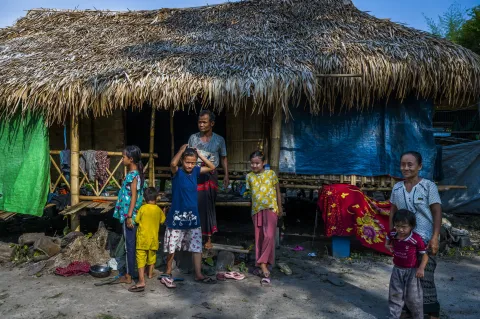
Families slept outdoors or under makeshift tarpaulin sheets, afraid the monastery might collapse in another aftershock. Nights were the hardest as every small vibration — a passing boat, a creaking wooden plank — sent children rushing outside in panic.
“My depression got worse,” she recalls. “I started to lose hope.”
For Tun Myar, the earthquake reopened wounds that had never fully healed. She lost her mother at the age of 10 and grew up separated from her father. Years of displacement and uncertainty had already taken a toll on her emotional wellbeing.
“Sometimes I felt like everything in my life was falling apart,” she says quietly. The earthquake deepened that trauma, causing her to withdraw from others, avoid conversations and spend long hours sitting alone. Sleep became difficult and at times she felt overwhelmed by sadness and fear. “I didn’t want to talk to anyone,” she says.

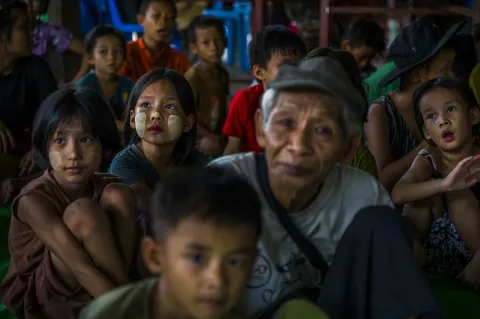
Tun Myar was not alone. Across Nyaungshwe Township, many children who had already endured conflict and displacement were retraumatized by the earthquake. Homes were damaged, shelters became unsafe, and families struggled to rebuild their routines – amid repeated aftershocks.
Parents did what they could to comfort their children. Some gathered children together for prayers inside monasteries. Others tried to distract them with games or stories. But anxiety lingered, with many children experiencing nightmares, sudden fear and emotional withdrawal long after the tremors stopped. Caregivers worried about their children — but often felt unsure how to help them cope.

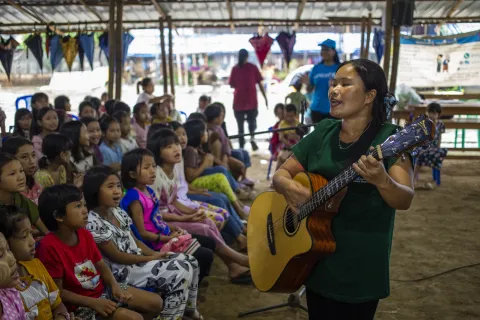
Hope began to return when UNICEF and its local partners reached the community as part of the emergency response, with support from its partners. The integrated response focused on helping children and families cope with the emotional shock of the disaster through a range of child protection services, including psychosocial support, case management, parenting sessions and safe spaces where children could begin to feel like children again. At a child-friendly activity session in a community in Nyaungshwe, children draw, dance, sing and play games led by trained facilitators. Laughter fills the room — a sound rarely heard in the days immediately following the earthquake.
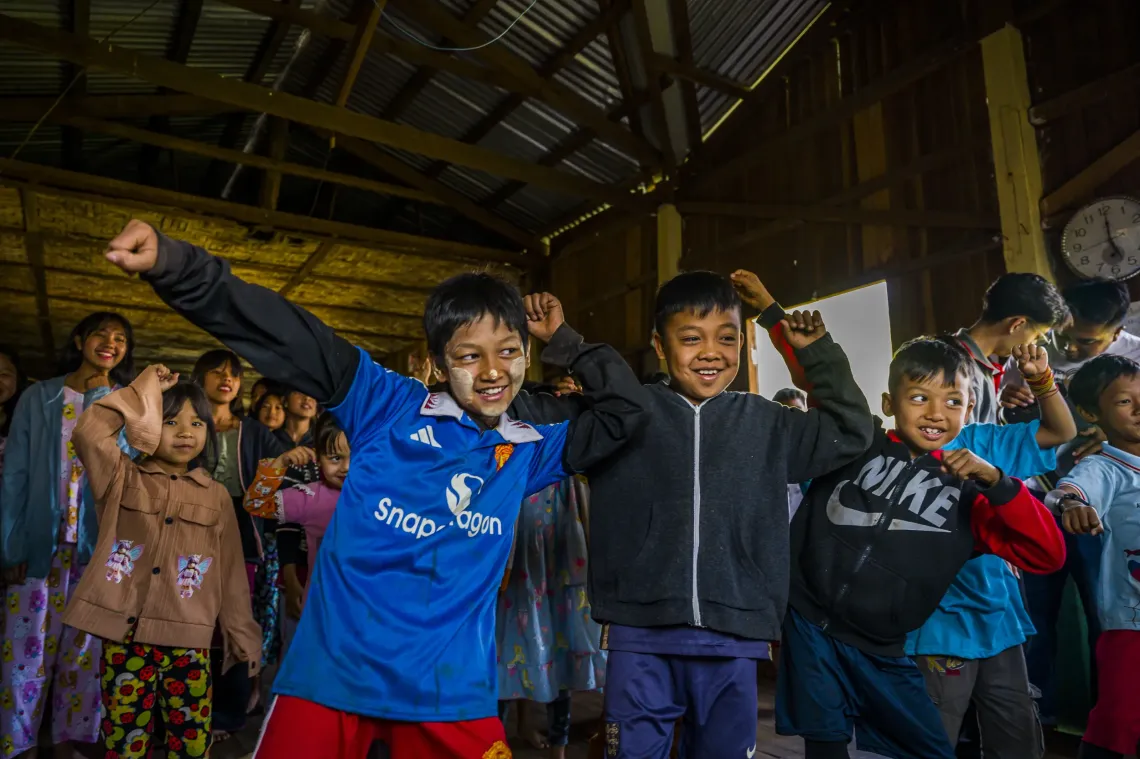
For Tun Myar, these sessions marked a turning point. “Before, I was scared to talk to people,” she says. “Now I can stand in front of others and lead. I want to finish school and become a doctor.” The change is visible. Once withdrawn and fearful, Tun Myar now leads group activities, encouraging younger children to participate.
For 13-year-old Pan Lay Pyay, the activities offer a moment of relief from the uncertainty her family still faces. She lives with her mother beneath tarpaulin sheets under the wooden floor of a monastery in the same village. When the earthquake further damaged their shelter, the small space they relied on became even more fragile.

Since then, her mother has struggled to find daily-wage work while worrying about school expenses and how to provide for her daughter. “It is very hard for us,” says Daw Hla Hla Aye, Pan’s mother. “But when I see my daughter smiling during these activities, I feel hope that she can continue her education.” Beyond recreational activities, the programme provides case management services, mental health and psychosocial support, parenting sessions and awareness-raising on child protection risks.

One year after the earthquake, UNICEF’s child protection response continues to support children and families across Southern Shan as they rebuild their lives after a year marked by both earthquakes and floods. This life-changing work, including the creation of safe spaces and dedicated psychosocial support, is made possible by the generous contributions of key partners. Beyond immediate relief, the support has helped children regain confidence, reconnect with their peers, and begin to heal from the emotional shock of the disaster.

Inside a child-friendly space in her community, younger children gather in a circle, clapping and cheering during a group activity. Standing at the front, helping guide the game, is Tun Myar.
“Now I can stand and lead,” she says with a smile. The tremors that once filled children with fear have faded. But for children like Tun Myar, the journey toward healing continues — supported by safe spaces, caring facilitators and the reassurance that they are not alone.