What we do
UNICEF works to promote and protect children’s rights in 190 countries, including Myanmar
- English
- မြန်မာ
How is UNICEF responding to the crisis in Myanmar?
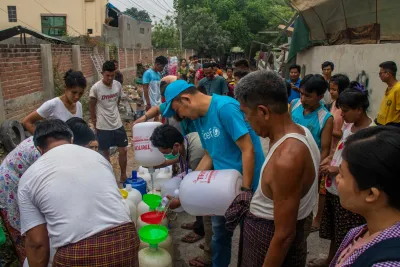
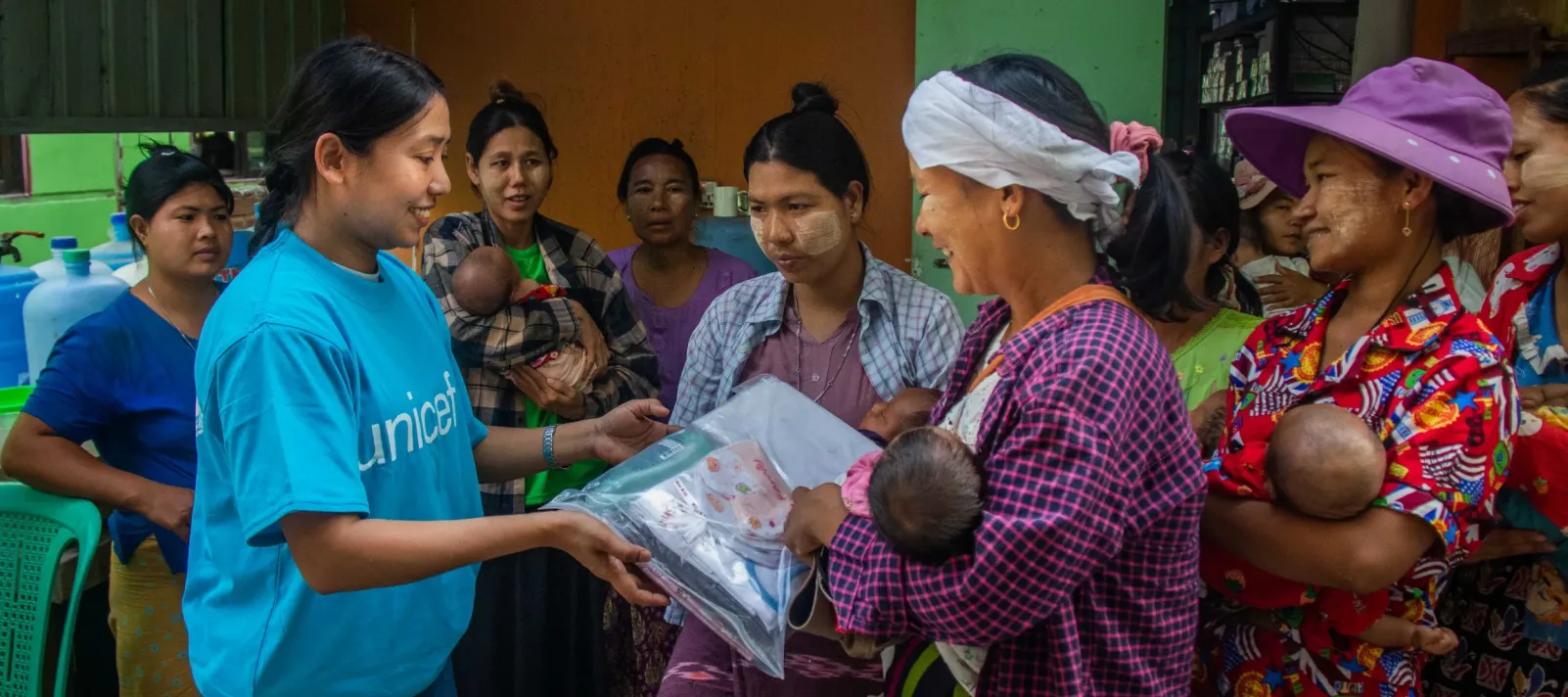
Since the onset of the Myanmar crisis, UNICEF has been delivering life-saving humanitarian assistance and critical services to the most affected and vulnerable children and families through our extensive field presence and diverse network of partners, including national and international NGOs, civil society organizations, and community-based organizations.
Following recurrent natural disasters and the intensification of conflict and insecurity across the country, which has triggered record levels of displacement and deepening needs, especially for children, UNICEF is scaling up the delivery of life-saving assistance and critical services to children and families, including in hard-to-reach areas where humanitarian access remains challenging.
Our focus is on reaching the most vulnerable children, including the poorest, children with disabilities, those living in camps and other displacement sites, and those in remote or hard-to-reach areas.\
Our commitment to staying and delivering for the children most affected by this crisis is unwavering.
In 2025, despite the challenging environment and amid funding constraints, UNICEF and its partners reached 4 million people, including 3.2 million children with vital health, nutrition, water, sanitation and hygiene promotion, child protection, and education assistance and services across Myanmar.
That means nearly 2.5 million children received vitamin A supplementation, over 1.2 million people were reached with safe water, 747,375 children accessed learning, and 23,025 children with disabilities were supported with specialized services – amongst many other services.
In 2026, UNICEF aims to reach 3.3 million people, including 2.6 million children, with life-saving assistance and critical services.