After years away from home, children from conflict-affected Myanmar continue to dream
UNICEF and partner step up child protection response in southeast Myanmar with support from Myanmar Humanitarian Funding
- English
- မြန်မာ
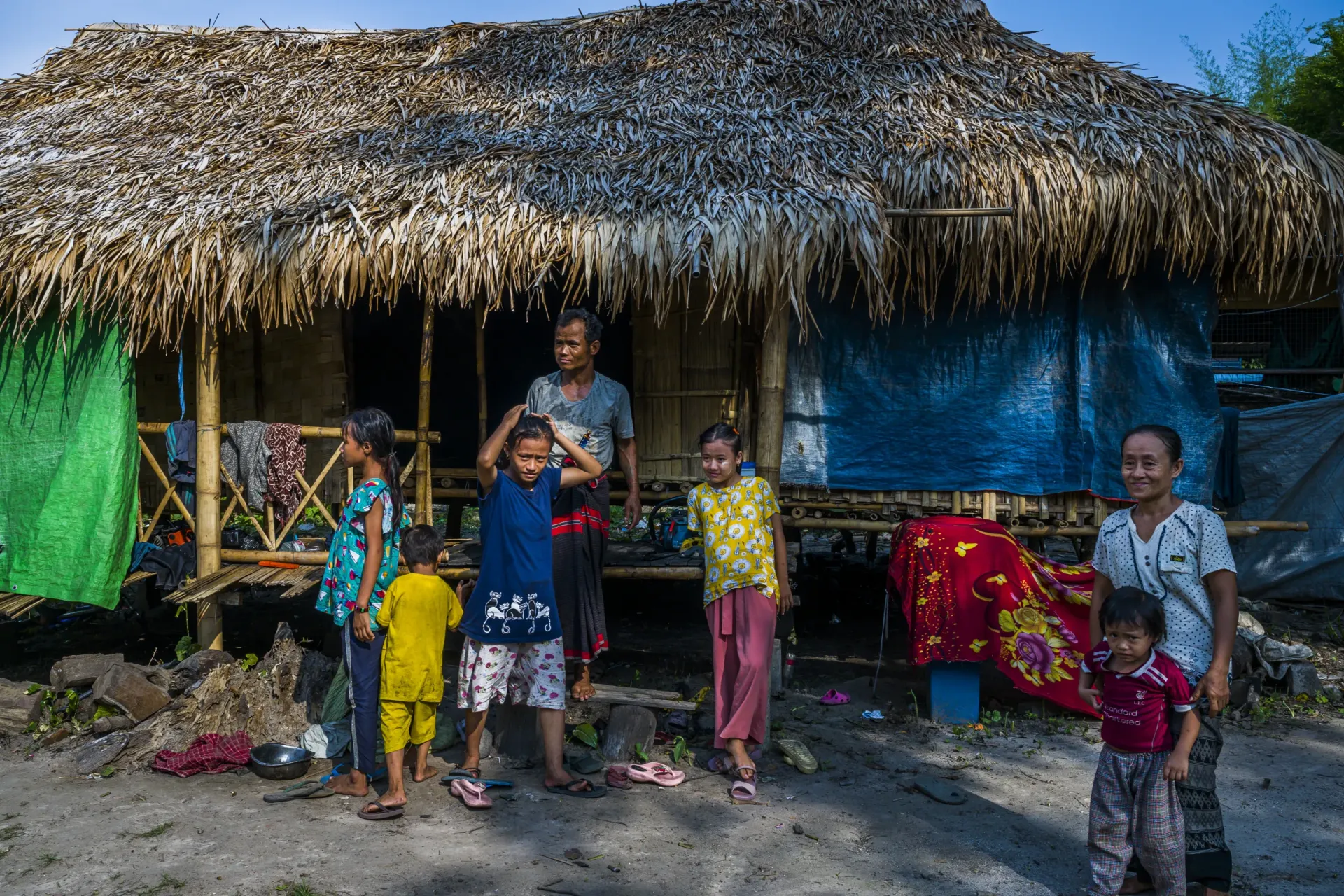
Under the scorching summer heat in southeast Myanmar, interrupted only by sudden pre-monsoon showers, six children gather inside a small bamboo-walled hut with a thatched roof in a small village.
For nearly four years, this temporary shelter has been home to the family of Saw Moo Sey and Naw Say Wah1, who fled conflict in 2022 and have yet to return home.
Although the bamboo walls provide protection from the elements, they cannot erase the memories of the day their lives changed forever.
"It was July 2022. The war came to our village," recalls Saw Moo Sey, 39. "There was a lot of gunfire and mortar shell continuously."
Saw Moo Sey, a father of six, had gone to check on an uncle who lived alone in a neighbouring village. On his way back, he encountered armed men gathering civilians along the road.
"I was really scared and ran for my life," he says. "The soldiers fired at me as I ran, but they missed. I was worried about my family, so I knew we could no longer live in the village."
Back at home, there was no time to prepare.
"As soon as my husband got back home, we left our house immediately," says Naw Say Wah, 46. "Most of the other villagers were leaving too. We could not bring anything except the clothes we wore."
Together with their children and neighbours, they walked for hours through rain-soaked forests and muddy roads in search of safety.
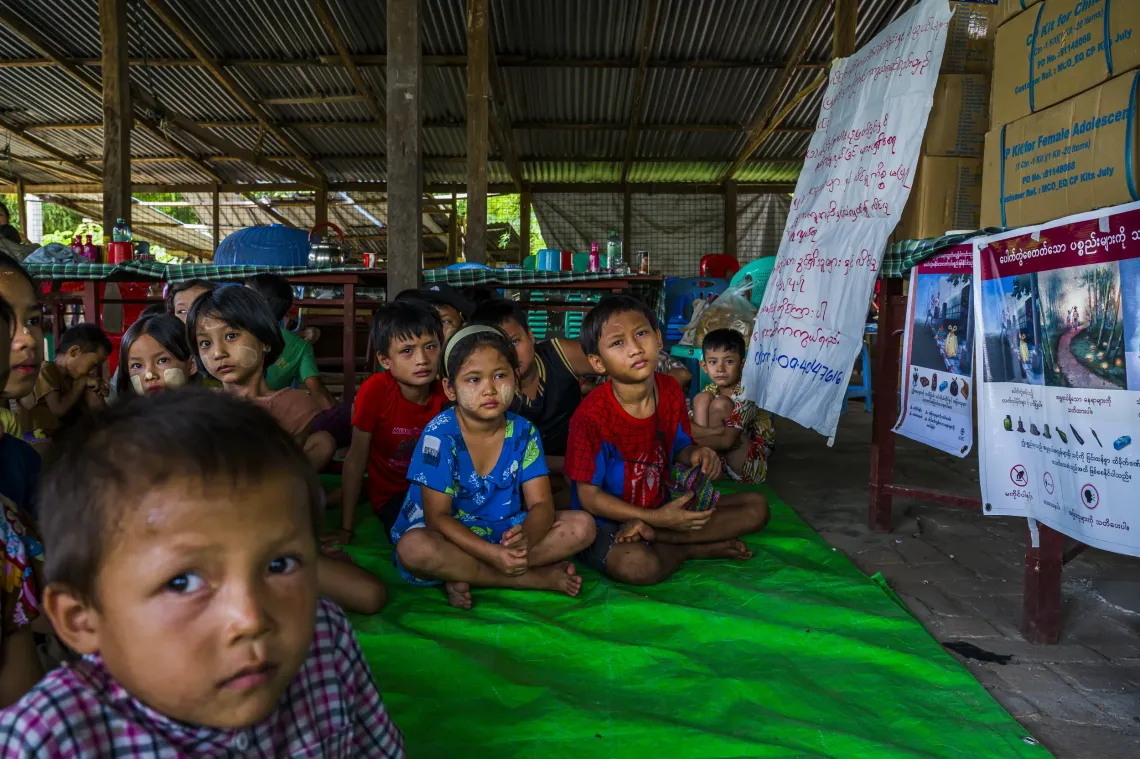
Their daughter, 15-year-old Naw Phaw Eh Mu, still remembers the fear.
"I ran with my family and friends through the jungles away from the sound of gunfire," she says. "I was so scared."
The family first found refuge at a church. Three months later, conflict spread there too, forcing them to flee again.
Life in displacement has been difficult. The family's home was destroyed and looted, while the tools that once helped Saw Moo Sey earn a living were left behind. Work is irregular, income is scarce and the children were unable to attend school for three years after being displaced.
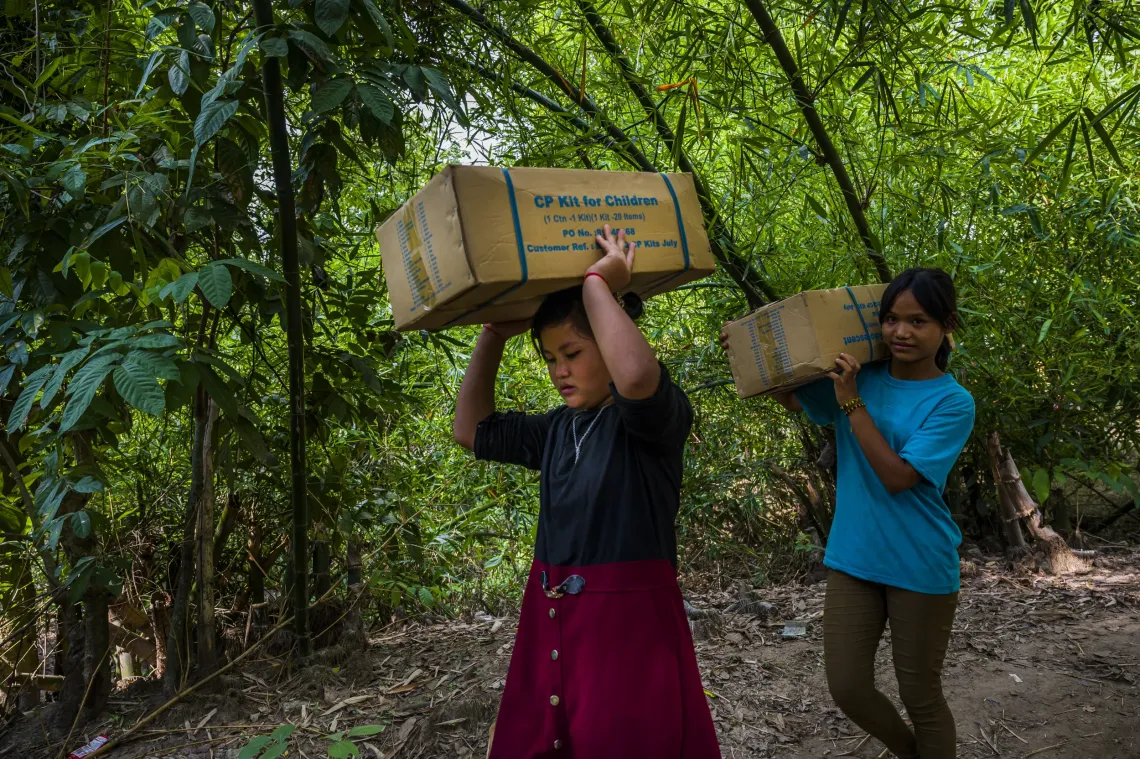
"We wish to go back to our village, but it is still not safe," says Naw Say Wah. "There are landmines and the conflict is still ongoing. I am worried for my children's safety. I don't want to lose them."
Their story reflects the reality facing many displaced families across southeast Myanmar.
Across monasteries, churches and temporary settlements on the outskirts of town, families continue to live with uncertainty as conflict prevents them from returning home. Some speak of aircraft still flying above their villages. Others fear the landmines that have injured or killed villagers attempting to return to farm their land.
"I am told there are still planes and helicopters sometimes flying above our village," says John Ko, who has been displaced with his family for almost four years. "It means it's not safe to go home yet."
At a Buddhist monastery nearby, 38-year-old Ma Tin Mya lives with her two daughters while her husband works in Thailand as a migrant worker.
The family fled their village three years ago after violence reached the area.
Although Ma Tin Mya occasionally returns to check on the family's home and farmland, she says the risks remain high.
“Last year, there was an airstrike near our village,” she says, speaking softly, almost in a whisper. “Three villagers were killed near the creek. Two of them were women whom I knew. Another bomb landed near the school."
Like many displaced families, separation has become part of daily life. Her husband works abroad to support the family, while she struggles to provide for her daughters by selling traditional desserts.
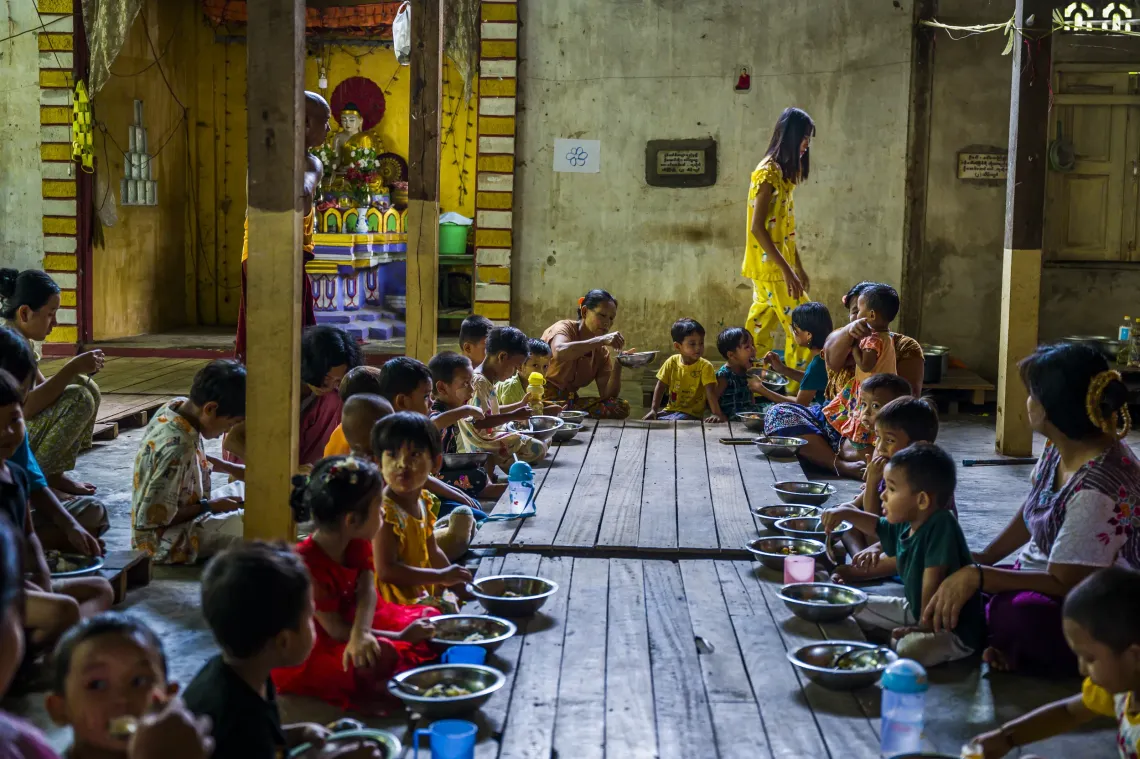
"We have no man in our household currently," she says. "I am worried about my daughters' safety, especially at night."
Displacement has left many children carrying burdens far beyond their years.
Eleven-year-old Aung Chan Myae and his sister Aye Chan Myae now live with their grandparents at a Buddhist monastery after both of their parents were killed when a mortar struck their home during a brief return to their village.
Yet despite the immense loss, the siblings still reach for the simple comfort of childhood.
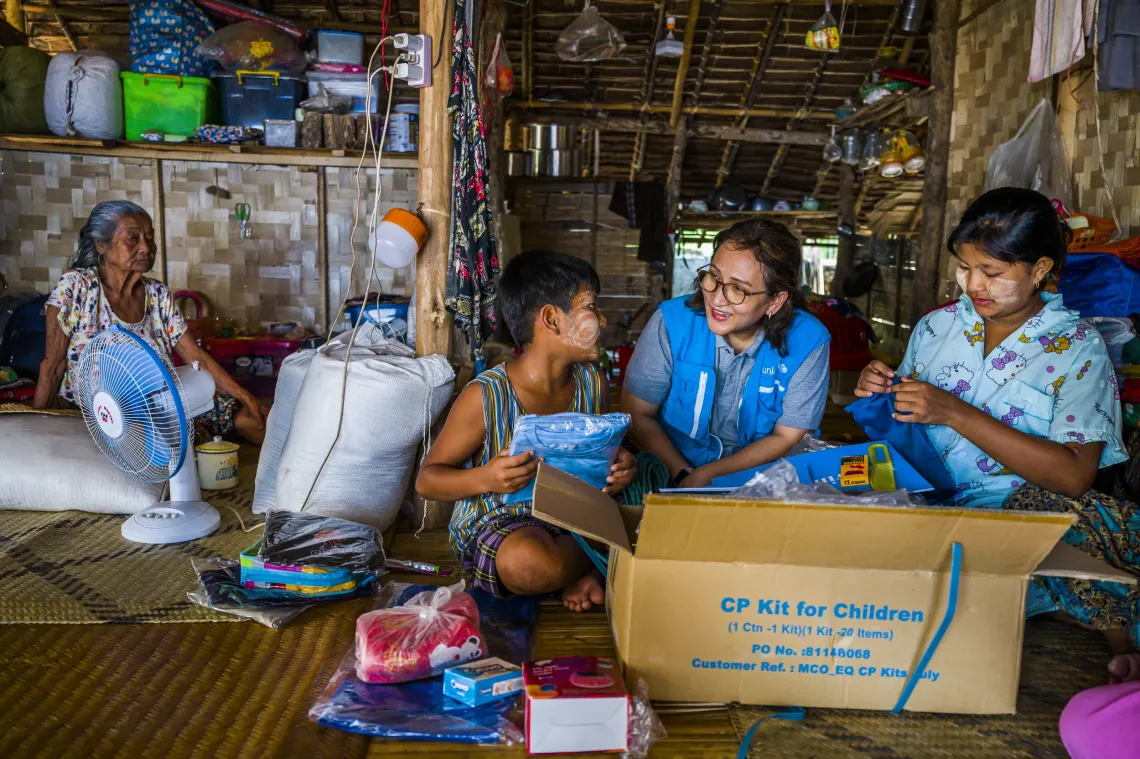
"Among the items from the kit, I like most the trousers with the elephant picture because I love animals, especially elephants," says Aung Chan Myae.
"I love drawing," adds his sister. "The drawing book and colouring set are my favourite items."
To help displaced children and families cope with these challenges, UNICEF and its local partner are providing child protection support across displacement sites in southeast Myanmar with funding from the Myanmar Humanitarian Fund.
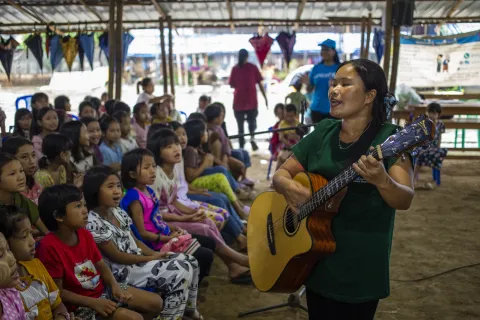
In the first round of distributions, 402 child protection kits were provided to 754 children across eight displacement sites, while 441 parents and caregivers participated in awareness sessions covering child protection issues; mental health, psychological first aid and psychosocial support; Explosive Ordnance Risk Education (EORE) and Protection from Sexual Exploitation and Abuse (PSEA).
The child protection kits contain age- and gender-specific items including clothing, slippers, hygiene supplies, toys, drawing materials, sleeping mats, raincoats, solar lamps and menstrual hygiene products.
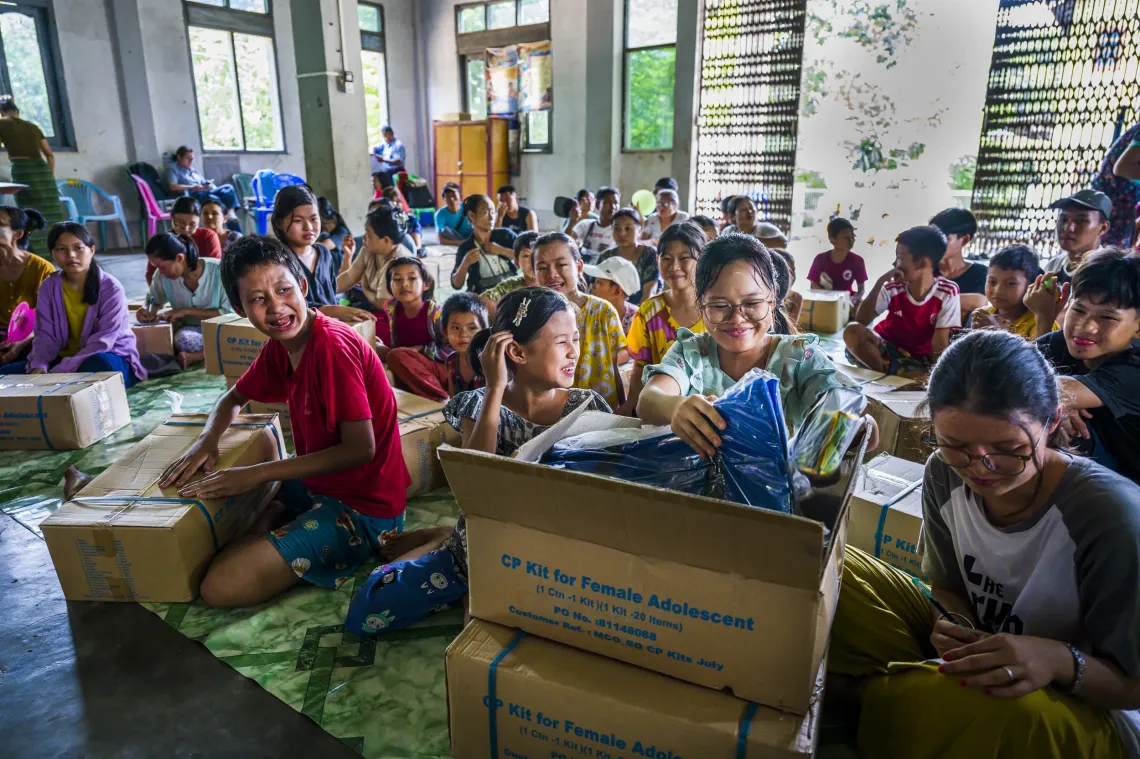
For families facing rising prices and limited income opportunities, the support provides practical assistance and reassurance.
"With little to no income and increasing prices of goods, these items are very impactful for our daily life," says Naw Say Wah. "We have been sleeping on the bamboo floor with a blanket, but now we have mats from the kit. My children will sleep better."
For her daughter, Naw Phaw Eh Mu, one item stands out.
"These menstrual pads are very expensive now and we cannot afford them," she says. "I am so thankful they are included in the kit."
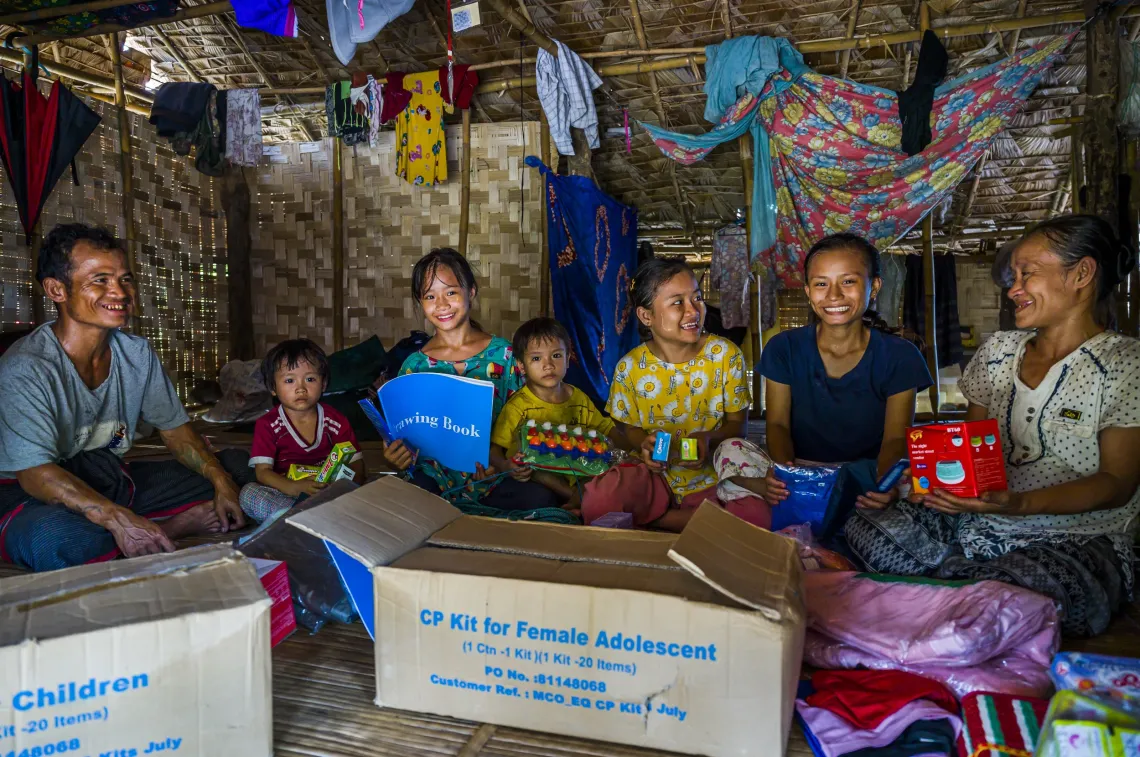
At another Buddhist monastery, Ma Tin Mya says the portable solar lamp included in the kit helps her feel more secure.
"It provides light during the dark nights and gives some sense of reassurance for my daughters' safety," she says.
The awareness sessions have also helped families better protect their children.
"I learned about the dangers of landmines during the EORE session," says Ma Tin Mya. "I used to be careless about it, but now I realize I must be very cautious."
For another displaced mother, Naw Lar Myar, the sessions offered an important reminder.
"I learned that it is important to listen to what my children have to say," she says. "Now I understand that listening helps me build a better relationship with my children."
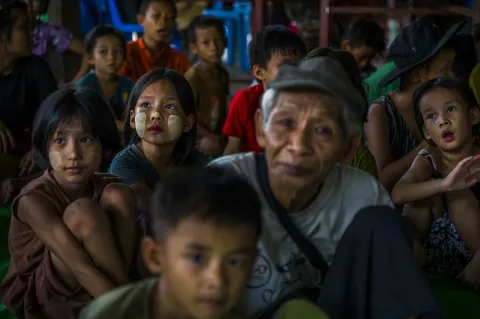
Years after fleeing their homes, many displaced children still carry memories of conflict. Yet they continue to learn, play and dream about the future.
Naw Phaw Eh Mu misses her village, her friends and the days she spent fishing with her family in the creek.
"I wish to study abroad one day and become a medical doctor so I can provide healthcare for my people back home," she says.
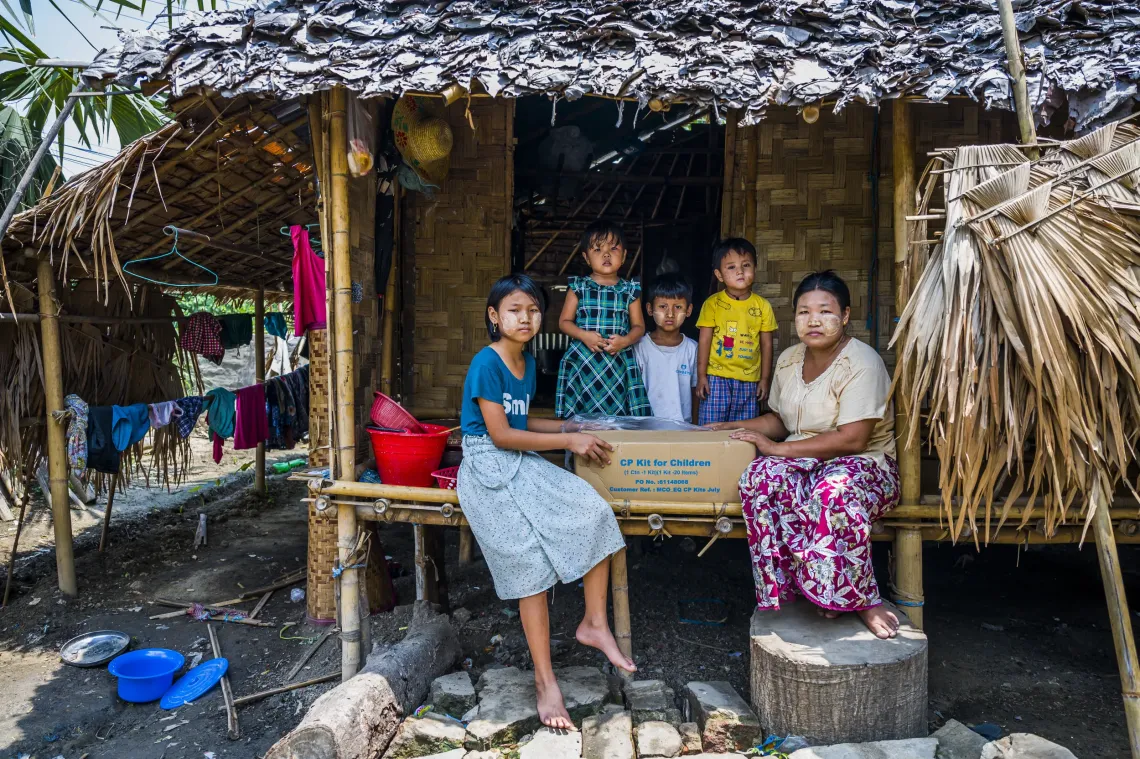
At the Buddhist monastery, 11-year-old Thinzar Aung completes her homework on top of a plastic clothes container because her family cannot afford a study desk.
She loves drawing and often thinks about the friends she left behind.
"Some of my friends are back in the village," she says. "I miss them a lot and I worry about them."
When asked about her hopes for the future, her answer is simple.
"I wish we can go home soon."
For families living in temporary shelters across southeast Myanmar, the future remains uncertain. But amid displacement, hardship and separation, children continue to hold on to their dreams — and through those dreams, hope endures.