Ready-to-use therapeutic food (RUTF)
The nutrient-dense paste that saves the lives of severely malnourished children.
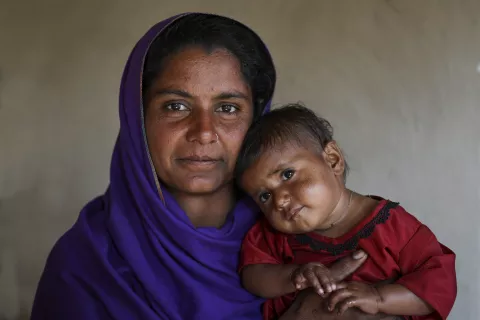
More than 12 million children under five suffer from severe acute malnutrition – the deadliest form of malnutrition. It is caused by a lack of nutritious food, often compounded by recurring illnesses such as diarrhoea, malaria, and measles. Severely malnourished children have significantly weakened immune systems, leaving them more vulnerable to common infections and death.
In the 1990s, treatment for severe acute malnutrition was available only in hospitals. The child and their caregiver – usually the mother – had to stay in the hospital for several weeks during the treatment, often far from home. This created major challenges for parents, who had other children to care for, along with household responsibilities and livelihoods to maintain.
Since 2000, UNICEF has been procuring and delivering ready-to-use therapeutic food (RUTF) – a nutrient-dense paste that allows severely malnourished children to be treated at home.
While children with medical complications and poor appetite still require hospital-based care, RUTF has revolutionized the treatment and improved survival for millions of children who are severely and acutely malnourished.
A “wonder food” that saves children’s lives
RUTF is a highly effective treatment for children suffering from severe acute malnutrition: nine out of ten children who receive RUTF recover within just a few weeks.
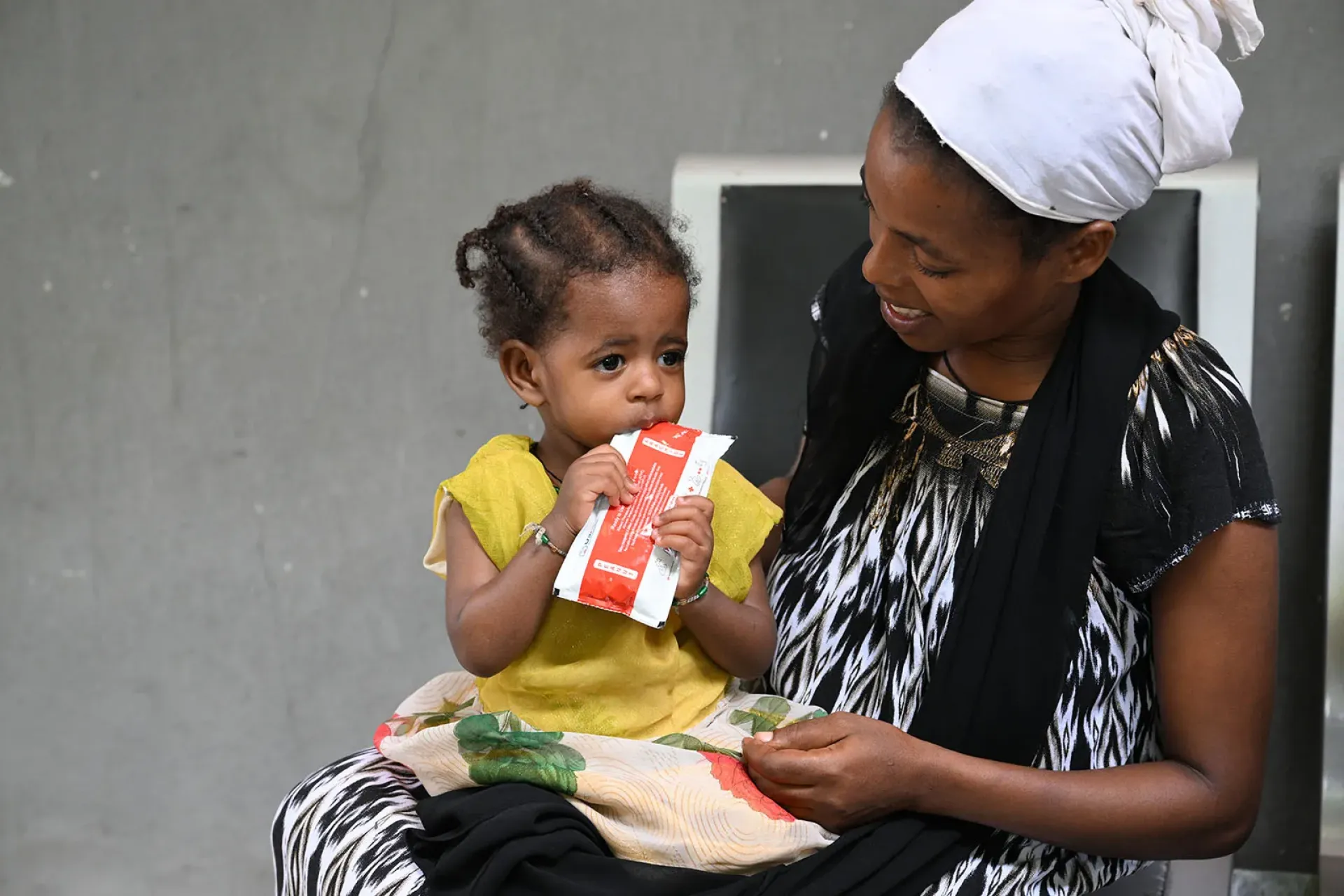
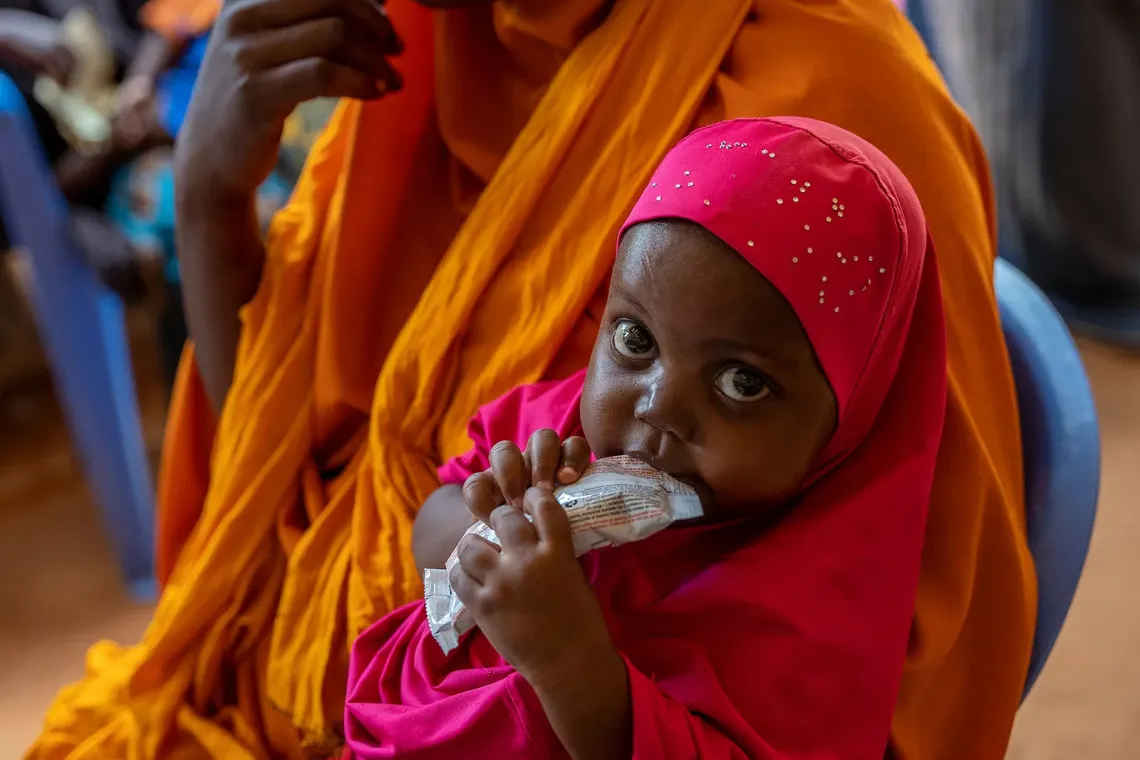
Made from powdered milk, peanut paste, vegetable oils, sugar, and a mix of vitamins and minerals, RUTF has a sweet, nutty taste that children love. The creamy paste is easy to swallow and comes ready to eat in pocket-size sachets; each 92-gram sachet provides 500 calories.
RUTF requires no cooking and no added water, which eliminates the risk of contamination from unsafe water. It also has a shelf life of two years and does not require refrigeration. This means it can be transported long distances and can be stored and distributed in emergency and low-resource settings, such as displacement camps, conflict zones and underserved remote areas.
Depending on a child’s age and weight, treatment typically lasts four to six weeks. Each carton of RUTF contains 150 sachets, which is usually enough for a full course of treatment.
UNICEF supplies nearly 80 per cent of the world’s RUTF. In 2023 and 2024, UNICEF delivered an average of 955 million sachets yearly, enough to treat more than 6 million children suffering from severe acute malnutrition every year.
Local production
Demand for RUTF remains consistently high. UNICEF leads efforts to secure a stable and reliable supply of RUTF, including by fostering local manufacturing. In addition to meeting demand in countries and regions where RUTF is most needed, local production enables faster delivery and reduces risks to the supply pipeline, especially during global supply chain disruptions.
Sourcing RUTF from local suppliers also reduces costs related to import, transport and storage, while at the same time lowering the associated carbon footprint. It generates positive economic impact locally by creating jobs in the RUTF supply chain and by providing opportunities for farmers to supply key ingredients.
In the early 2000s, there were no qualified local manufacturers of RUTF, only a single international supplier. Since then, the landscape has expanded to more than 20 suppliers in 2025, located in Africa, the Americas, Asia and Europe. The majority of these are based in low- and lower-middle income countries, including Burkina Faso, Ethiopia, Haiti, Kenya, and Madagascar where RUTF is both used locally and exported.
Today, more than half of the RUTF UNICEF procures comes from suppliers in low- and lower-middle income countries.
The nutritional composition, safety, and quality of RUTF are specified in the Codex Alimentarius guideline CXG 95-2022, which serves as a global reference for regulating RUTF production around the world. These standards support governments in ensuring RUTF products are safe, effective and nutritionally appropriate, while also facilitating fair international trade. There is flexibility for using alternative ingredients and developing new formulas, as long as they comply with the guideline requirements for nutritional composition, safety and scientific evidence.
Alternative formulations
For three decades, RUTF has relied on milk powder and peanuts as primary ingredients. These are relatively costly ingredients which together account for about two-thirds of RUTF production costs. In addition, local availability of quality milk powder and peanuts fluctuate significantly depending on country and season.
As a result, manufacturers often depend on imports, where transport and duties add more costs, and where long – often transatlantic – distances, border crossings and customs procedures can cause delays and disrupt production.
This is why UNICEF is leading the development of new RUTF formulations that use alternative ingredients, working closely with researchers, manufacturers, donors and other partners. If producers are given diverse ingredient options, they have more flexibility to adapt, and to source ingredients that are both cheaper and locally available. This can bring down the price of RUTF while at the same time enabling financially viable and uninterrupted production in more countries.
Soybeans and chickpeas – which are high in protein and widely grown in Africa and South Asia where RUTF is most needed – have emerged as promising alternatives to peanuts. Testing of these ingredients is already underway. An additional benefit is that soybeans and chickpeas are climate-smart ingredients; when using these, carbon emissions can be reduced by up to 70 per cent, making RUTF production more environmentally sustainable.