Nourishing hope: Shleydine’s journey to better health
Amid the crisis in Haiti, UNICEF’s nutrition supplies bring health to children and hope to families and communities.
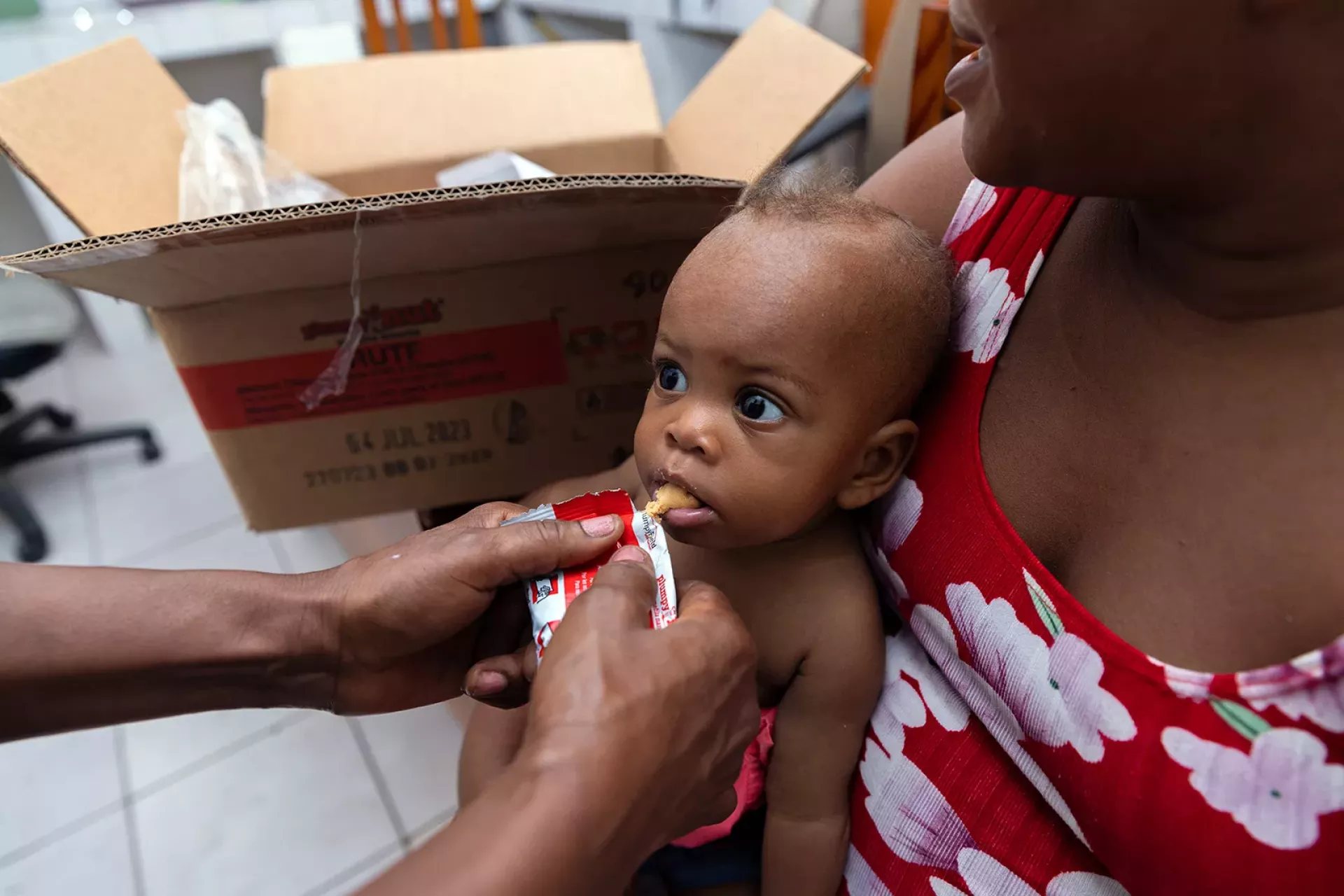
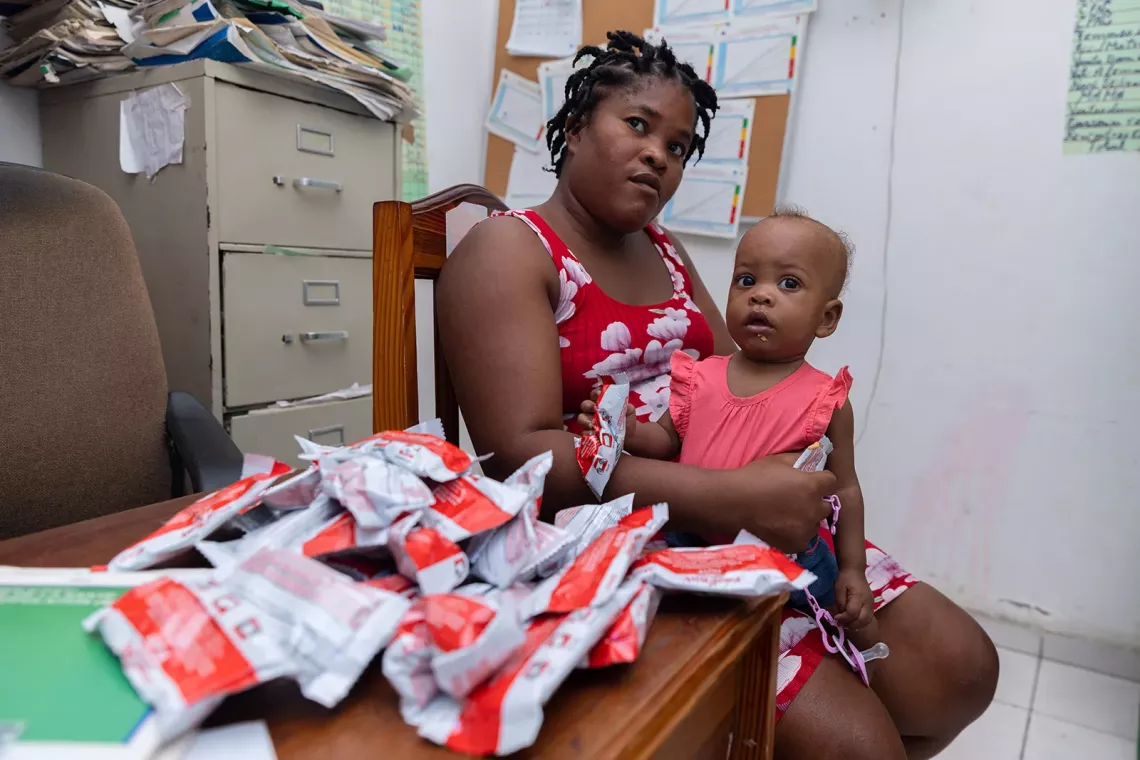
As a single mother from a modest neighbourhood in the city of Gonaïves in Haiti, 30-year-old Nathalie faces overwhelming challenges. Without a stable income, she struggles to put food on the table. "Sometimes, we go days without eating. I do my best, but it’s never enough," she confesses, her voice heavy with sadness.
Amid the country’s crisis, widespread extreme violence, poverty and malnutrition are threatening the lives of children, including Nathalie’s six-month-old daughter Shleydine. Little Shleydine’s health had deteriorated, and she was showing signs of weakness and irritability. She often refused to eat and cried constantly.
"When she was hungry and all I had to offer was my milk, she refused to nurse. I had to let her cry. I felt powerless, broken," Nathalie recalls, tears in her eyes.
A life-changing encounter
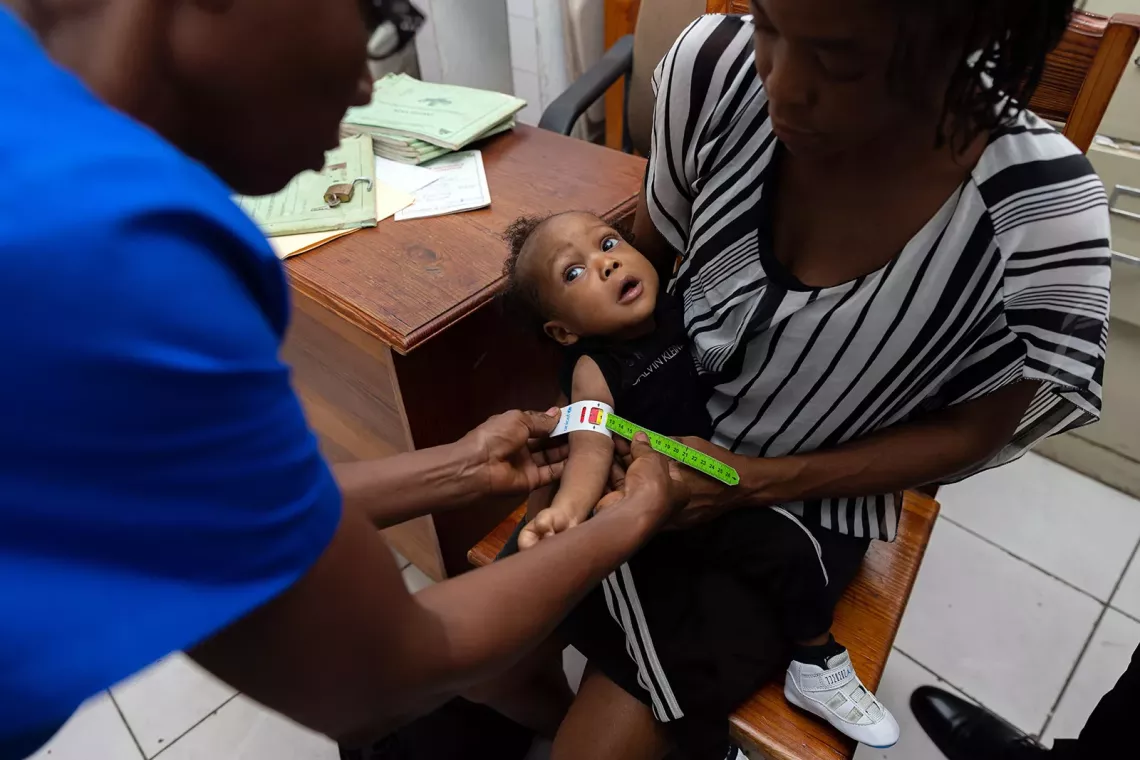
The situation took a dramatic turn when Nathalie visited the K-Soleil health centre for Shleydine to be vaccinated. There, the healthcare staff quickly diagnosed the infant with severe malnutrition. "I didn’t realize how sick she was. I came for a vaccine, and they told me she needed immediate care," Nathalie explains.
With support from UNICEF, the K-Soleil health centre treated Shelydine with nutrition supplies such as ready-to-use therapeutic food and vitamins, and also with essential medicines.
Within just a few weeks Shleydine had a new lease on life as Nathalie noticed a remarkable transformation. "She’s smiling again. That’s all that matters," she says." Now, she eats well and even laughs sometimes," Nathalie shares, her joy and relief evident.
A shared struggle for many
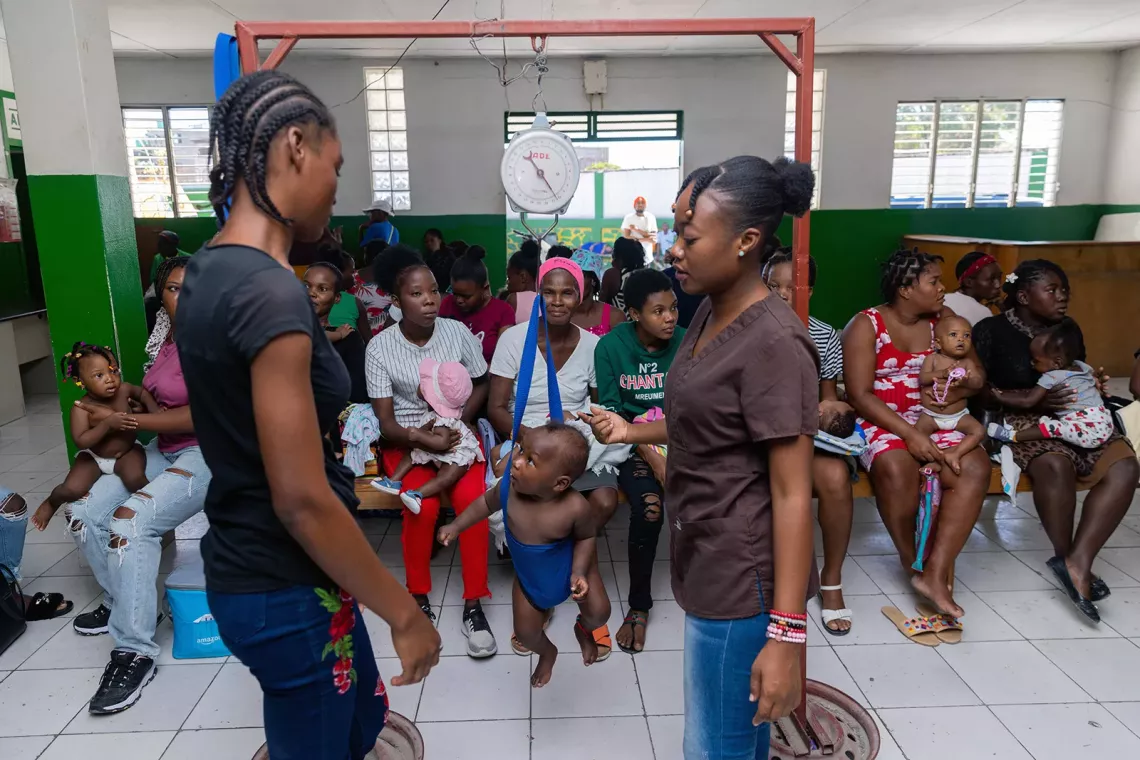
Shleydine’s story is not unique. At the K-Soleil health centre, thousands of families have been supported to overcome malnutrition. Stacy Gabriel, another mother, shares her daughter’s battle. "I knew my nine-month-old baby was malnourished, but I had lost everything during my pregnancy, including my business," she explains.
After learning about the K-Soileil health centre from a neighbour, Stacy was able to enroll her daughter in a malnutrition treatment programme. With relief and hope Stacy says "the nurse assured me that with ready-to-use therapeutic food, my daughter would improve in four to six weeks. I no longer have to face this alone."
A healthier future for children and families in Gonaïves
The centre has been a lifeline for thousands of families like Nathalie and Stacy’s. Today, both women have a renewed sense of hope and optimism. While challenges remain, Nathalie believes she is now better equipped to provide a safer future for her child.
They gave me more than care; they gave me the chance to watch my daughter grow up healthy," she says, her voice filled with emotion.
Based on a story originally published on UNICEF Haiti.