Japan and UNICEF sign an agreement to strengthen response of migrant children
Guatemala, 31 January 2025
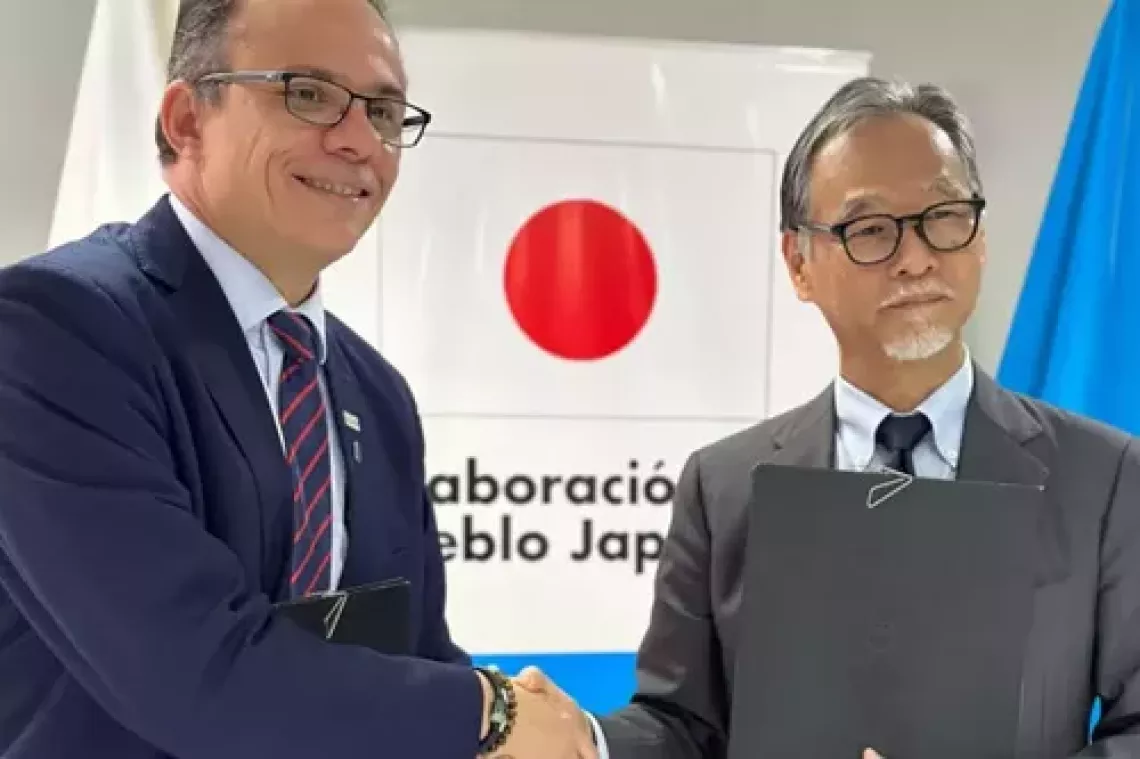
The Government of Japan and UNICEF sign a collaboration agreement to strengthen care and response of migrant children
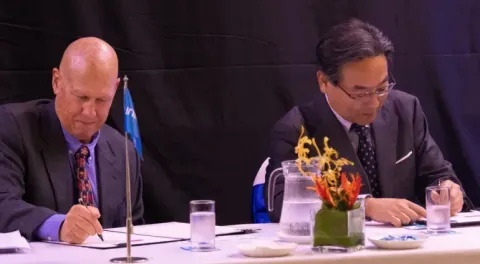
Guatemala, January 31, 2025 – The Government of Japan and the United Nations Children’s Fund (UNICEF) signed a collaboration agreement today to invest in the protection of vulnerable children, adolescents, and women within the context of human mobility. The agreement includes a contribution of $3.3 million from the Government of Japan to Guatemala through UNICEF for a two-year period.
The event was presided over by the Vice President of the Republic, Karin Herrera, as an honorary witness, along with the esteemed Ambassador of Japan to Guatemala, Mr. KUWANA Ryosuke, and Manuel Rodríguez Pumarol, UNICEF Representative. This agreement holds special significance as one of the first initiatives to mark the 90th anniversary of diplomatic relations between the Government of Japan and the Government of Guatemala.
As Guatemala serves as a country of origin, transit, return, and destination for people in situations of human mobility—including children, adolescents, and their families—and in the face of increasing migration flows, it is increasingly important to strengthen the provision of services. This is especially crucial for children and adolescents, whether accompanied or unaccompanied, as well as for family groups, both returning and in transit.
From January to December 2024, more than 76,000 Guatemalans returned to the country, including over 8,400 children. Of these, 40% were girls and adolescent women, and 51% self-identified as belonging to a Maya community.
This reality underscores the importance of collaboration and coordination across different entities and sectors to enhance humanitarian interventions with a comprehensive and human rights-centered approach.
“We are very pleased to collaborate once again with the Government of Guatemala through UNICEF, especially on the issue of human mobility, which transcends borders and must be addressed appropriately. Migrating children require special protection to prevent exploitation, violence, and organized crime, while ensuring their rights and access to essential services,” said KUWANA Ryosuke, Ambassador of Japan to Guatemala.
UNICEF’s efforts, in support of national initiatives and with funding from the Government of Japan, will focus on four strategic areas:
- Strengthening government reception centers and shelters with appropriate infrastructure and specialized human resources.
- Improving civil society spaces for the care of children, adolescents, women in vulnerable situations, and their families in transit.
- Expand and strengthen support for family reintegration in the community of origin by improving and equipping the infrastructure of the Presidential Secretariat for Social Welfare (SBS) at the departmental level, hiring psychosocial support teams, and providing mobile units.
- Broaden mechanisms and channels for disseminating information on migration rights, risks of irregular migration, gender-based violence, and the prevention of exploitation and sexual abuse.
These actions will be implemented across nine departments (Guatemala, Quetzaltenango, San Marcos, Huehuetenango, Quiché, Petén, Alta Verapaz, Izabal, and Chiquimula), identified as migration routes, border points, and/or major places of origin for unaccompanied children. The aim is to support family and community reintegration in coordination with the Guatemalan Migration Institute (IGM) and the SBS.
“Violence, poverty, and the effects of climate change are pushing more children and families throughout the region to seek new opportunities every year. This unprecedented migration flow demands a renewed commitment from governments to provide adequate responses in line with international standards, building on the efforts of society, the international community, faith-based organizations, and the private sector. Children are children, no matter where they come from, and they travel with all their rights intact,” said Manuel Rodríguez Pumarol, UNICEF Representative in Guatemala.
“As we shared in the Government's first report, this year we have prioritized implementing the Homecoming Plan because we firmly believe in every child and adolescent's right to grow up in an environment of protection and dignity. We are carefully preparing to welcome back our families and citizens returning to the country, offering comprehensive support to ensure protection, reception, and reintegration full of opportunities. That is why I am grateful for and celebrate this agreement between the Government of Japan and UNICEF, which addresses the needs of our children and youth in mobility and reinforces the Government’s commitment to their well-being," concluded Dr. Karin Herrera, Vice President of the Republic.
本プレスリリースの日本語版はこちらをご覧ください。