

UNICEF’s supply response to the COVID-19 pandemic
UNICEF worked to ensure that countries had equitable access to essential health supplies – including vaccines – to control transmission, mitigate impact and protect lives during the COVID-19 pandemic that struck the world in 2020.
Last updated on 5 March 2026.
The COVID-19 disease (or coronavirus) global outbreak had a profound impact on the world, causing millions of deaths, disrupting societies and lives, and overwhelming healthcare systems. COVID-19 is an illness caused by the SARS-CoV-2 virus that emerged in late 2019 and that spread quickly around the world.
In January 2020, UNICEF started dispatching health supplies, including personal protective equipment (PPE), to countries that were already fighting the disease. On 11 March 2020, the World Health Organization (WHO) declared the COVID-19 outbreak a global pandemic.
Supply chains disruptions
During the pandemic, UNICEF stepped forward to fill a role at an unprecedented scale: procuring and delivering health supplies for the COVID-19 response while supporting health systems and health workers.
Despite major disruptions to global supply chains, UNICEF managed to deliver essential health supplies to help countries respond to the pandemic, employing new, collaborative and agile solutions to procure and transport novel COVID-19 vaccines, syringes and cold chain equipment alongside PPE, diagnostics, and therapeutics.
These included the delivery of nearly 2 billion doses of COVID-19 vaccines to 146 countries from February 2021 to January 2024. As the world’s largest single vaccine buyer, UNICEF offered well established end-to-end processes across demand consolidation, centralized procurement, and manufacturing engagement for supply management and affordable pricing.
Through COVAX and Procurement Services, including the ACT-A Financing Facility and global partnerships such as the WHO-led Supply Chain System and ACT-Accelerator, UNICEF ensured countries received essential supplies on an equitable basis.
PPE, diagnostics and therapeutics
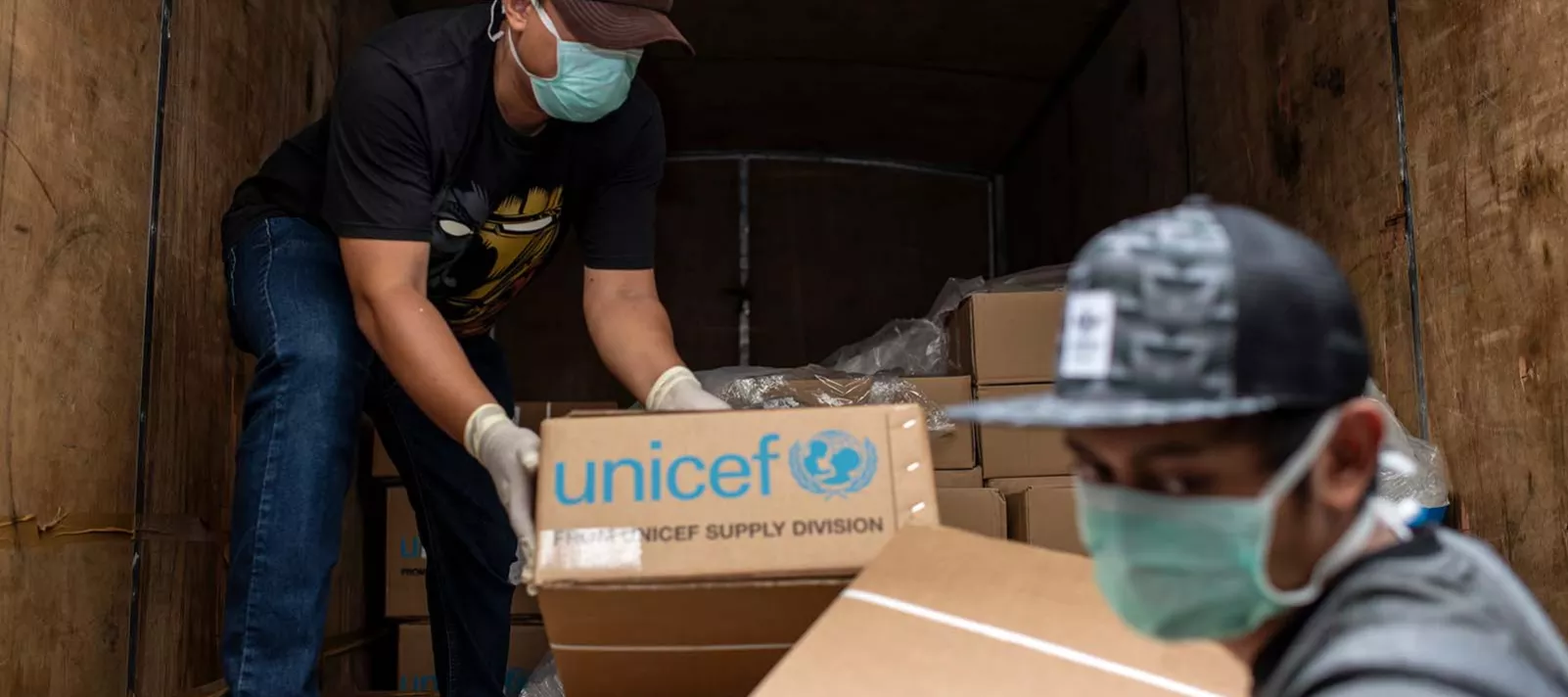
UNICEF worked to ensure that countries had access to quality-assured and affordable PPE supplies, such as medical masks, gowns, goggles, gloves and face shields, which were crucial to protect health workers at the forefront of the COVID-19 pandemic response.
Early and accurate detection of COVID-19 was critical for tracing and controlling the spread of the virus. UNICEF supported countries’ COVID-19 response by providing diagnostic tests, including rapid antigen tests at the most affordable market prices.
Therapeutic interventions were vital to reduce the severity of COVID-19 and save lives. UNICEF prioritized access to key treatments, including dexamethasone and oxygen therapy, ensuring that public health care systems could provide care and ultimately save lives worldwide. From 2020 to 2023, UNICEF delivered more than 67,000 oxygen concentrators to more than 100 countries.
ACT-A
UNICEF became the lead implementation partner of the Access to COVID-19 Tools Accelerator (ACT-A), launched in April 2020, as the world realized that COVID-19 required global solutions.
ACT-A brought together governments, scientists, businesses, civil society, philanthropists and global health organizations such as the Bill and Melinda Gates Foundation, CEPI, FIND, Gavi, the Vaccine Alliance, UNICEF, the Wellcome Trust, and WHO. to accelerate development, production, and equitable access to COVID-19 vaccines, tests, treatments, and PPE.
COVAX and access to COVID-19 vaccines
With extensive expertise in vaccine procurement, supply management and logistics, UNICEF was uniquely placed to play a leading role in the efforts to provide access to safe and effective vaccines to combat the pandemic.
The groundwork for the mammoth vaccine supply operation kicked off in June 2020 when UNICEF and Gavi, the Vaccine Alliance, published an expression of interest to gather information on the production potential of COVID-19 vaccines, and intensified in November 2020 with the issuance of a tender for the supply of the vaccine. Three months later, in February 2021, UNICEF started organizing the international transport of COVID-19 vaccines on behalf of the COVAX Facility.
Vaccine pillar
Led by CEPI, Gavi, WHO, and UNICEF, the COVAX Facility was the vaccine pillar of ACT-A and was created to accelerate the development and manufacture of COVID-19 vaccines, and to guarantee countries fair and equitable access to these vaccines.
Through COVAX, UNICEF worked with manufacturers and partners to procure COVID-19 vaccine doses, as well as to manage freight, logistics, storage and country rollouts. In collaboration with the PAHO Revolving Fund, UNICEF led procurement and delivery for low and middle-income countries while also supporting upper middle-income and high-income countries in accessing vaccines.
UNICEF procured and supplied COVID-19 vaccines and immunization products in several ways, including through COVAX and UNICEF’s procurement services for governments.
COVAX closed on 31 December 2023, having delivered nearly 2 billion doses of vaccines and prevented an estimated 2.7 million deaths in lower-income participating economies. During 2024 and 2025 UNICEF delivered COVID-19 vaccine under the Gavi-funded C19 program as well as bilaterally to governments as part of UNICEF’s procurement services.
In May 2023, COVID-19 was declared no longer a public health emergency of international concern. However, COVID-19 has not gone away and continues to circulate in communities, remaining a potentially serious health risk.