

Quality assurance
Ensuring the efficacy and safety of the goods and services UNICEF procures for children.
The challenge
UNICEF procures and delivers a wide range of commodities such as medicines, medical devices, therapeutic food, school supplies and water and sanitation products, while also providing services such as construction and transportation. These support healthcare, education and protection for children, and it is core to UNICEF’s work to ensure that the products and services are of good quality.
The risks associated with procuring and supplying non-compliant products are high: Counterfeit, substandard or contaminated medicines, medical devices, and nutrition products can cause harm to children.
The solution

To ensure that the products and services delivered to children are safe and effective, UNICEF has robust policies and procedures in place at country, regional and global levels. This rigorous approach not only assures adherence to quality criteria. It also incentivizes manufacturers to make the investments needed to become compliant with good manufacturing practices and other international standards. This way, the benefits of safe and effective products and services are amplified beyond UNICEF’s direct operations.
Quality assurance of products
UNICEF’s own quality assurance specialists assess the conformity of products with internationally recognized quality and performance standards; test and evaluate products to ensure they meet UNICEF’s requirements; and perform quality control activities such as pre-delivery inspections, sampling and testing at qualified quality control laboratories.
The UNICEF product portfolio includes a wide range of products, including pharmaceuticals, medical devices, nutrition products such as ready-to-use therapeutic food, school materials like scissors and exercise books, and other health supplies such as syringes, rapid diagnostic tests for HIV and malaria, and insecticide-treated bed nets.
UNICEF’s global warehouse in Copenhagen is licensed by the Danish Medicines Agency to be compliant with good distribution practices for pharmaceutical products. This requires UNICEF to ensure that pharmaceutical products are handled appropriately. The global warehouse also contains a quality assurance laboratory where samples are evaluated, and where other quality inspections are performed. In the case of complex and regulated products, UNICEF sends samples for testing at specialised laboratories.
UNICEF’s quality assurance of products spans the entire supply chain:
- Definition of needs: UNICEF technical specialists work closely with partners and stakeholders to analyse requirements and to translate these into product specifications that allow sourcing of products that meet both the needs of children and regulatory standards.
- Sample evaluations: UNICEF tests and evaluates samples from potential suppliers to ensure they are safe and that they meet specifications and standards. This ranges from testing and inspection of tensile and bursting strength and dimensional stability in the UNICEF laboratory to sending samples to specialized external laboratories.
- Site inspections: Once a product meets the requirements, UNICEF proceeds to inspecting the manufacturing site or distributor to verify that the suppliers adhere to UNICEF’s standards for social and environmental accountability. Site inspectors also review the quality management systems that underpin production, verifying that these are compliant with international standards such as ISO 9001, which demonstrates the reliability of the supplier to deliver a quality product.
- Pre-delivery inspection and supervision of loading: All shipments may be subject to a pre-delivery inspection. If a delivery is made directly from a supplier to a country rather than to a UNICEF warehouse, UNICEF contracts third-party agents to inspect products and loading at the supplier’s premises.
- Goods receipt inspection: When goods arrive at UNICEF’s global warehouses and to receiving countries, products are checked against criteria such as compliance with specifications, packaging, labelling, documentation, quality of workmanship, and shelf life.
- Management of feedback: Formal complaints and feedback mechanisms help hold UNICEF accountable to the children it serves and give insight into weaknesses in systems and processes. This drives the continuous improvement of products, services and processes, and fosters stakeholder confidence in these.
Quality assurance of services
UNICEF also assures the quality of services that it procures and delivers, such as construction of schools and water supply infrastructure. Similarly to the quality assurance of products, the quality assurance of services is embedded throughout the supply chain, from the terms of reference for potential suppliers, to the evaluation of the service provided.
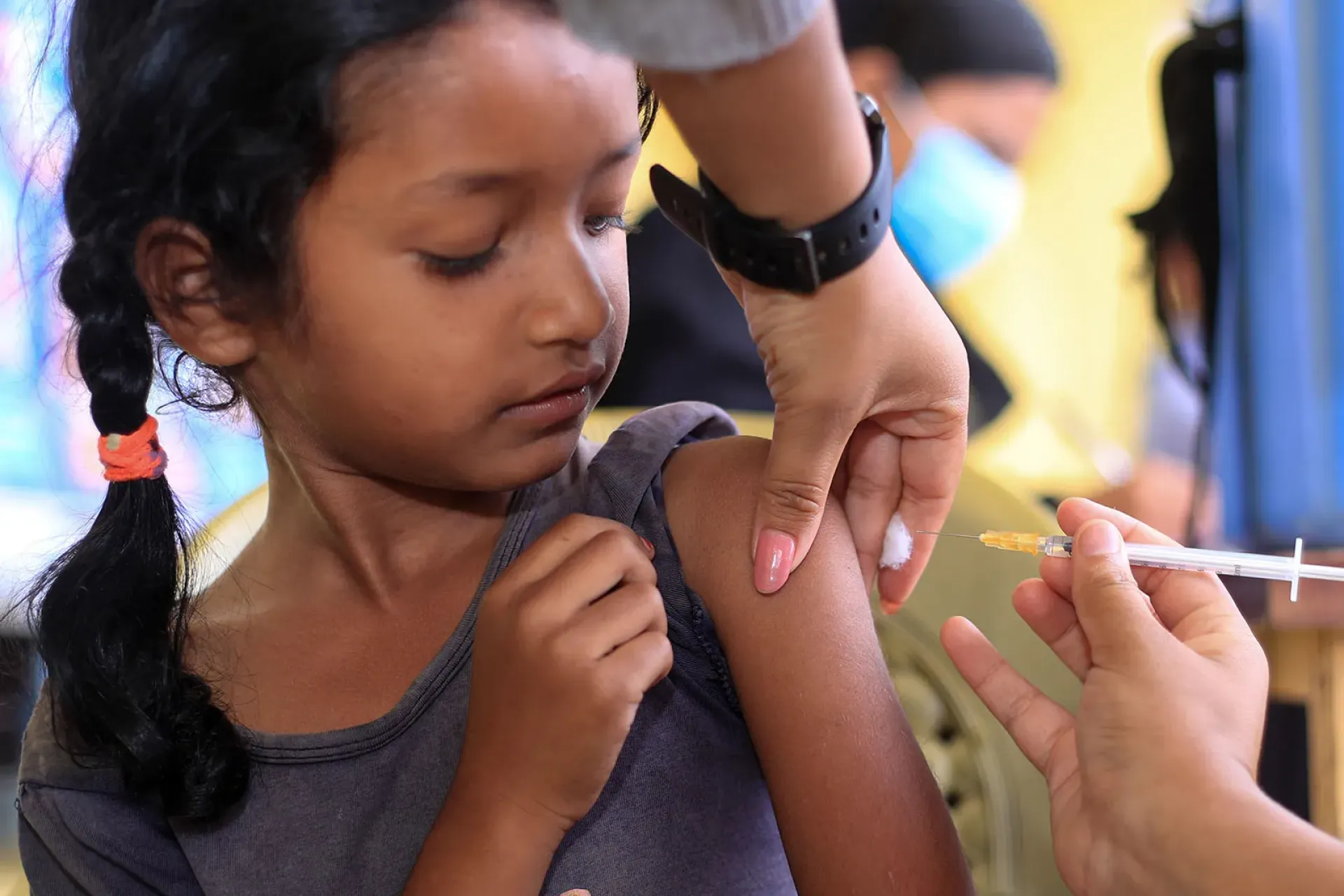
Ensuring the safety of vaccines
Highly complex products such as vaccines are subject to international safety standards. Manufacturers who supply vaccines to UNICEF go through a rigorous quality assurance process which is governed by the World Health Organization.