

Oral rehydration salts (ORS) and zinc
UNICEF works to ensure a reliable supply of these co-packed products that help children with diarrhoea.
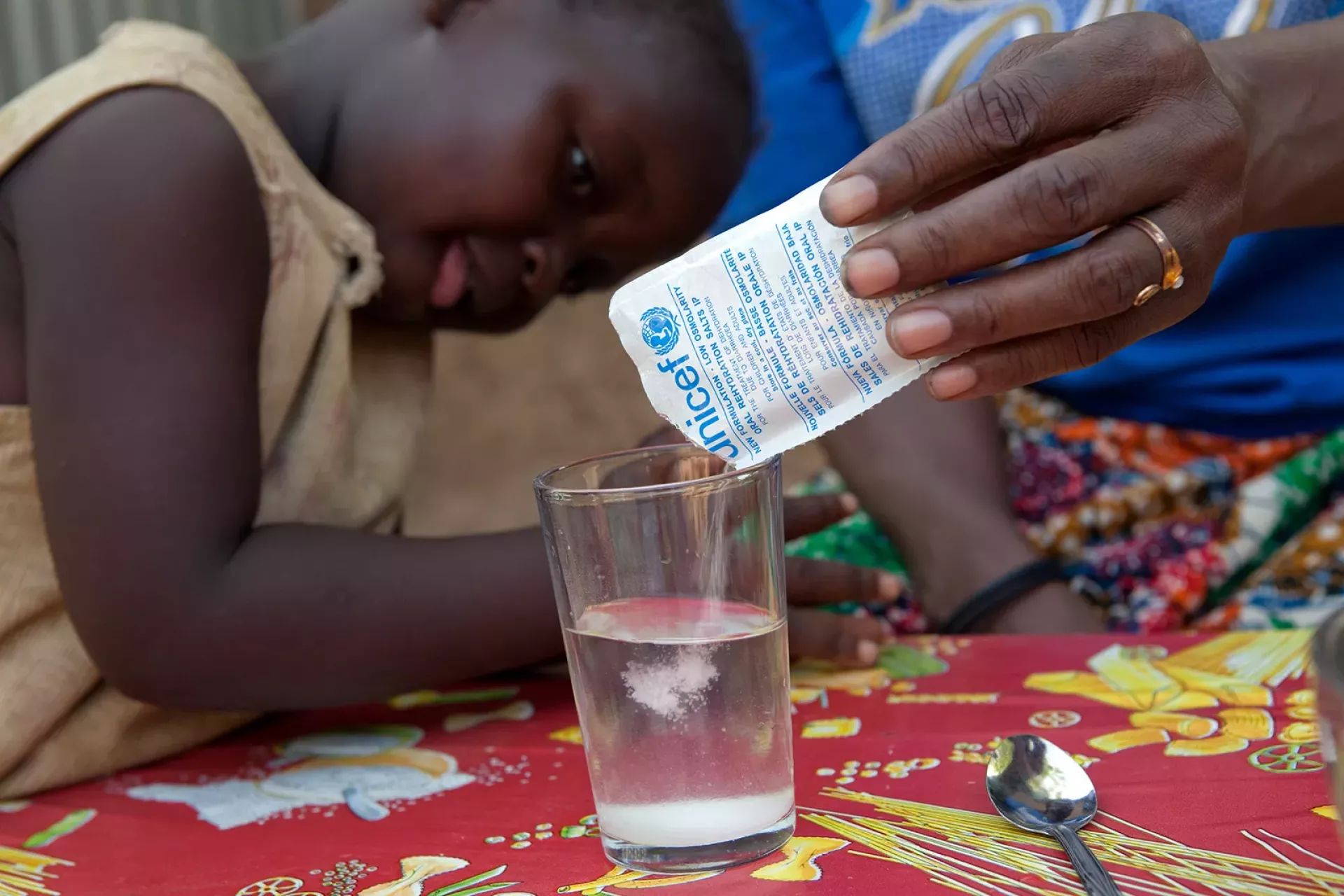
Diarrhoea is a leading cause of death in children under five, killing nearly 450,000 children under the age of five every year. A highly effective treatment to childhood diarrhoea is oral rehydration salts (ORS). Considered one of the most significant medical innovations of the twentieth century, ORS is a mixture of salt and sugar that is dissolved in clean water to treat dehydration caused by severe diarrhoea, heat stroke or any other illnesses that result in loss of fluid.
ORS for children with diarrhoea is even more effective when given in combination with zinc, which is a vital micronutrient that is lost during diarrhoea. Supplementing ORS with zinc reduces the duration and severity of this disease while lowering the chance of recurrence in the short term. These supplies are significantly reducing the number of deaths caused by acute watery diarrhoea.
Affordability
In addition to being easily administered, ORS and zinc are also affordable. A treatment course of ORS with zinc can cost as little as US$ 0.37, increasing the chances that sick children receive this co-packed product that is crucial for their recovery.

Procuring and delivering ORS and zinc
UNICEF began procuring ORS more than 40 years ago, promoting a single formula of oral rehydration salt in a standard sachet. From 2006, UNICEF started procuring zinc tablets in addition to ORS, and eight years later UNICEF began to co-pack the two items.
For countries with a high demand for ORS and zinc, UNICEF supports their governments to create or increase local manufacturing of the product. In 2024 alone, UNICEF delivered 29.2 million sachets of ORS to 56 countries, enough for 14.6 million treatment courses for children suffering from diarrhoea.


