"Turning on the faucet and feeling the water in my hands was a profound moment"
As a Venezuelan migrant, the community leader, Angelis Navarro, will celebrate World Water Day with access to clean water in her community in Boa Vista, Roraima.

- Português
- English
The convenience of having public tap water available, serving the families in her community, is still something that deeply moves the community leader, Angelis Navarro. Living in Brazil for six years now, the Venezuelan migrant recalls the challenging journey to secure this basic right for the nearly 180 refugees and migrants living in her community in Boa Vista, Roraima. 'It was a very difficult situation; both we, [adults] and our children fell ill from drinking rainwater we had collected,' Angelis recalls.
The connection of the community's water points to the public network was made possible through UNICEF's initiative. UNICEF sought support from the Public Defender's Office of the State of Roraima (DPE-RR) and the Roraima Water and Sewage Company (CAER), resulting in an agreement for water connection in eight informal refugee and migrant settlements in October 2022.
Therefore, this World Water Day, celebrated on March 22, holds a new and profound meaning for Angelis, her family, and her community. Access to clean water is vital for disease prevention, health promotion, and the full development of boys and girls.
As a mother of two children - 6-year-old Ximena and 4-year-old Thiago, who was born in Brazil - Angelis recalls how the lack of water disrupted her children's school routine and affected their health. Unable to maintain proper hygiene and cleanliness or access clean drinking water, the children frequently suffered from diarrhea, dehydration, and other illnesses that kept them away from school.
“A neighbor would supply us with water through a hose, and we paid a monthly fee to her. But the water only arrived at night, and it was very little”, she remembers.
Things began to change in 2019 when UNICEF initiated activities related to disease prevention in informal settlements like the Coronel Monteiro Baena occupation, where Angelis lives. These activities included the provision of clean water, hygiene promotion, solid waste management, and sanitation.
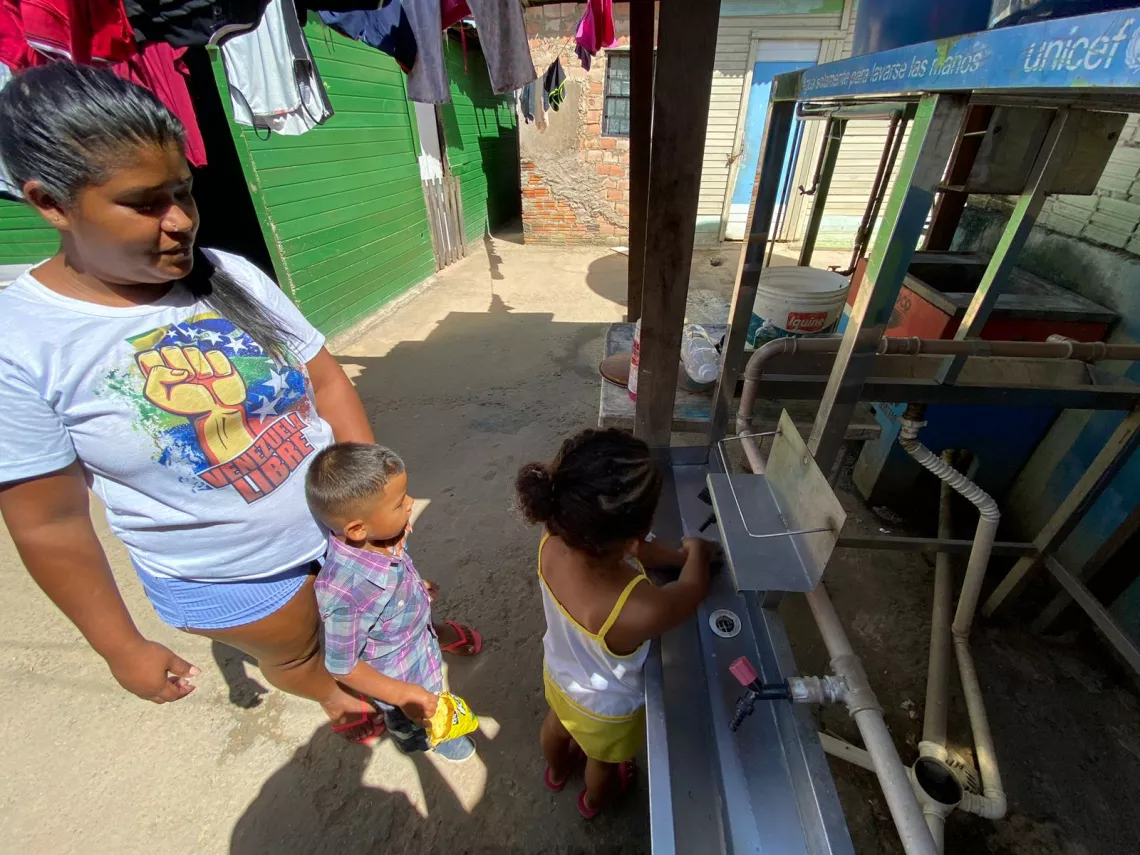
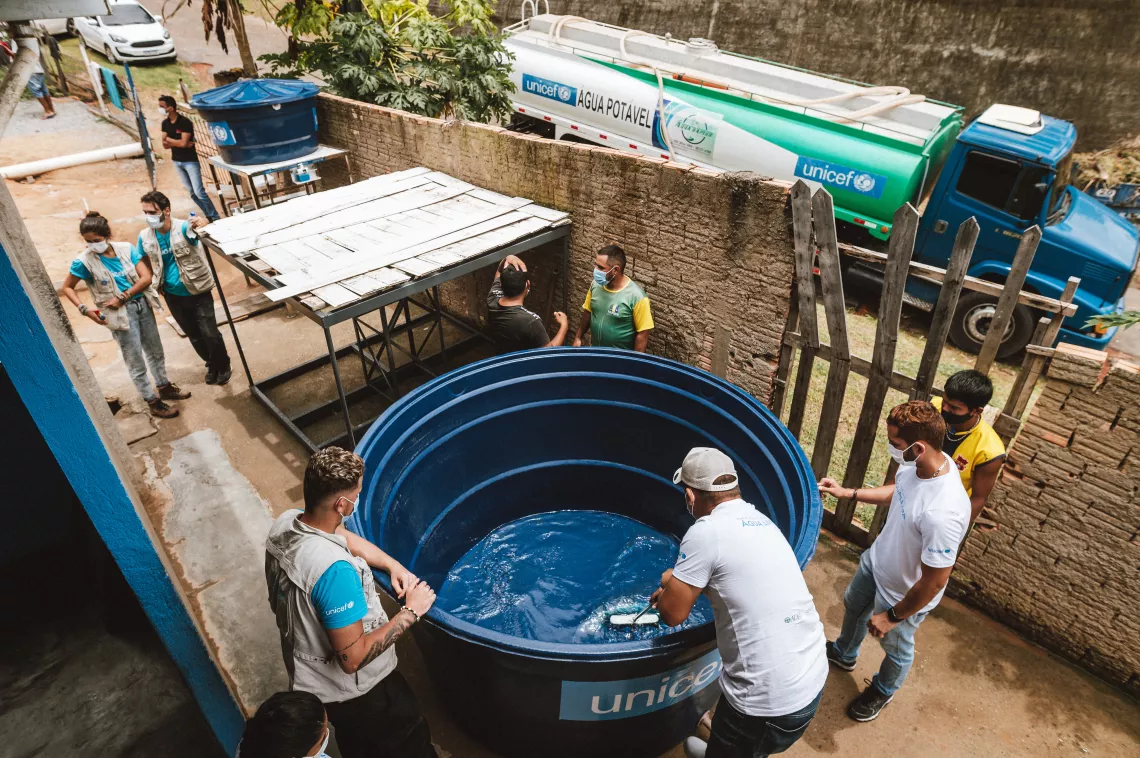
The handwashing infrastructure and water supply through water trucks were essential for families to navigate the COVID-19 pandemic. At the time, approximately 2,500 refugees and migrants in informal settlements in Boa Vista benefited from access to clean water, sodium hypochlorite for disinfection, as well as materials and personal hygiene equipment. This was made possible through a partnership with the Adventist Development and Relief Agency (ADRA) and CAER.
“During the pandemic, we started by supplying water through water trucks to informal settlements to ensure the human right to access clean water. However, we needed to work toward sustainability. This current agreement is in line with UNICEF's priorities to enhance the access of refugees and migrants to public policies, in cooperation with public agencies”,' says UNICEF's Water, Sanitation, and Hygiene (WASH) Officer in Roraima, Gabriel Maraslis.
Community Involvement
In total, eight spontaneous settlements in Boa Vista where refugees and migrants reside gained access to the public water supply network following the agreement forged with DPE and CAER, benefiting over a thousand people living in these communities.
The success of this initiative was also attributed to the commitment of community leaders and the community itself, which had to ensure registration and documentation, install pipes to connect the structures, and organize the community control of bill payments, offered at a reduced rate.
This work, resulting in improved social well-being, quality of life, and health, is made possible through financial support from the United States Government and the European Union. This support is provided through the United States Department of State's Bureau of Population, Refugees, and Migration (PRM) and the European Union's Department of Civil Protection and Humanitarian Aid (ECHO).
For Angelis, access to this right brings moments of happiness every day. “Turning on the faucet and feeling water in my hands is a profound moment”, she says.