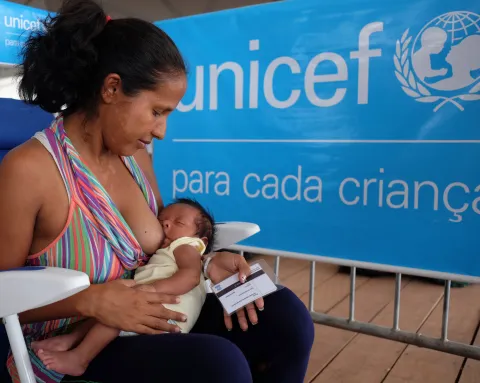
Pregnant women receive support and care in shelters in Roraima.
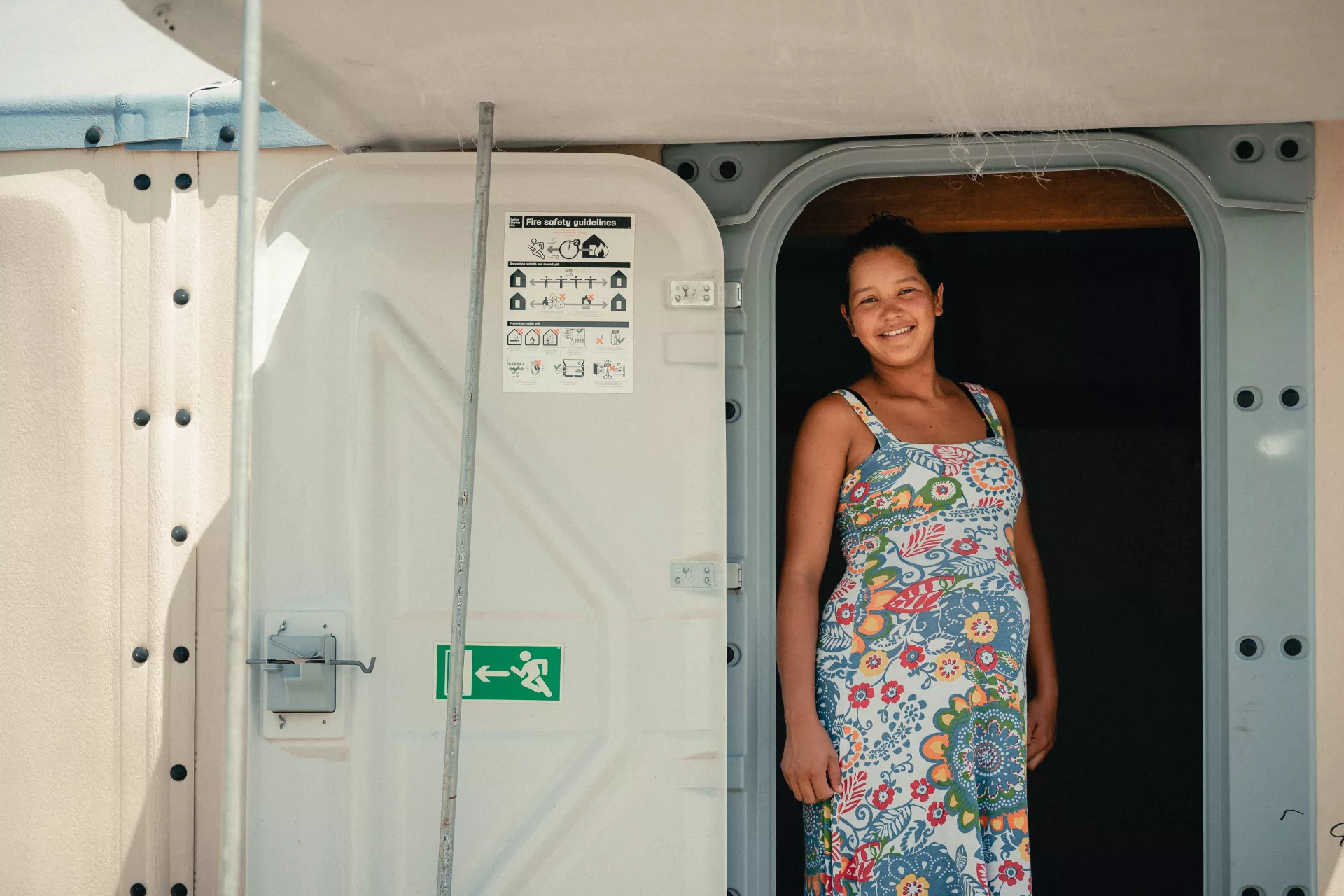
Expecting her second child, 19-year-old Venezuelan Dayreni Hernandez came to Brazil in search of a better life for her family.
- Português
- English
Like many Venezuelan refugees and migrants, 19-year-old Dayreni Hernandez came to Brazil in search of a better life. She arrived in the country three years ago while pregnant with her first child, along with her mother and five siblings, carrying only a bag of clothes. Today, eight months pregnant with her second child, she receives support from UNICEF in the shelter where she lives in Boa Vista, Roraima, and envisions a brighter future for her family.
In partnership with the Adventist Development and Relief Agency (ADRA), UNICEF provides health and nutrition support to refugees and migrants, including primary healthcare and nutrition services in reception centers and spontaneous settlements in Roraima.
"I arrived at 16, pregnant with my first child. I received all the prenatal care here in the shelter. They provided me with vitamins and vaccines for both me and my child and explained pregnancy care and violence against women to me. My way of thinking changed significantly after these conversations," Dayreni shares.
After living in another facility, the family now resides in Waraotuma a Tuaranoko, a shelter housing indigenous families that are part of the migration influx. Here, Dayreni also received guidance and support to access the healthcare services of the Brazilian Unified Health System (SUS) and was referred to a Basic Health Unit (UBS) in the municipality. Consequently, she started receiving universal healthcare and participating in family health strategy programs, including nutritional monitoring and prenatal care.
"We carried out a very intense awareness campaign with Dayreni because, during the first months of her pregnancy, she was reluctant to undergo prenatal exams," says Linda Peterson, a health monitor at ADRA. "To make her feel safer, we arranged transportation for her to go to the UBS. Today, she completes her prenatal check-ups, and after the baby is born, we will continue providing support," Linda adds.
Nutritional monitoring is also part of the effort. "We have monthly consultations to help Dayreni maintain the ideal weight, prevent complications during childbirth, and ensure her children's full development. We talk extensively to help her understand the importance of vitamin supplementation and nutrition," says Tessa Barbosa, the project's nutritionist.
"In the follow-up, they told me not to eat too many sweets and that I need to take all the vitamins. Unlike my first pregnancy, I now understand that this is important for me," says the young mother.
Dayreni and her family are among the more than 6,000 people currently sheltered in the state of Roraima, in the facilities of Operation Welcome - a humanitarian response led by the federal government and partners, including UNICEF, to address the Venezuelan migration flow. Brazil currently hosts 406,000 Venezuelan refugees and migrants.
Young Dayreni dreams of working and having her children attend school. “Here, I have clothes, food, and shelter. I was very afraid that my first child would have nothing. But since I arrived here, he has received full support, and nothing has been lacking”,' she adds.

Special Care
Pregnant women arriving at the shelter receive culturally sensitive care with a focus on health promotion, particularly prenatal care, and nutritional monitoring.
In August 2022, there were 27 pregnant indigenous women in the Waraotuma a Tuaranoko shelter. “We face many challenges, including resistance from mothers who are afraid to visit doctors and are very reserved, not to mention the cultural and language barriers”, explains Linda.
Among these challenges is updating the vaccination record. “Many mothers still don't know much about health promotion. So, we have discussions about the importance of vaccines, breastfeeding, and nutrition”, says nurse Natalia Meygan, who works at the shelter.
Another challenge is nutrition. “In general, mothers prefer foods that are high in sodium, fat, and sugar, so I show them the importance of choosing foods with greater nutritional value”, says Tessa. Group discussions are essential to raise awareness and educate members. The support provided by UNICEF allows Venezuelan refugees and migrants to have a better understanding of their rights regarding primary healthcare in Brazil, ensuring active access and periodic follow-up by family health strategy teams, with a focus on child development.
In 2022, UNICEF conducted 4,854 activities to monitor pregnant refugee and migrant women in Roraima, with 10.7% of them involving pregnant adolescents under the age of 18.
This health and nutrition work is only possible thanks to the strategic support from the United States’s Bureau of Population, Refugees, and Migration (PRM), and the Access to COVID-19 Tools Accelerator program, focusing on vaccines, treatments, and diagnostics.