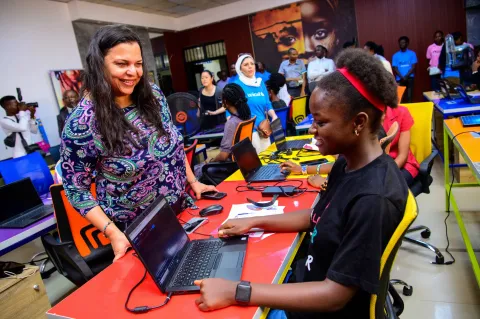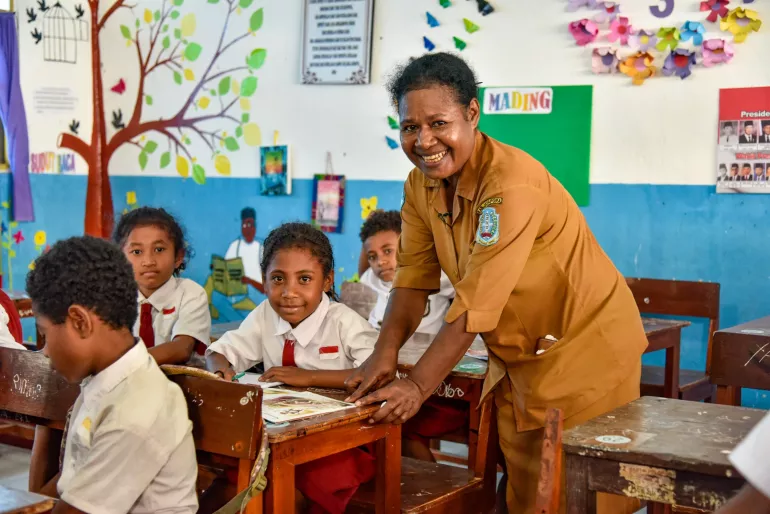
Teachers are at the heart of quality education.
However, to do their job effectively, teachers need to be supported and given the right tools to fulfil their passion and potential.
Despite rising school enrollment rates, hundreds of millions of students are leaving school without mastering basic literacy, numeracy, or socio-emotional skills. Globally, nearly two-thirds of children are still unable to read and understand a simple story by the age of 10.
At the heart of the learning crisis is a teaching crisis.
Around the world, teachers are not being adequately prepared or supported to meet the growing learning needs of their students. Teachers are reporting that they are feeling underprepared to address the diverse learning needs of their students, highlighting a gap in professional support and expectations. Immediate and smart solutions are required at scale to address the needs of teachers.
Globally, the shortage of teachers is another major challenge. To meet Sustainable Development Goal (SDG) 4 by 2030, an additional 6 million early childhood educators and 44 million primary and secondary teachers are needed worldwide. For example, in Egypt, an increase in students and decrease in teachers has caused the pupil-teacher ratio to jump from 30:1 to 38:1 over the last four years. The impact of these shortages is profound, affecting not only the quality of education but also increasing the workload and strain on teachers.
However, at the other end of the spectrum, countries like Japan, Korea and Spain are facing a sharp decline in population, which is leading to fewer students and an oversupply of teachers. In fact, 23 countries are projected to see their populations halve by the year 2100. In nations like Sweden and Luxembourg, the student-teacher ratio is low, with around 10 students per teacher.
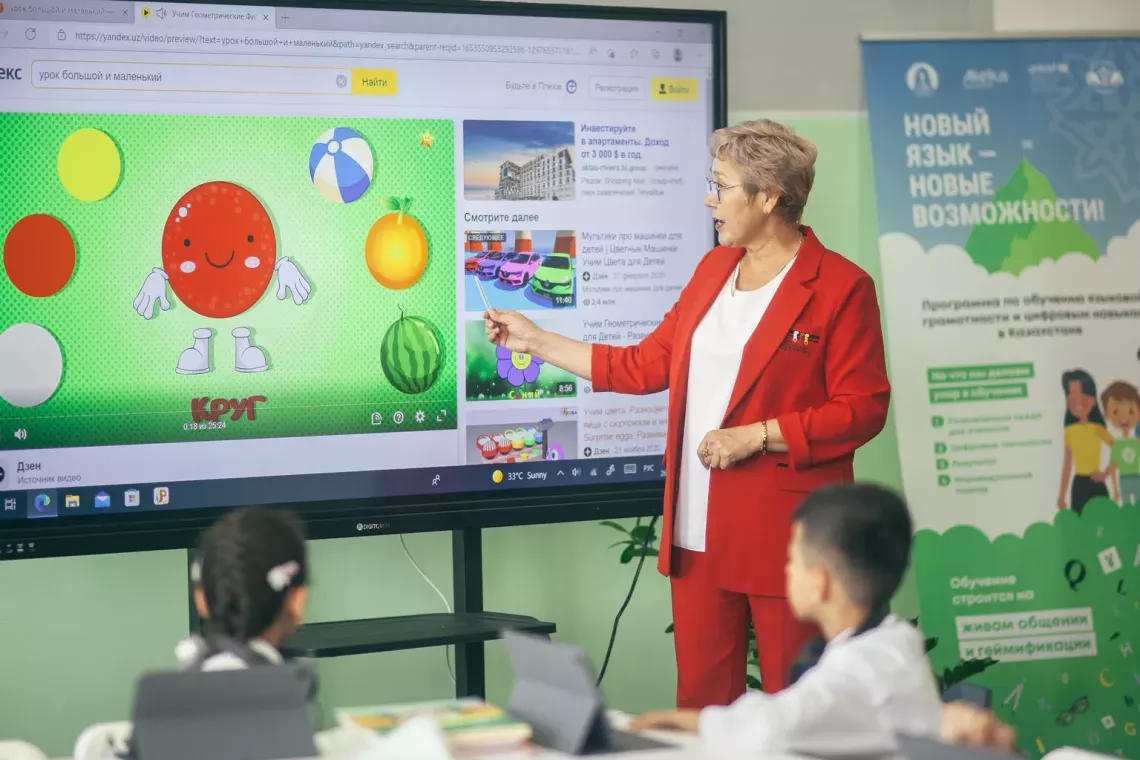
Amplifying teachers' impact with technology
We know that a well-equipped teacher is the single most important factor in improving learning outcomes. To effectively address this crisis, we need to make smarter, evidence-based investments that prioritize and support teachers. This means not only improving teacher professional development models but also ensuring teachers have the resources and support they need to thrive—despite global challenges like climate change, conflict, and economic instability.
While solving the global learning crisis hinges on having well-trained and supported teachers, technology may be a gamechanger to reach the most marginalized children.
Technology can be a powerful tool to enhance teaching, maximize teaching time, foster coaching and mentoring support, and enable remote learning in regions with no schools or too few educators. UNICEF has been at the forefront of leveraging digital tools to empower teachers and scale quality education where it’s needed most.
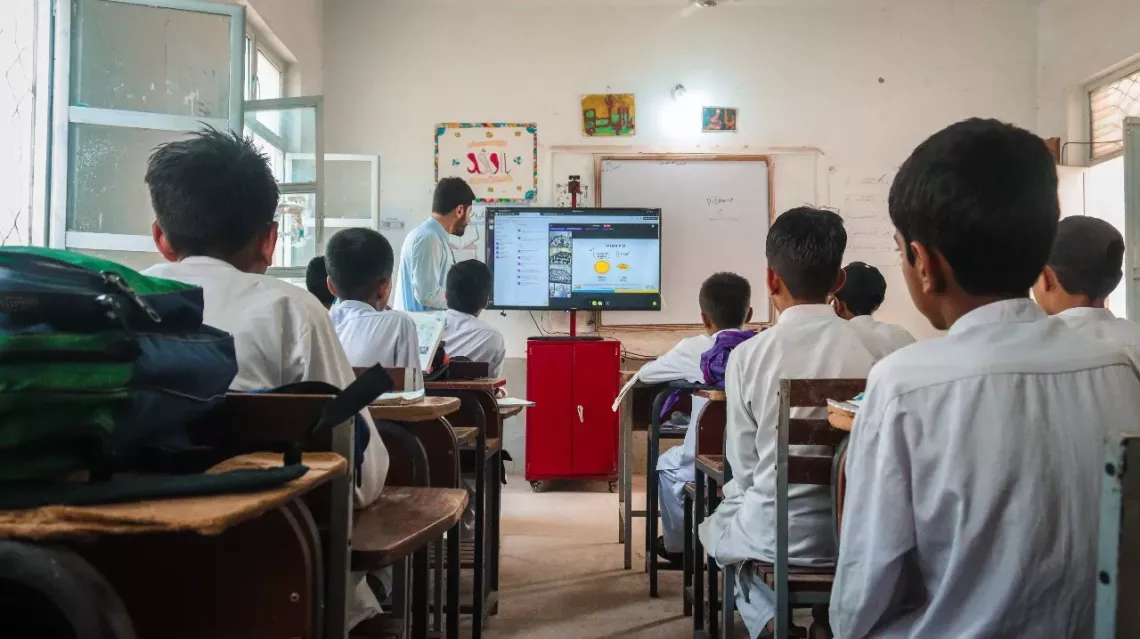
In Pakistan, a remote teaching programme is using technology to address the teacher shortage at middle school level. Teachers receive digital tablets pre-loaded with structured lesson plans, audio lessons, and virtual mentoring videos. They also receive frequent reinforcement through SMS text messages to keep them engaged and supported in their professional growth. This blend of digital tools and ongoing support has led to positive and significant improvements in students’ oral reading fluency.
In Ghana, data-driven dashboards are being used to track learning progress and identify areas for improvement, providing targeted feedback and coaching to enhance teaching practices. Meanwhile, in Guinea, mobile-based platforms are connecting teachers in remote regions, opening opportunities to engage in online communities, share best practices, and foster peer-to-peer learning. These virtual communities promote collaboration, continuous learning, and the adoption of effective teaching methods.
These approaches demonstrate that successful technology integration hinges on positioning teachers as agents of change in the learning environment. By empowering and supporting them to use technology in ways that align with their classroom needs, curriculum, and students, we can foster more effective outcomes. Providing high-quality content and user-friendly tools, while allowing flexibility for teachers and students to adapt technology to their specific contexts, offers a more valuable approach than treating them as passive technology users.
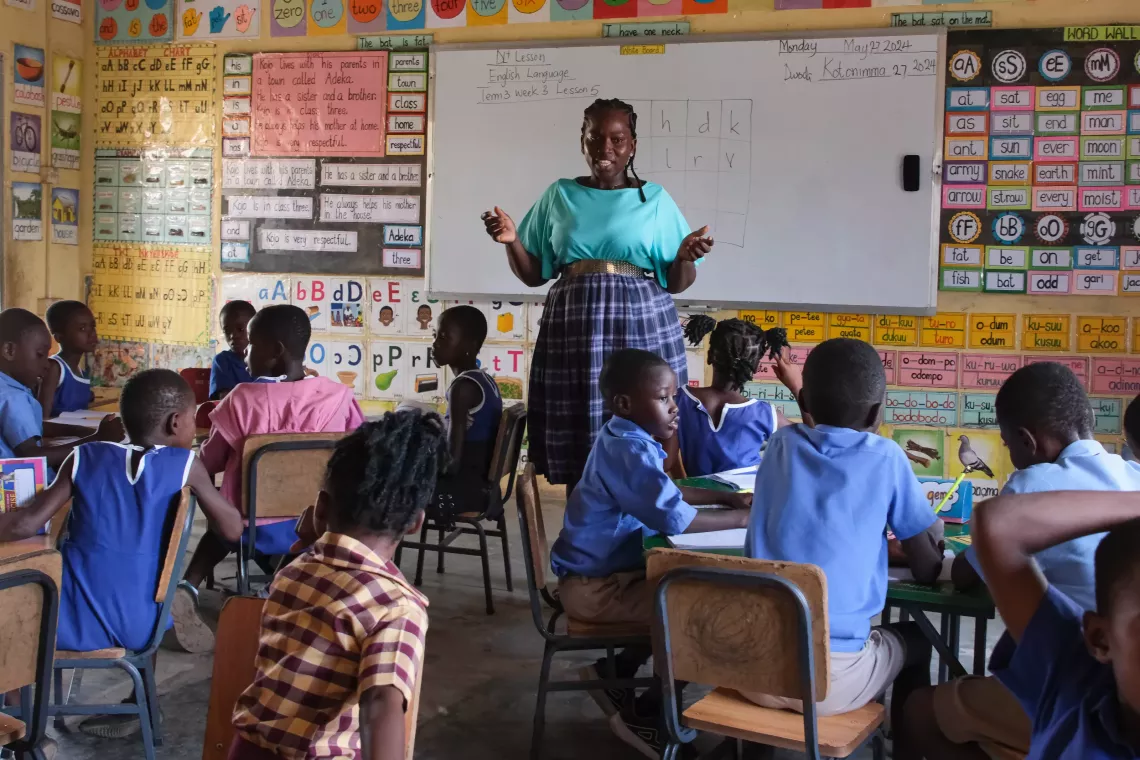
Investing in teachers is investing in learning
The global learning crisis is not just about the lack of resources or infrastructure—at its core, it is a teaching crisis. Teachers remain the single most critical factor in improving learning outcomes, that no amount of technology can replace.
Addressing this crisis will also require outside-the-box, global solutions. For example, digital tools could be used to connect teachers in countries with a surplus—like Japan, Korea or Spain—with students in regions facing severe teacher shortages, allowing expertise to flow across borders. Incentives to volunteer and join peer-to-peer coaching programmes could be also explored and facilitated by technology. This kind of innovative, global collaboration could help bridge the gap between the lack of teachers in some parts of the world and the oversupply in others.
By investing in teachers and combining their irreplaceable human element with the scalable power of technology, we can begin to close the learning gap and support every child to learn and thrive.
Pia Britto is the Global Director, Education and Adolescent Development at UNICEF