

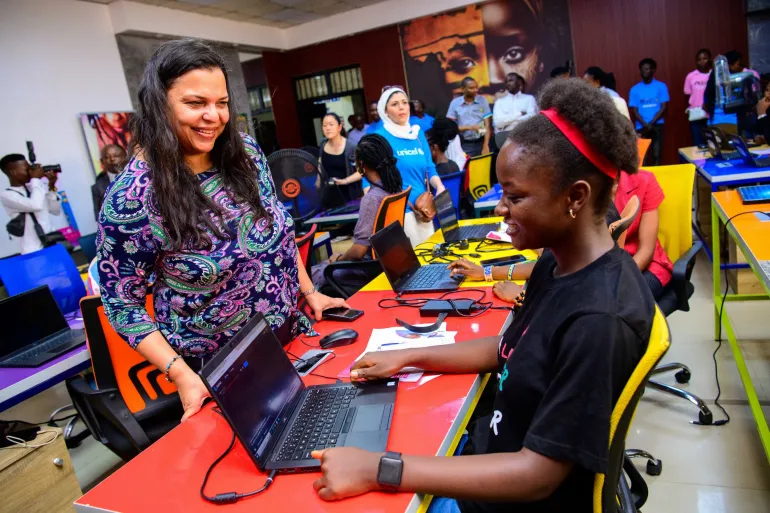
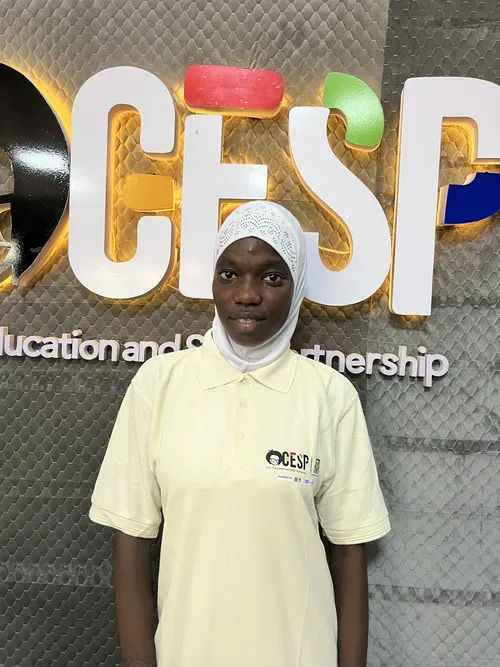
Opportunity changes lives. During a visit to a technical college in Lagos, Nigeria, I met an adolescent girl named Obafoshun whose story has stayed with me ever since. Her story is, in many ways, a story of possibility. It reflects both the progress we have made in opening doors for girls into Science, Technology, Engineering, Arts and Mathematics (STEAM), and the importance of continuing to widen those doors for the many girls who are still being left behind.
Obafoshun studied arts in school, but she dreamed of working in technology. Again and again, she was told that technology was not for girls like her – that it was not for someone with her background. What struck me most was that no one questioned her talent. Instead, they questioned whether she belonged. To me, that captures one of the defining challenges of our time.
As the future becomes increasingly technology-driven, STEAM and digital skills are essential for young people to thrive in both work and life. Yet girls continue to face barriers that limit their opportunities. Obafoshun's story is not hers alone. It echoes the experiences of millions of girls across Africa and around the world whose aspirations are constrained not by a lack of ability, but by unequal access to opportunity.
From rapid technological advances to the growing impacts of climate change, the world of work – and the skills it demands – is evolving at an unprecedented pace. Preparing today's learners with the knowledge, skills and mindset to navigate this changing landscape has never been more important.
Although access to education has expanded significantly in recent decades, too many adolescents still leave school before completing their education. Globally, only 60 per cent of young people complete secondary education, leaving millions without this critical foundation.
While gender gaps in secondary completion have narrowed in many parts of the world, girls continue to face significant barriers in sub-Saharan Africa, where only 88 girls complete upper secondary school on time for every 100 boys. This gap represents millions of adolescent girls pushed out of school each year, right at the stage when education matters most for their future economic independence, health, and agency.
The picture becomes even more stark in STEM fields. In many countries across sub-Saharan Africa, women account for fewer than 30 per cent of engineering graduates, and globally they represent only 35 per cent of STEM graduates, a figure that has remained stagnant for the past decade, constraining access to high-growth careers.
Many of these inequalities become most visible during adolescence. This is the stage when aspirations take shape, interests are nurtured, and young people begin making decisions that influence their future education, careers and lives. It is also when many girls face increasing barriers to staying in school, including child marriage, adolescent pregnancy and growing unpaid care responsibilities. That is why secondary education matters so profoundly. It is not only a bridge to further learning; it is increasingly the bridge to the skills, opportunities and agency that young people need to succeed in work and life.
What gives me optimism is the strong momentum across the continent.
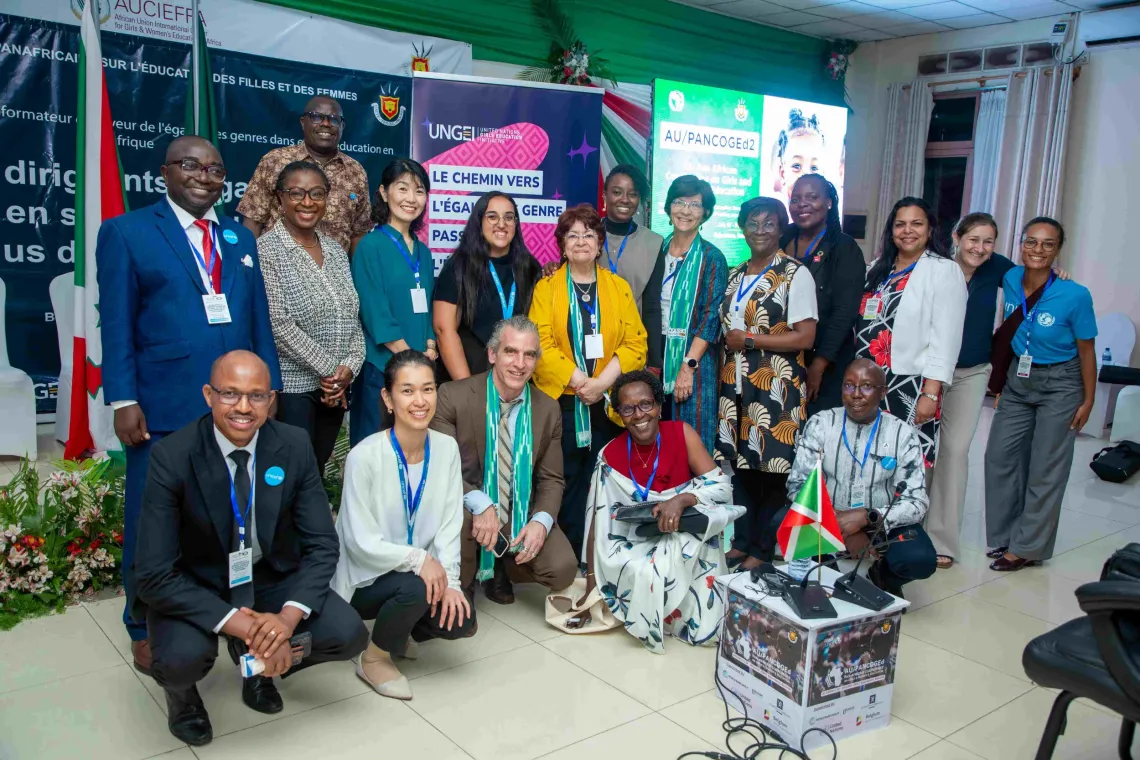
Countries across Africa have placed secondary education, skills development and gender equality at the centre of their vision for Africa's future. This message was clear at the Second Pan-African Conference on Girls' and Women's Education in Africa, held in July in Bujumbura, Burundi, where I had the privilege of engaging with leaders who are shaping the future of education and skills development. While the discussions focused on advancing opportunities for girls and young women, they reinforced a broader message: quality secondary education and skills development are essential to unlocking young people's potential and building more inclusive, resilient and prosperous societies.
Yet an important question remains: how do we ensure that investments in STEAM and digital skills reach the girls who are often left furthest behind?
For me, the first lesson is that we must intentionally design programmes for those facing the greatest barriers. Too often, they are designed for those who are easiest to reach, with inclusion as an afterthought.
Obafoshun's experience offers a different model. Through Girls' Education Skills Partnership (GESP), she joined the All Girls' Tech Hub – an initiative anchored in UNICEF, leveraging Generation Unlimited’s public-private-youth partnership. Here she developed practical ICT skills, including laptop assembly and mobile phone repair. More importantly, she entered an environment where she was encouraged to believe that she belonged. She learned from women working in technology, found mentors who believed in her potential, and saw firsthand that success in these fields was within her reach.
Girls need more than technical skills. They need opportunities to build confidence, strengthen their agency and develop a genuine sense of belonging. That means listening to their voices, valuing their lived experiences and shifting from designing programmes for girls to designing them with girls.
As we mark World Youth Skills Day, it's time to put young people, their skills and their futures at the centre of our actions. That begins by ensuring that every child acquires strong foundational learning, every adolescent has access to quality secondary education, and every young person develops the skills they need to realize their full potential.
When we invest in girls like Obafoshun, we do more than change one life. We strengthen families, communities, economies and the future we all share.
Urmila Sarkar is the Global Lead for Skills & Secondary Education at UNICEF.


