Helping children cope during and after a crisis

How parents and caregivers can support their children’s mental well-being during a crisis

UNICEF South Asia
A Rohingya refugee baby holds on to its mother
UNICEF/UN0156977/Bindra
11 July 2023

Heartbreakingly, many families and communities in South Asia have dealt with much disaster and tragedy over the last few years. 

Last year alone, families across the region faced devastating floods, heat waves, drought, cholera outbreaks and landslides, all while still shouldering the impacts of the COVID-19 pandemic.  

When crises strike, they’re sudden and unexpected. And can be incredibly traumatizing for the whole family. 

The immediate and long-term impact a crisis can have on a child, depends on the nature of the crisis, how long it lasts, the child themselves and your reaction to the situation.  

While crises are by their nature overwhelming, it can be reassuring to know that there are practical steps you can take during a crisis and after to keep yourself calm, protect your children’s mental health and shield them from trauma.  

These expert tips can help.  

Immediate things to do when crisis strikes

  • Safety comes first. Do everything in your power to ensure you and your children can reach a safe place and be with safe people.  

  • If you or your children need medical help - for example for physical injuries – ensure you are able to get help without delay. You may want to take someone with you for emotional support. 

  • Speak up for what you and your children need.  

  • If you need to report a crime, take someone with you. 

  • Where possible, make your own decisions as best as you can. Taking back control and feeling empowered is important, especially in the first 72 hours after an incident.  

  • You may find decision-making hard. Seek advice from those who you know and trust, if you can.  

Research shows that simple repetitive tasks, like playing a basic game, can help reduce stress.  

children playing puzzle
UNICEF/UNI333861/Mawa

Keeping children calm during a crisis

During a crisis our fight or flight response is activated. Your child can be overwhelmed by a range of intense emotions and feelings of stress and loss of control. 


Reassure children that they are safe and are being taken care of 

Keep calm.  

Reassure your children that you, and others, are there to support and protect them. 

If true, emphasize to your children that they and your family are fine.  

Repeat these reassurances as frequently as you think your child needs to hear them, even after the immediate crisis has passed. 

It’s also important to prioritize your own self-care and mental well-being. This will help you cope better in the immediate and long term and better support your children.   

>> Tips for parents on staying calm and protecting their well-being during a crisis.  


Help children find comfort in familiar things 

If it’s possible, surround your children with things that they find familiar or comforting. For example, fresh clothes, familiar stories, their favourite toy or food. 

Surrounding yourself with familiar things can also help you too.  


Be there to listen to how your child is feeling 

Every child is different and will respond to crisis in different ways.  

No matter how your children seem to be coping, it’s important that you make yourself available to listen to how they’re feeling: 

  • Create a safe space for them to express their thoughts, fears, and worries.  

  • Listen actively, without judgment.  

  • Let them know that however they are feeling is OK and normal.  

Openly discussing children’s concerns with them can help them process their emotions and reduce their anxiety. This is especially important if your situation involves a threat, real or perceived, to your physical or emotional survival.  


Help children do activities that make them feel calm 

Help your children engage in calming and engaging activities like reading books, drawing, doing puzzles, listening to music, or participating in creative play.  

Such activities can help children relax and reduce anxiety by immersing them in something that takes them away from worries.

family reading books together
UNICEF/UNI359527/Chakma

Limit your child’s exposure to distressing news and information 

Be aware that information designed for adults, like news reports, is developmentally inappropriate for children and can cause them anxiety and confusion. Especially young children. 

  • Shield your children from exposure to lots of news or distressing information on social media. 

  • Reduce the amount of time that you spend on social media yourself.  

  • Be aware of how children are spending any time online.  

>> More information on keeping your children safe online and managing their screen time.  


Be honest with your children in an age-appropriate way  

During turbulent times, it can be difficult to know what to tell your children and when. But be aware that in the absence of information, children can often imagine situations that are far worse than reality.  

Children have an innate ability to tune into their parents. They may not know exactly what is being discussed, but they will pick up on the atmosphere and any whispered conversations. 

Like adults, children are most likely to be worried about their family and friends. They can often imagine the worst or blame themselves for a problem or tense atmosphere. 

This is why it’s important to bring children into important conversations early, once it’s clear that it’s in their best interests to know some or all of what is going on. Here are some tips: 

  • Provide children with honest information about what has occurred, using language they understand.  

  • Give these conversations the time and space for your child to process and ask questions.  

  • Answer their questions honestly, but in a reassuring manner. 


Avoid blame 

Following a crisis and when tensions are high, it can be tempting to blame someone. However, this is usually not helpful.  

Focusing on whose fault it is will not help you overcome the problem, and can often make everyone feel worse. Instead, try to focus on: 

  • What you can control and do to make the situation better.  

  • What needs to change or what help you need.  

  • How strong and resilient you all are. 

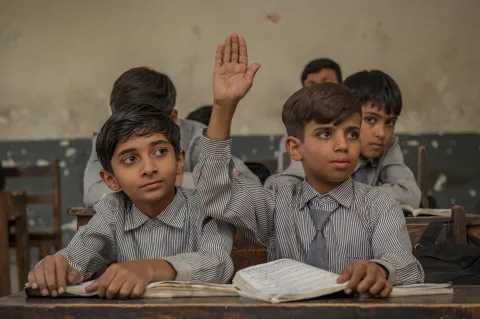
A Student od Government Higer Secondary school
UNICEF/UN0600722/Kaur

Supporting children after a crisis

Children have a wide range of response to crisis — and different children will react differently to the same events.  

Some children and teenagers experience temporary worries and fears that get better quickly. Others may experience longer-term problems.  

Children might not want to be with people as much as before, avoid school, or have trouble concentrating on schoolwork. Their emotions will also vary. Some children may be withdrawn, others could be intensely sad or angry and some will act as if nothing has happened. 

Reactions can occur immediately, or weeks later and can depend on your child’s age.  

Children aged 5 years old and younger  

Very young children may develop new fears, like separation anxiety, fear of strangers or animals. They may act younger or lose a skill they’ve already mastered, like toilet training.  

Children aged 6 to 11 years old 

Older children may get parts of the traumatic experience confused or out-of-order when recalling the memory. They may complain of physical symptoms that have no medical cause, for example stomach aches. They may startle easily, or stare to space and seem spaced-out. 

Children aged 12 to 18  

Teenagers may have unwanted distressing thoughts about the event or experience flashbacks. They may become more impulsive and aggressive or start to use alcohol and drugs to try to feel better. They’re also at a higher risk of feeling depressed or experiencing suicidal thoughts.  


Here’s what you need to know and how you can help: 


Help children express their feelings and worries  

Children might be confused about the facts and need your help in making sense of what happened and what may happen in the future. Children may also find their feelings confusing or embarrassing and need your help to understand and work through them.  

  • Encourage your child to express their feelings and thoughts.  

  • Listen to them carefully and share their concerns, without making judgments.  

  • Talk softly. 

  • Allow your child to feel sad or cry.  

  • Tell them that it’s normal to feel upset when something bad or scary happens. 

Remember, children process traumatic events at their own pace. Their interest in and questions about what happened will change over time. Make yourself available to discuss the events on more than one occasion.  

If your child is struggling with opening-up to you, don’t worry, this doesn’t make you a bad parent. The following child helplines are available across South Asia. Children can call and talk in confidence to a trained counsellor about how they’re feeling.  

Child Helplines in South Asia
UNICEF South Asia

Be open and supportive 

If your child’s behaviour has changed, for example, they’ve started clinging to you, or do things they did when younger, don’t criticise them or compare them to other children.  

Instead, be supportive and reassure them often. Remember that these are normal reactions to exceptional events. 


Tell children you love them and be physically present 

Spending extra time with children and being physically around can help them to feel safe. After a crisis, make sure you’re giving your child more affection and care. Tell them that you love them often and protect them from further exposure to traumatic events, as much as possible.  


Help your child find constructive ways to express their feelings  

Encourage children to write their thoughts, feelings and experiences in a journal, or to draw pictures of their experiences. This will help provide them with a way to express their feelings, especially if they are struggling to talk about them.   

Children drawing at the UNICEF-supported Children's Safe Space
UNICEF/UN0847793/Haro

Help children keep routines 

Establishing a sense of normalcy and structure is essential is essential to help children feel stable and secure. Try to return to normal routines as much as possible. For example, having regular meal times, bedtimes, daily activities and exercise. 

By maintaining familiar schedules, children will gradually re-establish feelings of normalcy, and their anxieties about what happened will be significantly reduced. 


Support your child to return to school 

School is a child’s most important routine and can be a major healing environment for them.  

If your child’s schooling has been interrupted by a crisis, it’s important to support them back to school as soon as possible. It’s a good idea to talk to the child’s teacher about the situation, how it has affected them and any needs that they have.  

Once your child returns to school, encourage them to keep up with their schoolwork, but don’t push them if they seem overwhelmed.  

Children during their outdoor activity outside the Child Safe Space
UNICEF/UN0768904/Singh

Help children relax and play  

Play, fun and relaxation are essential to a child’s wellbeing.  

  • Help your child socialise with other children and find time to play.  

  • Help them take part in activities where they can feel in control. 

  • Yoga and mindfulness can help children relax and relieve anxiety.  


>> More advice for young people on coping during stressful times, written by young people. 

>> Information on supporting children with grief and the loss of a loved one

Supporting children who are struggling for a longer period after a crisis

Following a crisis, most children will recover within a few weeks. However, others may experience longer-term problems such as fear, depression, withdrawal, anger, haunting memories, avoiding reminders of the event, regressive behaviour, worrying about themselves and others dying or being hurt, and irritability. 


Children are at greater risk for developing longer-term problems if: 

  • The traumatic event was very severe (for example death or injury).   

  • Their parents are extremely distressed in the aftermath of the traumatic event.  

  • They were directly exposed to the event (rather than hearing about it later). 

  • They have pre-existing mental health problems.  

  • They have experienced trauma before, or been exposed to a number of stressful life events. 

  • The traumatic event was caused by another person.  

None of these factors mean that children will have longer-term problems following a traumatic event, but it does increase their likelihood.  

In the weeks after a crisis, it’s important to pay attention to your child’s behaviour. If significant changes in your child’s behaviour (including persistent anxiety, sleep disturbances, or other signs of distress) last for more than six weeks, speak to a mental health professional about getting them some tailored support.  

>> Learn more about supporting children with stress, anxiety and depression 


Remember, crisis and traumatic events can have a devastating impact on children. But children are also incredibly resilient and with the right approach and support it is possible to help them through it.