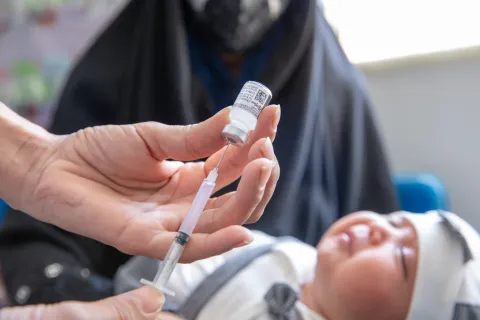
Not All Heroes Wear Capes
UNICEF with Support from GAVI strengthens the vaccinators workforce to improve the immunization status of children and families in Afghanistan
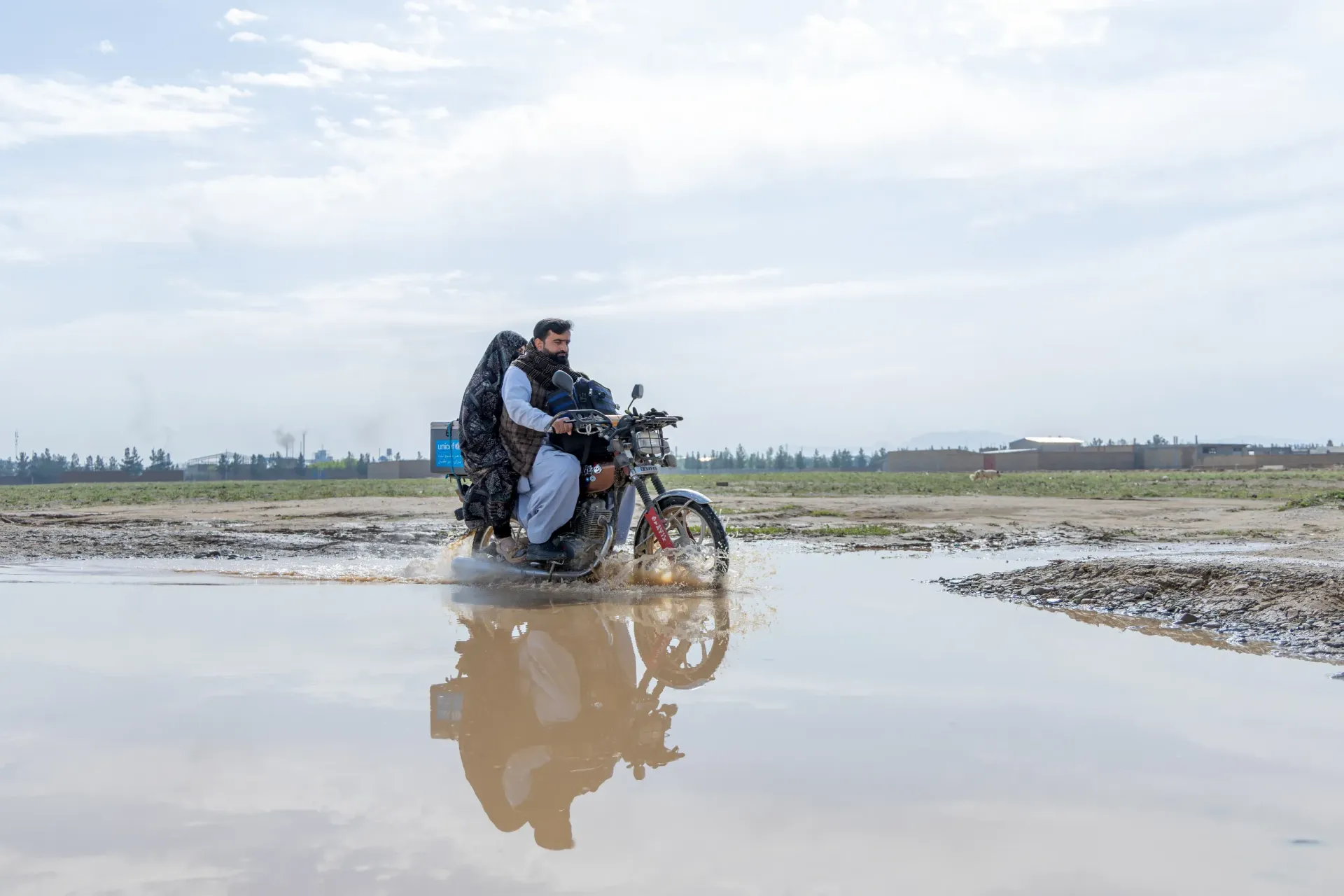
Afghanistan is a country of diverse and beautiful landscape, communities living along water bodies and the mountainsides, largely in hard-to-reach areas – all bound together by the immense challenges that the country has been faced with and the continued resilience of its people over the decades. Having survived years of conflict, natural disasters, a pandemic, changing political environment, and economic challenges; the health and wellbeing of the children and families of Afghanistan continue to be at risk.
These challenges have pushed many children further out of reach of essential services including immunization, specially for children under five years of age and zero-dose children who remain deeply impacted by displacements, vaccine hesitancy, poverty, education and gender disparity. In 2024, Penta-3 coverage was 59 per cent, while Penta-1 coverage reached 66 per cent, indicating an estimated 490,000 zero-dose children across Afghanistan[1].
UNICEF, with support from GAVI – the Vaccine Alliance, continues to work on closing these immunization gaps through strengthening the health system supported by GAVI's Equity Accelerator Fund. Under this initiative, more than 1,200 vaccinators have been deployed across 34 provinces of Afghanistan. For families who are unable to access healthcare services and health facilities, these vaccinators are now bringing lifesaving services to the most underserved and hard-to-reach children and their families for the first time in decades.
Each vaccinator carries the vaccines from the health facilities and delivers them to the health facilities and communities, where they administer it to the children. These heroes, while they may not wear capes, travel miles, beat the weather, come heat or rain, brave through unimaginable challenges on the way and fulfil the duty of saving lives of countless children, every day.
Each morning, vaccinators across Afghanistan quietly set out to their journeys delivering and administering vaccines – to health facilities and children and women in the communities, strengthening the immunization of the people in urgent need of access to health.
Two is better than one
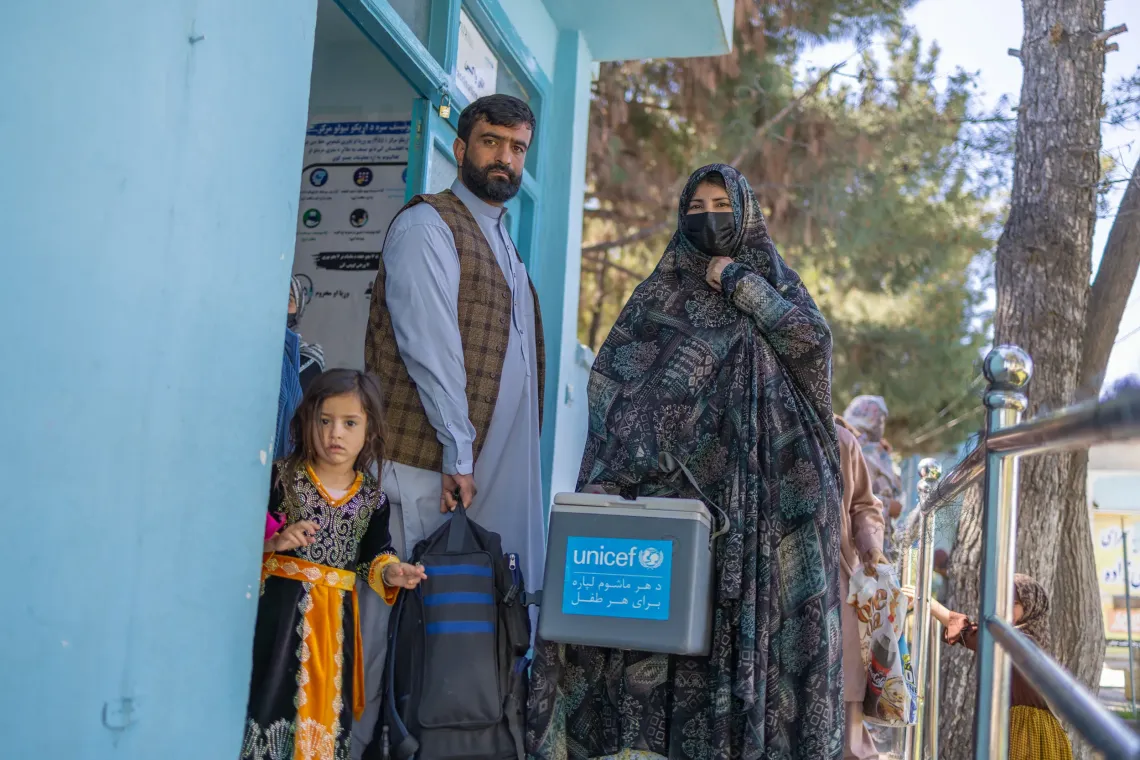
“We have only one goal, and that is to not miss any child due for vaccination,” says Omid (30), an outreach vaccinator, as he gets ready to leave for vaccination visit on a sunny Tuesday morning in Guzara district of Herat Province, Afghanistan. Carrying the vaccines, the records and essential supplies, Omid and Nadia (29) - the husband and wife – set out on Omid’s motorbike to reach the villages in hard-to-reach areas.
“We have divided the tasks amongst ourselves. While I take care of logistics and making announcements to call on the parents and families to start coming for the vaccinations, Nadia takes care of guiding mothers on vaccine schedules and educating them on importance of vaccinating their children and themselves during pregnancy. We both administer vaccines,” adds Omid.
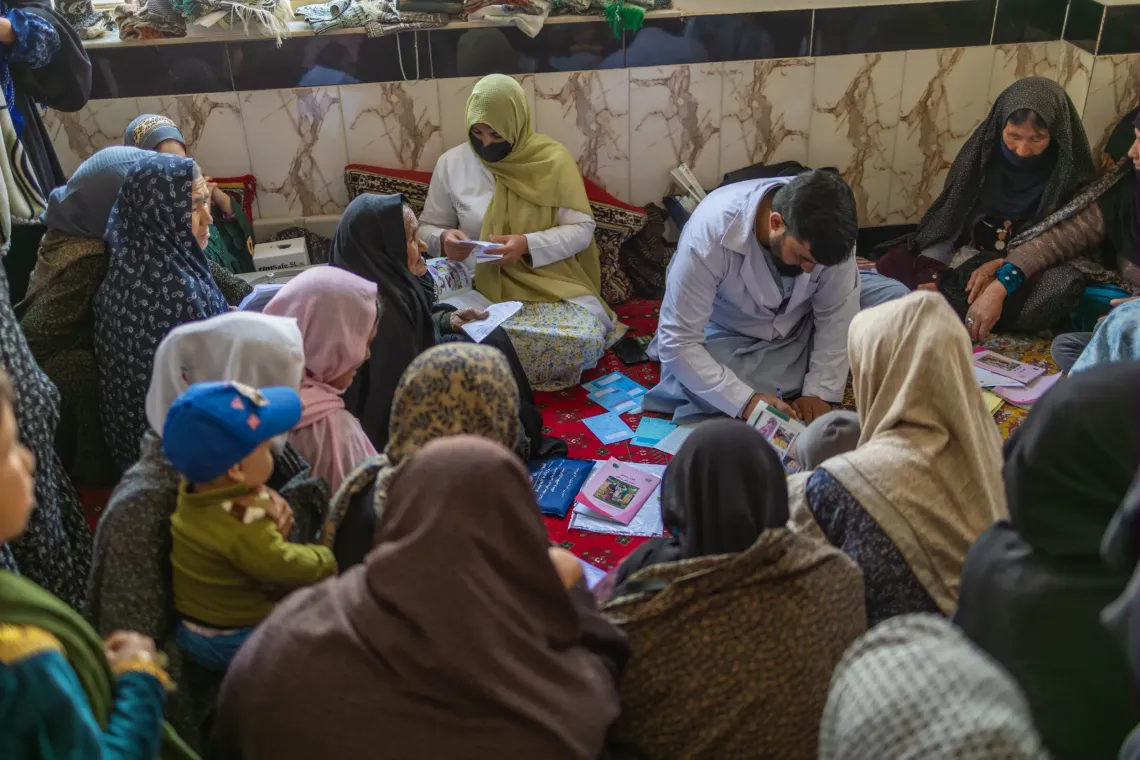
Omid and Nadia plan and schedule their visits in advance. Together they manage community mobilization, registration of children and women, administering vaccines, and providing health education to families.
“Talking and guiding the families plays a very important role in vaccination visits, says Nadia. “When we explain and answer their questions, clearly, the mothers become more confident and bring their children for vaccination. I tell them that vaccine protects your children from serious and preventable diseases, so it is critical to get the vaccine on time,” she adds.
Omid and Nadia’s teamwork not only help Nadia continue responding to the call of duty, as her Mahram (male chaperone), Omid, accompanies her, but it also helps them cover large catchments, reaching more families, and strengthening vaccine coverage in rural, underserved communities and hard to reach areas. The couple travels long and challenging routes on a motorbike to reach their vaccination site.
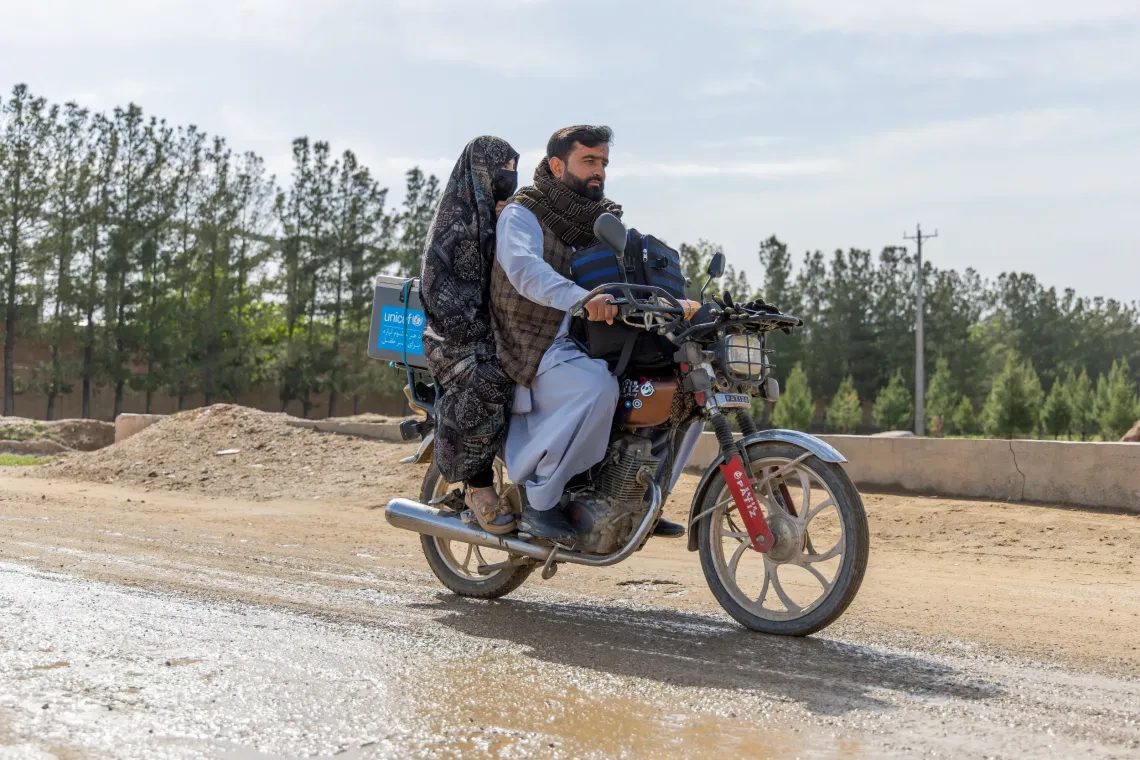
“Reaching some areas can be quite difficult sometimes. As they don’t even have proper roads or a pathway. But we continue, even when the road is difficult, because these children need protection,” says Omid.
Going the last Mile, literally, for Every Child
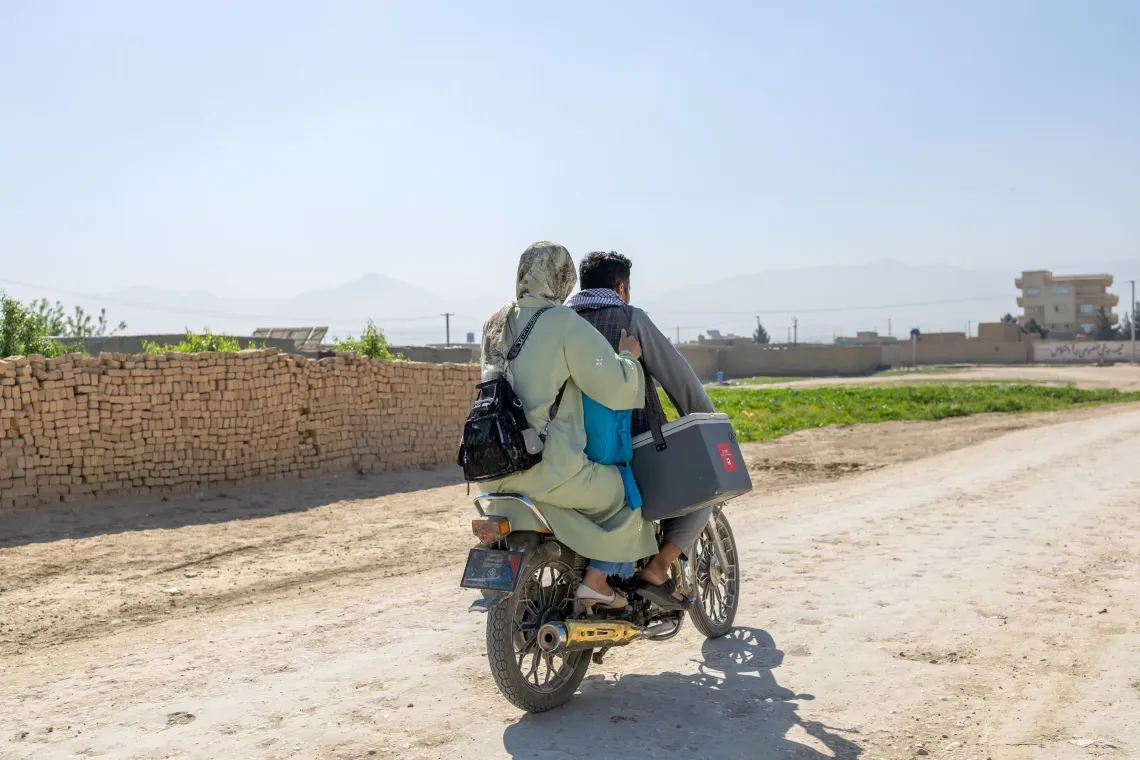
Zahra, a 26-year-old is an outreach vaccinator, working at Ali Chopan Basic Health Facility in Balkh region of Mazar-e-Sharif Province, Afghanistan. Leaving her two-year-old child with the grandmother, Zahra sets out every morning to reach the health facility – that takes about 30 minutes on bike with her husband, Ali (27).
“Before going to the communities, I come to the clinic first to help my colleagues with administering vaccines, as there are many patients every day,” says Zahra. Starting her day early and once she has finished assisting at the health facility, Zahra proceeds to visit the communities.
“My husband Ali accompanies me to work and with his support, I can reach all near and far off locations, no matter the weather or difficulty. He is always with me,” she explains.
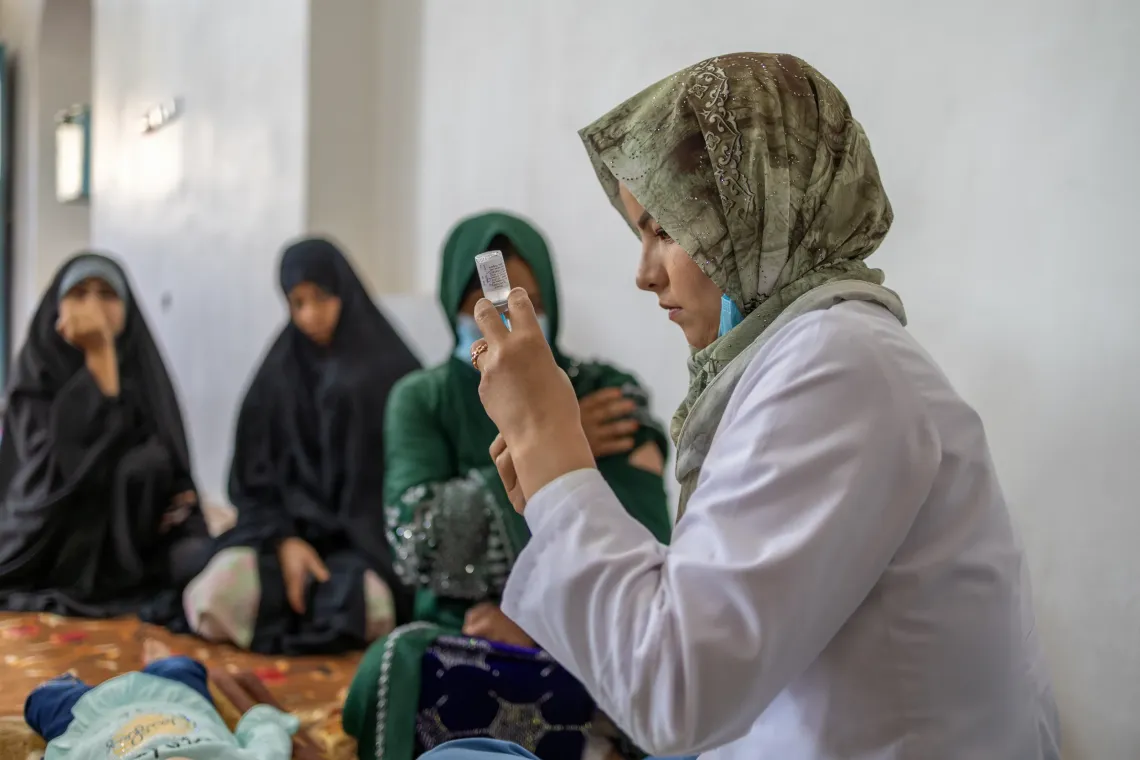
Vaccinating children and women between the ages of 13 and 49, Zahra vaccinates about 35 to 50 people in different locations, every day. She believes that while many families may not have means to visit the health facilities, she can bring life-saving and essential vaccines closer to them. “Some mothers walk for up to one hour just to reach the vaccination point. Despite the challenges and distance, they come to me, so their children are protected and healthy,” adds Zahra.
“For me this is not only a job, but my responsibility towards my community. Every vaccine that I administer, helps protect a child, a mother, and a future,” says Zahra.
A Bond of Trust that has Stood the Test of Time
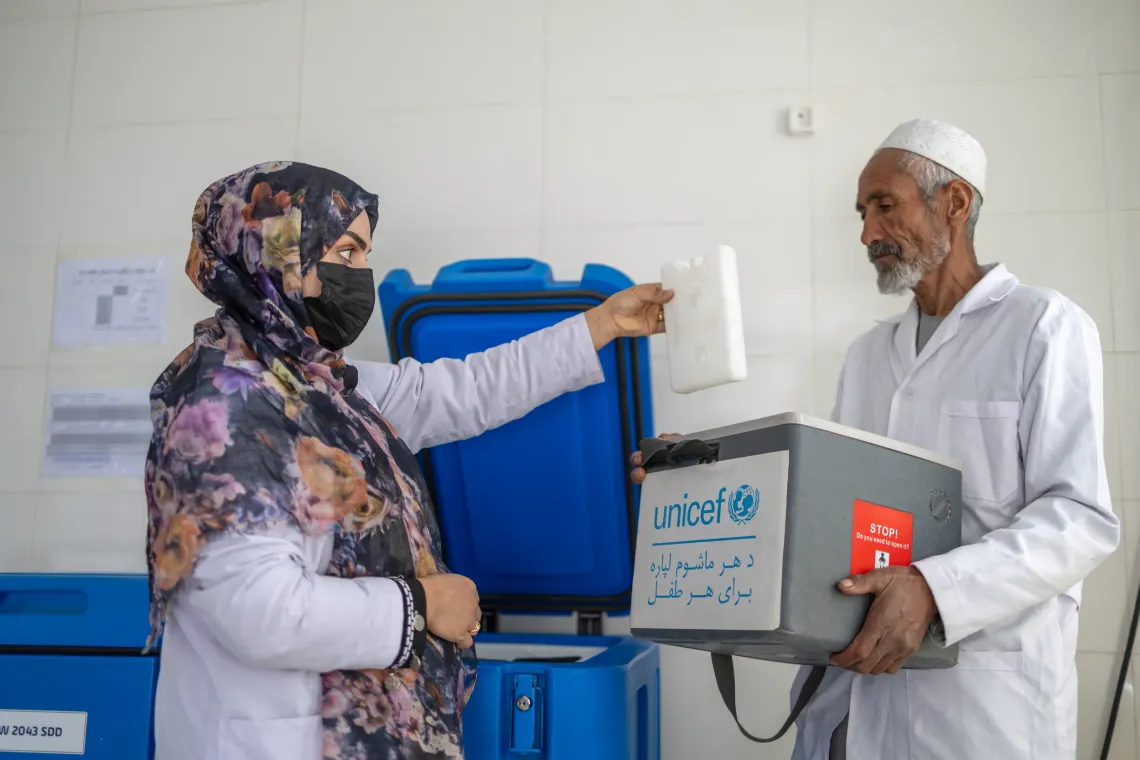
“Every day, I stop by to collect the vaccines at the health center, and continue my journey to the communities, irrespective of the difficulties on the road, the weather, freezing cold, rain, or heat. I pass through all conditions and reach the children whom no one else may reach,” says Abdul Aziz, a 54-year-old vaccinator from Kahdistan district of Herat Province, Afghanistan.
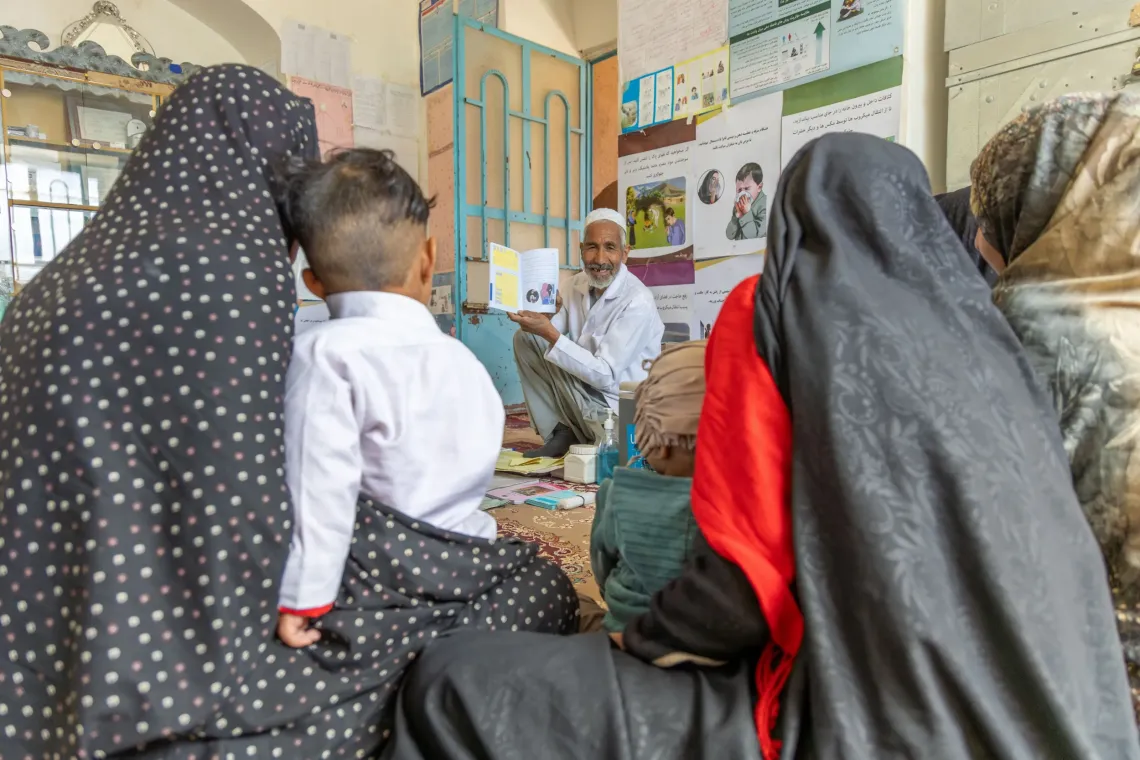
Member of the vaccinators task force, Abdul Aziz has been working tirelessly as a vaccinator for 16 years. His own community and those that he visits recognize and trust him. Building on this trust and having vaccinated at least two generations of some families, Abdul Aziz also provides health education to families and mothers. “I speak to mothers, guiding and informing them about different vaccines, their importance and schedules for their children,” says Abdul.
Main breadwinner for his family of eight, Abdul takes immense pride in his 16 years – and counting – of service. “My family and I feel very proud of me for helping children and mothers. Despite all challenges, I am committed to protecting children from preventable diseases through vaccination,” says Abdul, as he smiles while getting ready with his vaccine carrier, leaving for an outreach site.
Continuing the efforts, UNICEF ensures that every child and woman of Afghanistan has access to lifesaving vaccines. With GAVI’s support – and of Japan for vaccine supply and cold chain systems, alongside other partners and donors – this recruitment is a sign of immense hope, and a guarantor of a protected, healthy future for underserved, vulnerable and hard-to-reach populations, that have never been reached in past decades.
[1] WHO/UNICEF Estimates of National Immunization Coverage (WUENIC), 2024 revision- Published 15 July 2025