An oasis in a medical desert
From vaccines to nutrition screening and pre-natal checks, pop-up clinics deliver primary health care to under-served communities in southern Afghanistan

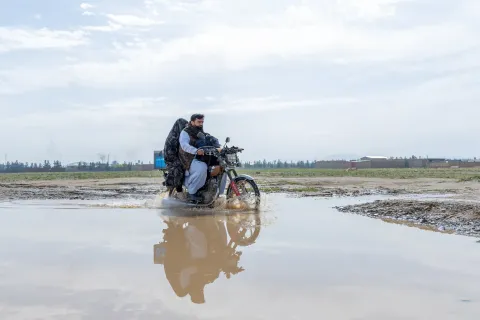
It’s like a pop-up clinic. For one week every month, a medical team sets up in a “white area” – a community located farther than five kilometres from a static health facility.
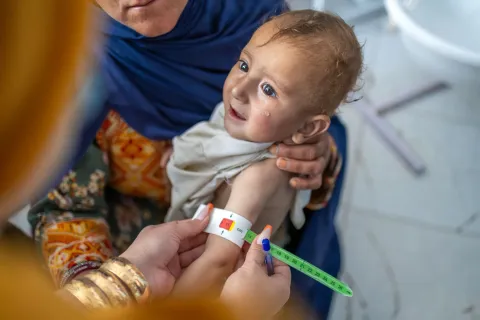
With a doctor, midwife, vaccinators, nutrition counselor and a health educator on board, the team provides vaccinations, treatment for diseases like diarrhoea and respiratory infections, and screens children for malnutrition. They also deliver pre-natal and antenatal care to pregnant women and mothers.
These pop-up clinics in Afghanistan's southern Kandahar province serve up to 150 patients every day.
Nargis
When patients arrive at the clinic, they register and proceed to a waiting area. There, community mobilizer Nargis teaches them about vaccines, nutritious diets and maintaining good hygiene. She answers their questions and allays their fears, particularly about vaccines for those who may be skeptical.
“I do separate sessions for mothers who refuse to vaccinate their children, to understand their point of view and explain why vaccines are important for their children,” says Nargis.
Sometimes Nargis has soap and fliers to give mothers after each session.

Baby Asiya
Two-month-old Baby Asiya is getting her polio and rota vaccines.
“This clinic is convenient because it is not too far from our home. We can easily come here. The other hospitals are far, and we can’t go unless my husband takes us,” says Asiya’s mother.
These pop-up clinics spend a week per month in each location, occupying space in a rented building in the community. The location is chosen carefully, serving patients who are not able to reach the nearest health facility or hospital in the area.

Nadia
It’s just after 10 in the morning and midwife Nadia is seeing her 12th patient for the day – Shukria, a mother of three.
Shukria has been feeling dizzy and weak along with a headache that won’t stop.
“Of out the 12 patients I have seen this morning, seven have anaemia. It is very common here,” says Nadia as she examines Shukria. After the exam, she gives Shukria 30 tablets of iron folic acid to treat the anaemia.
When severe, anaemia can cause complications during pregnancy and lead to pre-term babies, or those born too soon and with a weight that is lower than normal.

Rukia
Rukia is at the clinic today with two of her six children. They only had to walk about 15 minutes. Rukia's six-year-old, Layla, is being treated for a respiratory infection, while her youngest, three-year-old Zubeda, just received her polio vaccine.
In the past month, more than 1,000 children have received the polio vaccine at this pop-up clinic.

A hybrid clinic model
Supported by UNICEF and the Gates Foundation, each of the six health teams in Kandahar serves four delivery points, spending one week in each location before moving on to the next.
The risk of exposure to deadly, preventable diseases remains high in Afghanistan, one of the last two countries in the world where polio still lingers. Polio transmission has resurged, pointing to immunity gaps, especially in previously inaccessible locations, where health facilities are too far and among mobile and cross-border populations.
These pop-up clinics offer an integrated package of health care services, aiming to increase vaccine acceptance and uptake, especially of the polio vaccine. They aim to reach under- and unvaccinated children with polio vaccines, as well as other routine vaccines that prevent children from diseases like measles and pneumonia.

Dr. Tahir
Dr. Mohammad Tahir, who heads the team at the pop-up clinic, is seeing a rising demand for the services they provide.
While he treats 5-year-old Rahmar for an ear infection, his mother receives iron folate for her anaemia.
"Everywhere we go, people want us to stay longer but we cannot," he explains. "We must move around to treat more people in communities far from regular health facilities."