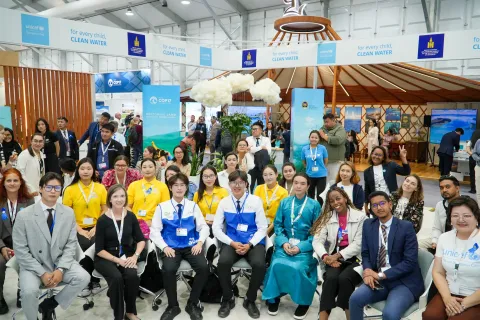
Smart Solutions for Safe Water
in Mongolia’s Eastern Steppe
In the remote eastern steppe of Mongolia, safe water is becoming more than a daily necessity — it is becoming a story of innovation, resilience, and local leadership.
Home to around 65,000 people, Sukhbaatar Province stretches across vast distances where communities are widely dispersed. Like many rural areas in Mongolia, the province faces increasing pressure on its water sources due to climate change, overuse, and ageing infrastructure. Despite these challenges, local authorities, technicians, and engineers are working to modernize the province’s water system for communities.
In Sukhbaatar Province, a local public water utility company called “Durvulj” is showing how smart technology and strong partnerships can help communities adapt to growing water challenges. UNICEF Mongolia, with support from UNICEF UK and the Eleva Foundation, is working with Durvulj to build more climate-resilient, reliable services for children and families.
Innovation through local leadership
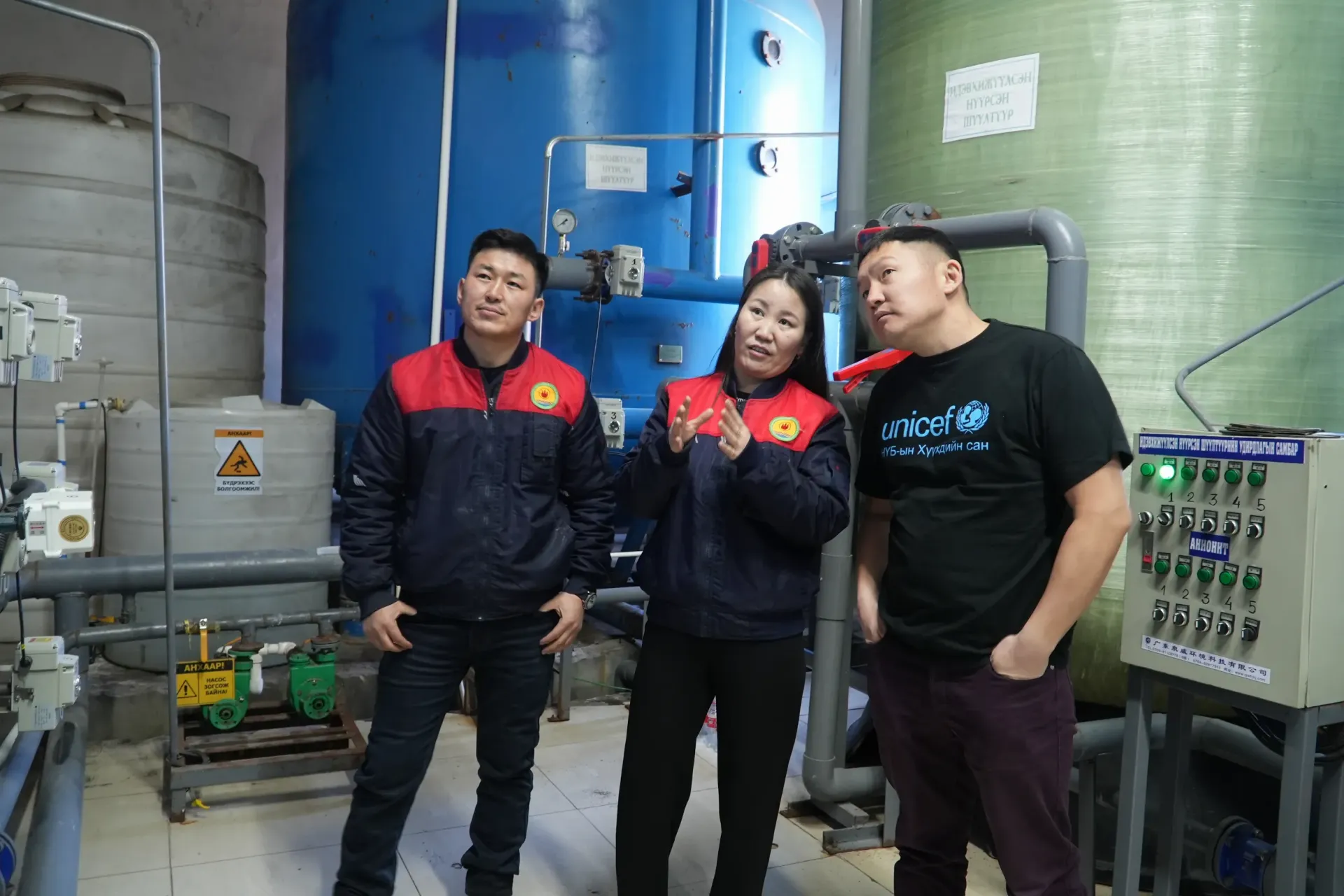
Durvulj, the province’s public water utility company, is the main organization managing water at the Sukhbaatar province center, with a population of 27,000. Through initiatives in digital technology and local capacity, Durvulj is improving how water is monitored, managed, and delivered.
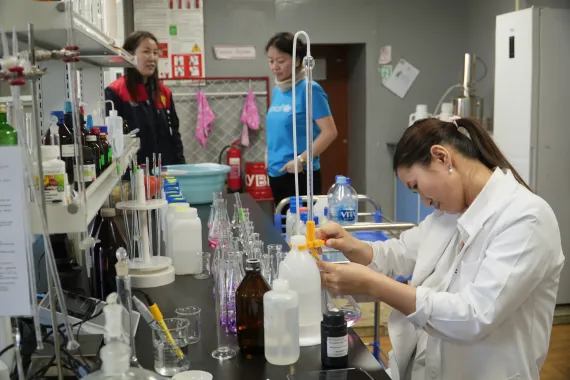
One important step has been strengthening water quality testing. The province upgraded its water laboratory to better monitor drinking water safety and respond to risks more quickly. According to the report from Central Water Laboratory in 2025, the drinking water sample from Sukhbaatar Province met Mongolia’s national drinking water standard (MNS 0900:2018), with all tested chemical indicators remaining within permissible limits.
“Improved testing and monitoring have helped us consistently monitor drinking water safety,” said Ts.Nandintsetseg, Head Laboratory Technician at Durvulj.
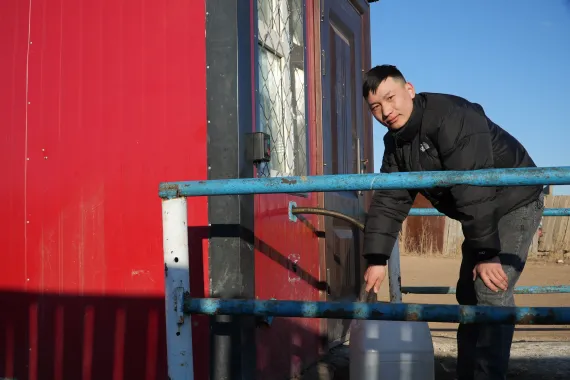
Innovation is also improving daily access to water for families living in Ger(traditional housing) districts. More than 60 per cent of residents in Sukhbaatar Province live in Ger districts and rely on water distribution kiosks for their daily water supply. By installing smart water systems at all water distribution points (kiosks), families can now access safe water 24/7, while the integrated digital monitoring system enables Durvulj to efficiently monitor water use, manage operations, and improve service delivery.

For residents connected to the central water supply and sewage system, the province is also piloting a smart (automatic) metering technology. More than 1,900 households — representing around 30 per cent of connected users — as well as local businesses have already received smart water meters, helping both families and service providers better understand and manage water consumption.
“People can review their water consumption and help prevent overuse on Toki app[1],” said U.Sukhbat, Senior Distribution Engineer at Durvulj.
Through these initiatives, Durvulj is emerging as a leading example of digital water management in Mongolia’s remote province.
How UNICEF is supporting local solutions
To further strengthen the system, UNICEF Mongolia, with support from UNICEF UK and the Eleva Foundation, is working closely with local authorities and Durvulj to expand access to safe water services. To meet the growing water demand of the population and reduce pressure on existing water sources, an additional high-capacity groundwater well is currently under development to strengthen long-term and reliable water supply services for communities in Baruun-Urt city (the province centre).
Once completed, the new well is expected to increase the Baruun-Urt city’s water supply capacity by 25 per cent. It is also being designed to use solar energy, helping reduce operational costs, and promote more sustainable water services. With Mongolia receiving around 257 to 260 sunny days each year, solar energy offers strong potential for rural water systems.


Through co-financing from the local government, Durvulj has also helped bring together UNICEF, other development partners, and local decision-makers to jointly plan and invest in sustainable water solutions for the province.
The way forward for nationwide water security
Sukhbaatar’s experience reflects broader challenges facing many provinces across Mongolia. In remote soums, groundwater sources remain limited, technical capacity is often low, and budgets for operation and maintenance are insufficient to meet growing needs. Yet the Durvulj water utility company shows what is possible when local leadership, innovation, and partnerships come together.
“The water sector in Mongolia needs stronger national policy support and sustainable financing to ensure safe water access for every child, no matter where they live,” said Ariuntungalag Danielsson, WASH Officer at UNICEF Mongolia.
As climate pressures continue to intensify across Mongolia, Sukhbaatar’s experience offers an important example of how smarter systems and local action can help build more resilient water services — and protect every child’s right to safe water.