UNICEF launches project to improve sanitation and hygiene in flood vulnerable areas
Every child has the right to clean water, sanitation, and hygiene.

- English
- Mongolian
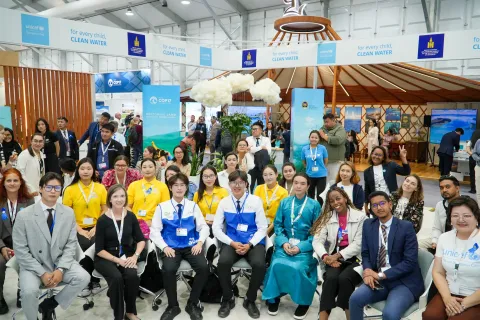
The project on “Improving sanitation and hygiene in flood vulnerable communities for improving public health situation” was officially launched in Ulaanbaatar, Mongolia, 2nd April 2024. The launch event was under the joint leadership of the Deputy Prime Minister of Mongolia, the Ambassador Extraordinary and Plenipotentiary of Japan to Mongolia, UN Resident Coordinator in Mongolia and UNICEF Representative to Mongolia. In attendance were high-level government officials including Vice Minister of Environment and Tourism, Member of the Parliament of Mongolia, Chief of the National Emergency Management Agency (NEMA), senior government officials, as well as representatives from the diplomatic community, UN agencies, government agencies and private sector. This diverse representation highlights the broad support and collaborative effort towards improving public health in flood vulnerable communities.
Over the past decade, Mongolia has experienced a 1.5-fold increase in natural disasters, primarily due to climate change. The situation is exacerbated by poorly planned urban construction and blockage of watersheds, which slow water drainage due to the lack of proper drainage facilities in cities. In July last year, a flood impacted 128,100 people across 31,600 households, causing power and water outages in over a thousand buildings, damaging more than 20 roads, and severely limiting access to basic services for children and families. The flood also heightened the risk of infectious and waterborne diseases due to overflowing pit latrines and inadequate hygiene practices.
In Mongolia, 82.5% of households have access to “at least basic” drinking water services. However, only 30% of the population has access to safely managed drinking water services, which is an improved water source accessible on premises, available when needed and free from faecal and priority chemical contamination. On the other hand, the increased frequency of flooding during the last few years has caused an extra burden for many households living in flood-prone areas.
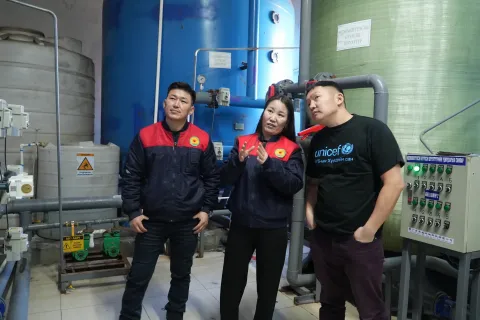
In response to this situation, UNICEF is launching a project, funded by the Government of Japan, with the main objective of improving access to WASH services in flood-prone communities in 9 districts of Ulaanbaatar city. The project’s main objectives include:
- 18 WASH facilities with sanitation system constructed in flood prone areas
- Procurement of 3 heavy duty water pump for NEMA
- Strengthening capacity of health and education professionals and overall operation of the NEMA and State Emergency Committee under the Deputy Prime Minister’s Office for the nationwide systematic emergency response coordination

During the project launch event, Deputy Prime Minister of Mongolia, Mr. Amarsaikhan Sainbuyan shared his thoughts on the project: “The unwavering support from the Government of Japan and UNICEF have been invaluable to us. Three years ago, during the global battle against the Covid-19 pandemic, Government of Japan generously supplied Mongolia with 2.35 million doses of the Pfizer vaccine through UNICEF Mongolia. Through this project, we aim to provide a reliable source of clean and hygienic drinking water to families and children in flood-prone areas of Ulaanbaatar city, including women, the elderly, and people with disabilities.”

H.E. Mr. Igawahara Masaru, Ambassador Extraordinary and Plenipotentiary of Japan to Mongolia said: “This project intends to underpin the efforts of Mongolian people who are taking measures to improve the environment so that the citizens of Ulaanbaatar can live in a safe and sanitary environment. I am pleased that Japan will be able to contribute to this end in collaboration with UNICEF, which has extensive experience and knowledge in this field. I hope with this project, Ulaanbaatar becomes a city where people can live in safely and sanitary conditions.”

UN Resident Coordinator Mr. Tapan Mishra, said: “This project is not just about dealing with floods, but about strengthening Mongolia in the face of climate change. It’s about building resilience and reducing disaster risk. We are grateful for the support from the Government of Japan. Their contribution is not just about funding, but a testament to friendship and partnership. Together, we can make Mongolia a healthier, safer place, leaving no one behind.”

UNICEF Representative to Mongolia, Mr. Evariste Kouassi Komlan, said: “This project is a significant step towards ensuring that all children in Mongolia, regardless of where they live, have access to safe and clean water. Taking prevention measures and being prepared are essential to coping with flooding. We are grateful for the support of the Government of Japan and our other partners in this endeavor. Together, we can make a lasting difference in the lives of the most vulnerable communities.”

Every child has the right to clean water, sanitation, and hygiene.
Media contacts
About UNICEF
UNICEF promotes the rights and wellbeing of every child, in everything we do. Together with our partners, we work in 190 countries and territories to translate that commitment into practical action, focusing special effort on reaching the most vulnerable and excluded children, to the benefit of all children, everywhere.