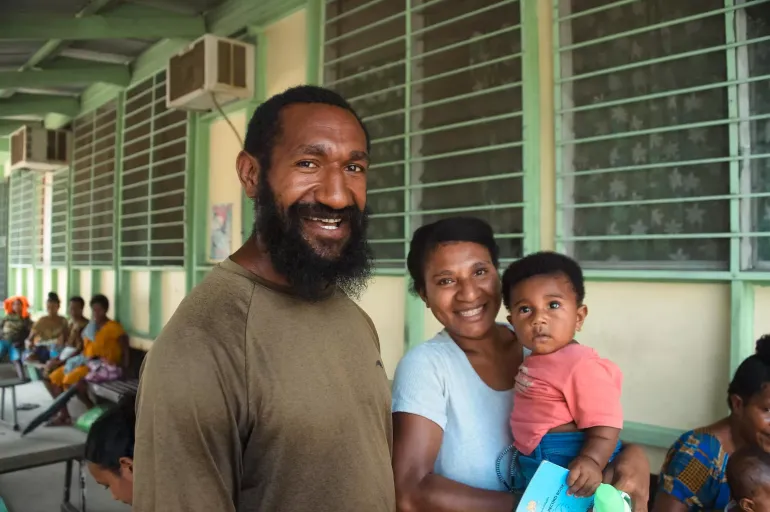
In the streets of Port Moresby, Papua New Guinea, the simple act of going from Point A to Point B is fraught with danger. The capital’s reputation as one of the world’s most dangerous cities precedes itself, with thefts, harassment, and assaults common on the road
Judy Agui, a community health worker at the Six Mile Well Baby Clinic, knows this all too well. “The manpower here is made up of female workers. With crime on the rise, we fear being held up by thugs on the road on our way to work.”
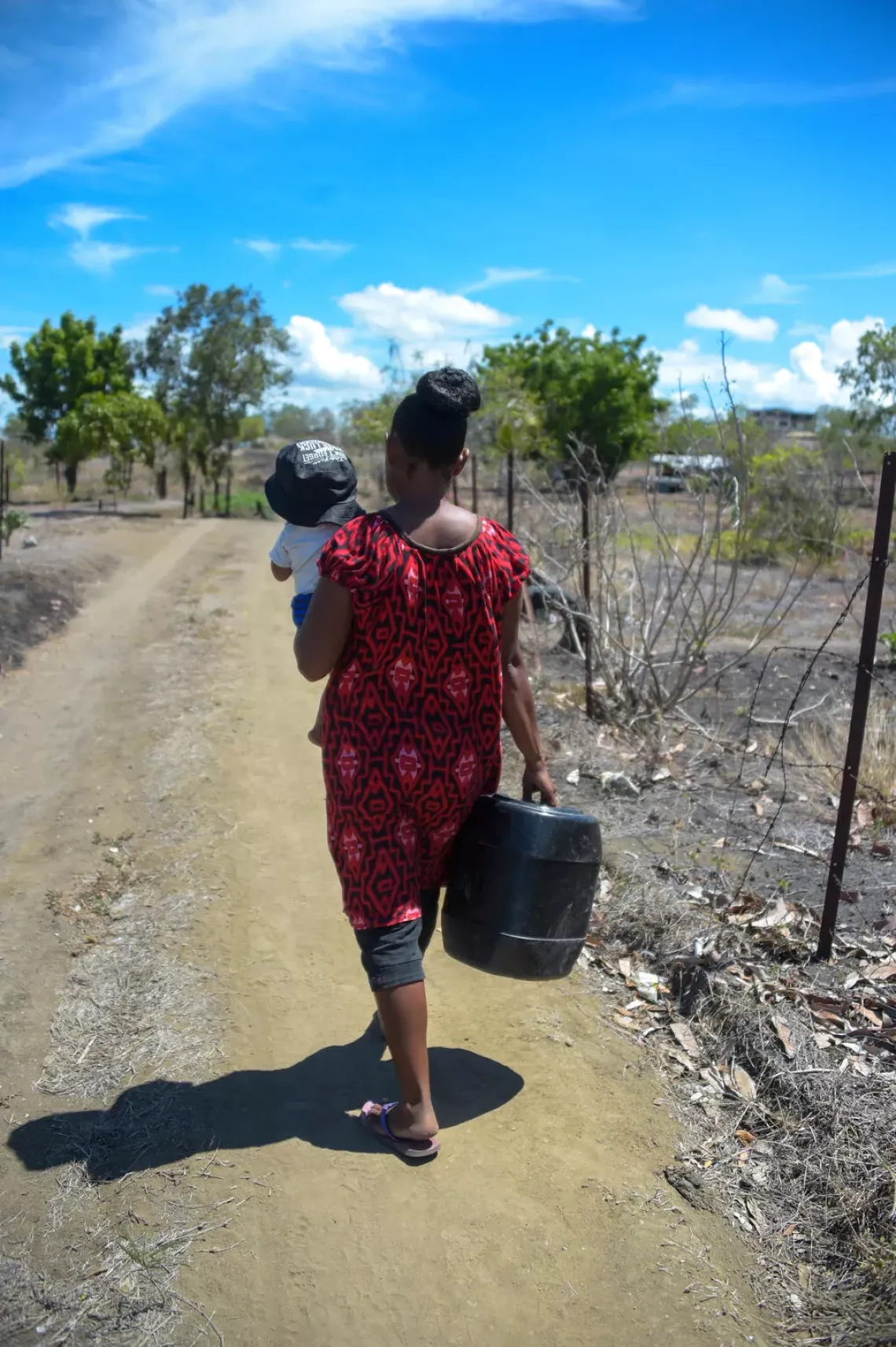
In Papua New Guinea, over 90% of women said that they had experienced some form of violence on public transport in a 2014 survey conducted by UN Women. Private transportation is safer, but carjackings and other forms of violence are still common, meaning that for Judy and her colleagues, restocking vaccines meant facing security threats when traveling to immunization facilities or vaccine warehouses. “You had to look for transport, travel from point A to point B, drop off your orders, and collect your orders. The main challenge (for my work) used to be transport, because of security.”
The risk isn’t limited to healthcare workers: mothers also risk their safety when traveling to reach community facilities that hopefully can vaccinate their children. Once there, they often find out that vaccine stocks are no longer available, spoilt or even that the facility is no longer operating. As a result, vaccine access for children is very low in Papua New Guinea, sitting around 60%, and increasing the risk for outbreaks at any point.

Thankfully, Judy and her colleagues no longer have to fear the dangers associated with picking up and transporting vaccines. In 2022, she started to use mSupply, a digital tool used to manage vaccine supplies. It’s part of a group of digital health initiatives supported by UNICEF and made possible by a generous donation from the Government of Japan. It has transformed the way in which she works. Every Monday and Wednesday, she sits down at her clinic with a tablet, and with just a few taps on the screen, she can update her vaccine stocks and order more, safe in the knowledge that they will be delivered the next day.
“It simplifies my work as a nurse, and it’s fast. It has really impacted our services here at Well Baby.”

Health services are also being improved across the nation through the eSupervisory tool, another initiative supported by the Government of Japan and UNICEF, who are also providing ongoing training and support. This monitoring tool provides the National Department of Health with insights and data on the performance of immunization facilities, including tracking of the immunization sessions taking place and the status of vaccines in cold chain management – ultimately leading to better monitoring and management of vaccine programmes.

“Reaching every child with life-saving vaccines should not come at the cost of a mother’s safety or a nurse’s security,” said Satish Gupta, Chief of Health at UNICEF Papua New Guinea.
"By introducing digital tools like mSupply and eSupervisory, we are not only improving vaccine delivery systems—we are ensuring healthcare workers can do their jobs safely and swiftly, helping restore trust in health services, especially for the most vulnerable. This is what innovation for equity looks like.”

“Before these tools were rolled out across facilities, monitoring was below 10% and there was no clear standard of how to monitor performance. Now that we have a standard, we can improve the performance of these facilities,” says Martha Pogo, National Manager of the Expanded Programme for Immunization at the National Department of Health.
The government also sees the wider implications of using digital tools to better face future threats. “Papua New Guinea is not immune to anything when we look at pandemics and climate change,” says Pogo. “The government should be open minded in terms of taking on improvements in the future, to improve the vaccination rate, but also to just ensure that children have better access to healthcare. Every child needs that healthy life.”