March 28, 2025 - it was just a regular Friday morning, like any other. I was working from home, busy juggling work calls and deadlines, when I suddenly started feeling a bit unsettled, like a mild queasiness.
Immediately, I knew what it was. A familiar feeling I’d experienced many times before – in aftershocks in Haiti, and during earthquakes in Pakistan and the Philippines. I waited for 10-15 seconds, thinking it would pass, but as it continued the swaying started to feel more noticeable. In my 14th-floor apartment, I could hear the building creaking, and I realized I needed to move. My backpack was next to my desk, so I grabbed my laptop, phone and charger, and my passport. Then the cat – who had slunk off and was hiding behind the couch.

The swaying was slowing by then, and as I burst out of my front door, I ran into my neighbour, barefoot and standing in the hallway with her small baby. I grabbed her some shoes from the shoe rack outside her apartment, and as the swaying finally stopped, we made our way down the fourteen flights of stairs. But the real challenge came when we were outside. Where should we go? In this crowded urban area, all we saw were tall buildings, power lines and telephone poles with their jumbles of cables, which didn’t seem safe to stand under. We wandered around until we found shelter near a security guard’s booth and waited.
During those stressful moments, I realized how unprepared I was—just like everyone else on the street, looking around helplessly. Despite having experienced earthquakes in the past, I was still caught off guard. When I moved to the Philippines, I knew it was a high-risk area, so I made sure I was in an earthquake-proof building and had an emergency grab bag packed by the door. I felt so frustrated with myself for having forgotten all those good drills!
We waited in the blazing Bangkok sun, feeling hot and bothered and unsure of what to do next. I let my husband know I was safe (he’s based in Sudan) and started to get in touch with my team members - thankfully everyone was ok, though some were still trying to reach their family members. Then, the news came: the earthquake’s epicenter was in Myanmar, and it had a magnitude of 7.7. Other neighboring countries were reported to be impacted too. My first thought was for our colleagues in Myanmar. After a few moments, I heard back from Faika, a friend and colleague based in Yangon, who said they were still trying to get in touch with colleagues in the field.
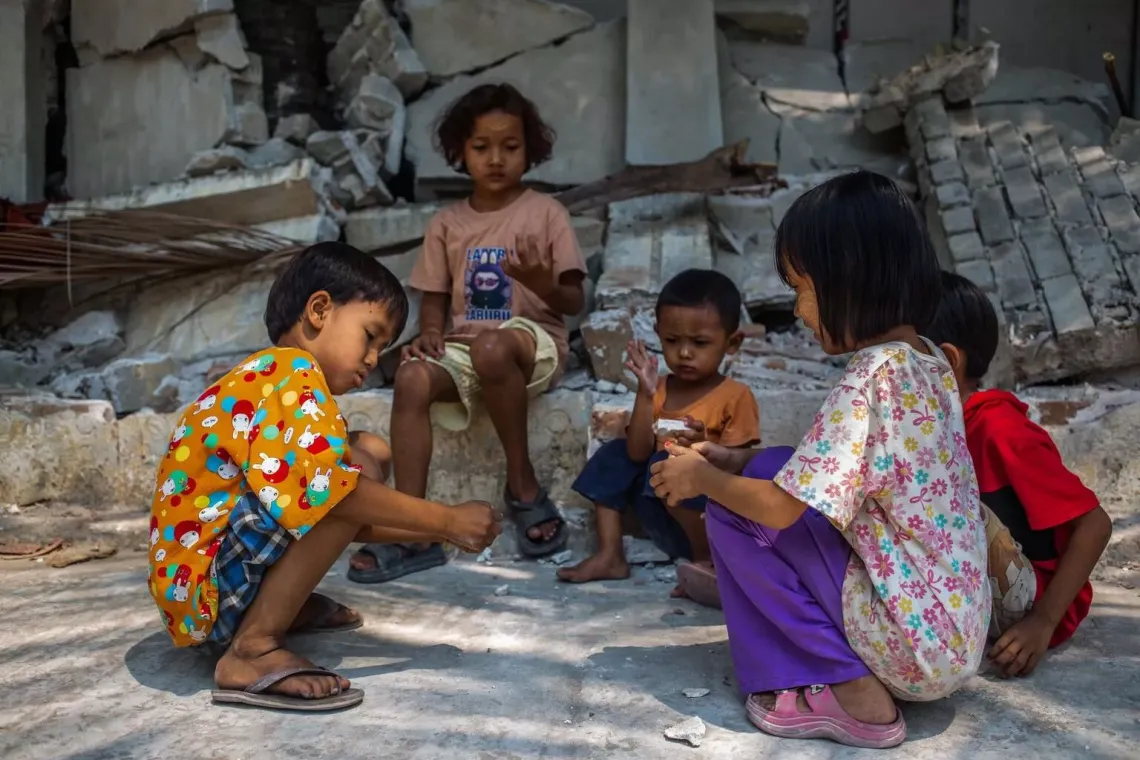
I couldn’t imagine how devastating the impacts of the earthquake would be, especially for the children in Myanmar, many of whom have faced years of conflict, displacement, poverty, and successive disasters – cyclones, floods, cholera outbreaks. It felt so unfair.
I knew we had to start work immediately. I found a side street with a small café garden where I could sit in the shade and start working and give my cat some water. I started looking at the news, messaged our emergency focal points in China, Lao PDR and Thailand and with the other emergency team members, we started gathering information on the impact of the earthquake, and figuring out next steps we would need to take.
Friends started sharing videos of the devastating building collapse near Chatuchak and dramatic footage of water sloshing out of Bangkok’s hotel rooftop pools. Sitting there in the busy café, hearing everyone around me share stories of what they had done and how they felt in the moment the earthquake hit, I thought about our colleagues and the children who may have been going to school or playing with their friends, and the families who might have been having lunch together in their homes in Mandalay, going about their daily lives.
We were lucky in Bangkok—it seemed like very few buildings were damaged (whether because we were so far from the epicentre or because the infrastructure was built to withstand these shocks), our phones were working so we could check on our loved ones and let them know we were alright. I couldn't imagine how much more stressful it must be for those in the epicentre, not knowing how far the damage extended, with no internet or phone connection, no way of knowing who has been hurt, who is safe, if help was on its way.
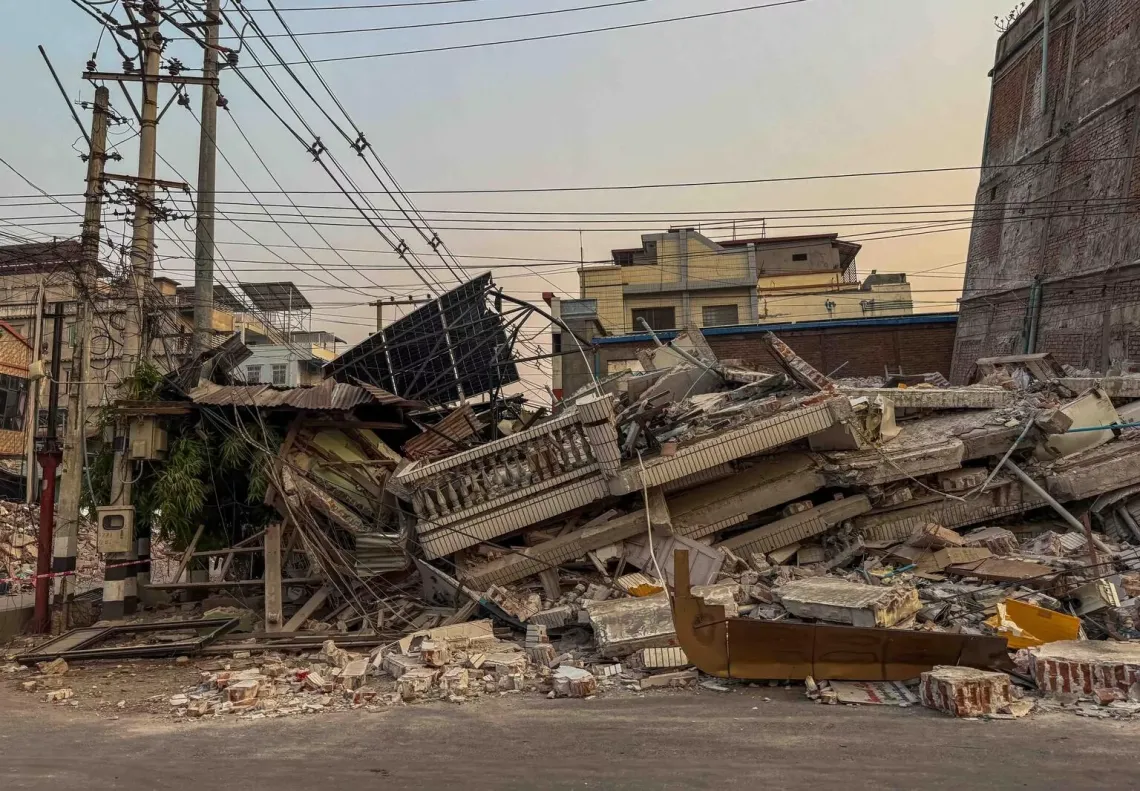
After hours of waiting, I got the all-clear to return from my building’s management. By the time I finished my work that evening, my feed was full of heartbreaking reports about the earthquake – homes, temples, hospitals and day care centres collapsing with many deaths and injuries anticipated, critical damage to air and road infrastructure that would be vital for the response. Every now and then I felt like the room was swaying, and I couldn’t tell if it was aftershocks or just a post-trauma reaction. I felt exhausted – the emotions of the day were finally catching up with me.
But there were messages that brought hope and a sense of solidarity – family, friends and colleagues from around the world checking in; confirmation that our office had approved immediate funds for the response and our supply team was already putting together a charter flight to bring in life-saving supplies; media and donors reaching out to find out what the needs were and how we planned to respond.
I knew this was only the beginning of a long journey ahead and having worked with UNICEF in a number of large-scale disasters around the world, I also knew that our staff on the ground would be hard at work – despite being directly impacted and the personal challenges they would be facing - they would be focused on the response, working tirelessly to help affected families and children. And I was reminded how proud I feel to be part of this incredible organization.
Before going to bed that night, I repacked my grab bag, just like I had done in the Philippines. For next time.
Louise Gorton is an Emergency Specialist at UNICEF East Asia and the Pacific