Access to clean water gives girls the freedom to learn

With funds from Japan, UNICEF installs hand pumps in flood-affected villages of Sindh Province

-
Helen Wylie
15 April 2024

Umerkot, Sindh: “When the flood hit, my entire village was submerged. Water engulfed everything around us,” says 12-year-old Farzana, recalling the floods from almost two years ago. “Our houses collapsed, and all our belongings were swept away. We barely managed to save our lives and get out.”

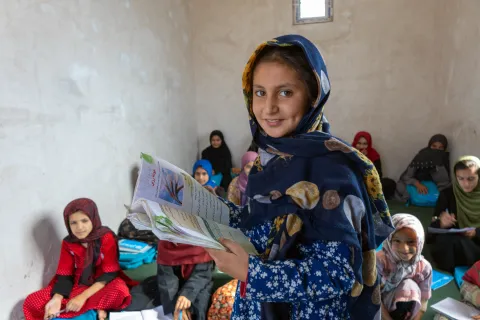
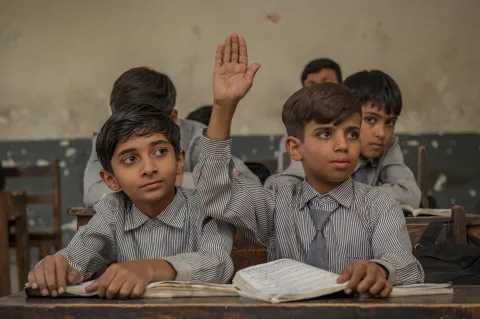
Farzana now sits happily at the front of her classroom, absorbed in a textbook. She’s learning Sindhi, Urdu, and English. She hopes to become a teacher herself one day.

But not long ago, Farzana’s future looked dismal. When the devastating floods hit large parts of Pakistan in August 2022, her home and the 40 households in her village were completely destroyed. The community had to relocate to a temporary camp for six weeks.

Even before the floods, a lack of safe drinking water in the dusty, rural village of Musa Jasser in Umerkot, Sindh Province, meant that Farzana would walk 7 kilometres with her mother to the nearest clean water source, up to three times a day, to collect water for her family. The only water closer to home was a contaminated pond. This exhausting chore left no time for school.

“The water source used to be very far away. Whenever I used to go to fetch water, it was exhausting. I used to feel hurt when I saw my friends going to school,” says Farzana.

UNI535328
UNICEF/UNI535328/Bashir Before a hand pump was installed in her village, Farzana would walk up to 20 kilometres a day to collect clean water for her family and carry it back on her head.

Following the floods, Musa Jasser was one of many communities supported by UNICEF and partners to ensure vulnerable populations have access to safe water and sanitation. With funding from the Government of Japan, a new hand pump provided villagers with their dream of having fresh, clean water every day. The pump was built on a raised platform to help withstand future climate shocks.

“I’m happy,” says Farzana, who walks just five minutes from her home to the new pump. “It saves time and now I can go to school and be with my friends. I like games, playing football and learning Sindhi.”

UNI535315
UNICEF/UNI535315/Bashir Farzana walks just five minutes to the new hand pump in her village to collect clean, safe water for her family.

Before the hand pump was installed, Farzana had missed four years of school due to spending her days travelling back and forth to collect water. But her teacher, Mr Hassan, who also lives in the village, had never given up hope of her returning.

“She has a lot of potential, I wanted her to keep studying,” he says. “When she came back, she had forgotten everything, even her ABCs, but we worked hard to get her back on track, and she passed grade 2. It’s important for girls to be educated. If they’re educated, the whole society progresses.”

In Sindh Province, around 4.2 million girls are out of school. Like Farzana, many are forced to stay at home due to traditional beliefs, poverty, or to help with household chores like collecting water for washing, cooking and drinking.

UNI535027
UNICEF/UNI535027/Bashir Farzana enjoys being back at school and playing with her friends.

“We didn’t feel safe going to another village so we would take the children with us,” says Farzana’s aunt, Sumri. “We didn’t have good water pots, so we had to go three times a day, every day. It was crowded. We would have to wait in turn. Now it saves a lot of time, and the children can go back to school.”

Access to safe drinking water is a basic human right, yet an estimated 50 per cent of households in Pakistan still consume contaminated water. The effects of climate change further worsen this situation, leaving millions increasingly vulnerable.

Access to safe water not only prevents waterborne diseases like diarrhea but also empowers communities, especially women and girls, by freeing up time and energy spent collecting water.

UNI535024
UNICEF/UNI535024/Bashir The new hand pump provides clean, safe water to all 40 households in the village.

With funding from the Government of Japan, UNICEF has reached 189,000 people in flood-affected areas of Balochistan and Sindh Provinces with access to sufficient clean water for drinking, cooking and washing; improved access to toilets; hygiene kits for adolescent girls and women; and improved WASH facilities in health centers, schools and institutions.