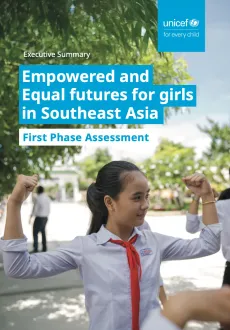
Empowered and Equal Futures for Girls in Southeast Asia
An assessment of gender norms, gender-based violence, empowerment and education outcomes among adolescents in Cambodia and Viet Nam

About
Girls in Southeast Asia continue to face harmful gender norms, gender-based violence and barriers to education that limit their well-being and opportunities. In Cambodia and Viet Nam, schools remain shaped by inequitable gender attitudes, with girls often held to stricter standards, burdened with caregiving responsibilities and subject to restrictions on mobility. At the same time, girls frequently demonstrate strong agency and academic performance.
This study presents the first phase assessment of the programme ‘Empowered and Equal Futures for Girls in Southeast Asia’. The assessment examines gender norms, gender-based violence, empowerment and education outcomes among adolescents in schools in Cambodia and Viet Nam. The study establishes a baseline that will be repeated at endline to measure change and track shifts in gender attitudes and outcomes among adolescents.
Key findings include:
- Girls demonstrate more equitable gender attitudes than boys, although girls continue to face persistent bias in expectations and perceptions in school settings.
- Protective attitudes toward violence coexist with acceptance of harmful norms. LGBTQ+ students also face stigma and exclusion.
- Schools can play an important role in fostering girls’ empowerment. However, economic hardship and tokenistic leadership opportunities continue to limit meaningful participation of girls.
- Girls outperform boys academically, yet stereotypes around STEM subjects and stigma around mental health persist.