More than 2.6 million girls in Afghanistan have been denied a secondary education since 2021
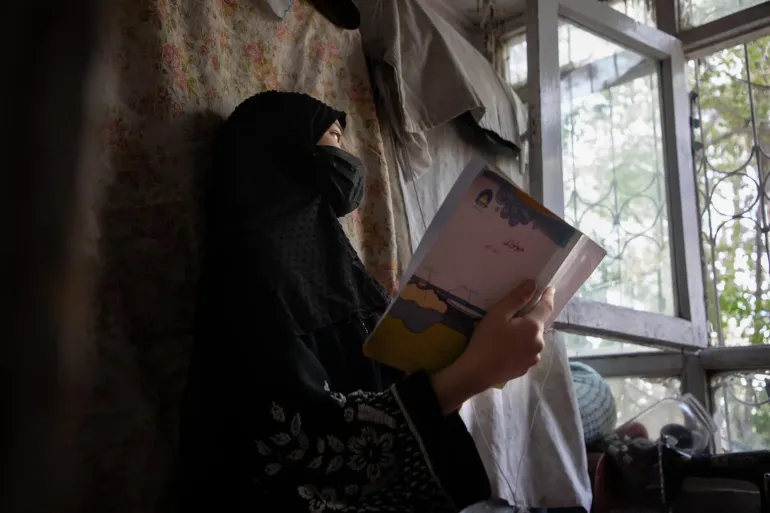
NEW YORK, 14 August 2026 – More than 2.6 million girls in Afghanistan have been denied a secondary education in the five years since the de facto authorities took power, UNICEF said today. Afghanistan remains the only country in the world where secondary and higher education is effectively closed to girls and women.
Girls have been barred from formal education beyond grade six since September 2021, and women from universities since December 2022.
“Five years may be brief in a country’s history, but it is a defining period in a girl’s life,” said UNICEF Executive Director Catherine Russell. “A classroom offers more than learning. It gives a young person a voice and the ability to reach their full potential. And it offers a shield against child labor, early marriage, and violence and abuse. When schools closed, that protection disappeared – at a time when girls needed it most.”
Girls who are out of school face heightened protection risks, including child labour, abuse, early marriage, and gender-based violence. Those risks rise with household poverty and displacement, and both are widespread in Afghanistan. More than 2.7 million people have returned from Iran and Pakistan since 2023, 60 per cent of them children and young people.
The effects extend beyond the girls directly affected. UNICEF analysis published in April 2026, The Cost of Inaction on Girls' Education and Women's Labour Force Participation in Afghanistan, found that the country risks losing up to 20,000 women teachers and 5,400 female health workers by 2030. The number of female teachers in basic education has already fallen by more than 9 per cent, from nearly 73,000 in 2022 to around 66,000 in 2024. Female representation in the civil service fell from 21 per cent to 17.7 per cent between 2023 and 2025.
The same analysis estimates that restrictions on girls' education and women's employment are costing Afghanistan US$84 million a year in lost economic output, with losses compounding each year the restrictions remain. The consequences also carry into the next generation. As the proportion of mothers without education rises, so do the risks of low birthweight, under-vaccination, and stunting among their children, adding further strain to a health system already under pressure.
Despite the restrictions, UNICEF continues to support learning in Afghanistan. In 2025, more than 3.7 million children in public schools received emergency education support, 442,000 children took part in community-based learning - 66 per cent of them girls - and 232 schools were built or rehabilitated.
"UNICEF calls on the de facto authorities to lift the restrictions on education and allow all girls and women to return to schools and universities immediately," said Russell, echoing the UN Secretary-General's call to lift the suspension of girls’ education in Afghanistan. “UNICEF and our partners stand ready to support the reopening of schools so that every girl can return safely. A country cannot thrive when half of its young people are held back. Afghanistan's future is outside the classroom, waiting to be let back in."
#####
Media contacts
Additional resources
About UNICEF
UNICEF, the United Nations agency for children, works to protect the rights of every child, everywhere, especially the most disadvantaged children and in the toughest places to reach. Across more than 190 countries and territories, we do whatever it takes to help children survive, thrive, and fulfil their potential.
Follow UNICEF on X, Facebook, Instagram and YouTube