“It’s worth fighting for what we want”
Through community mobilization, Flipper Nuñez, 21, managed to bring the issue of mental health to the indigenous community where he lives, on the border between Brazil and Venezuela

- Português
- English
Anyone who sees Flipper Nuñez gathering 200 people at the community cultural center in his community cannot imagine that the young man, who is 21 years old, was very shy not long ago. A native of the Taurepang ethnic group and a resident of Tarau Paru, an indigenous community on the border between Brazil and Venezuela, Flipper is part of the Venezuelan migratory flow.
He ended up coming to the country during a conflict in the region where he lived. Now, after three years in Brazil, he jumped at an opportunity to help teenagers and young people in his community deal with an urgent issue: mental health.
The young man is a volunteer for the Community Mobilization Strategy with Adolescent Participation, called CMAPS after the acronym in English, a UNICEF initiative in partnership with the Pirilampos Institute and the Adventist Development and Relief Agency (Adra), which seeks to unite young people in the co-creation of solutions to the problems faced by their communities in Roraima.
With a tablet in hand, Flipper carries out surveys, receives opinions and requests from the community and seeks to bring reliable information to where he lives. Like other indigenous Taurepang-Pemón communities on the border, Tarau Paru is among the most severely impacted by the influx of refugees and migrants from Venezuela. Of the 900 residents, about 600 are indigenous Venezuelans who have been welcomed in recent years. Even though the countries are separated, they are the same indigenous people, with linguistic origins and kinship ties.
But the process of forced migration due to episodes of violence, allied to the need of integrating into a new country and community, in addition to the pandemic, exacerbated the needs of the community. And, for Flipper, the difficulties experienced by teenagers and young people particularly increased: one of his friends took his own life.
“I lost people and loved ones. Since I lost my close friend, I started to see things differently. I didn't want to lose someone else,” he says. It was then that he had the idea of talking about the topic with the teenagers and young people of Tarau Paru. He spoke with the community school, which submitted a similar request. Then, he decided to mobilize the entire community and used the resources he had: he organized a lecture with UNICEF and partners on the subject, sent the invitation in his community WhatsApp group, visited the houses and even reinforced the invitation during a general meeting of the community.
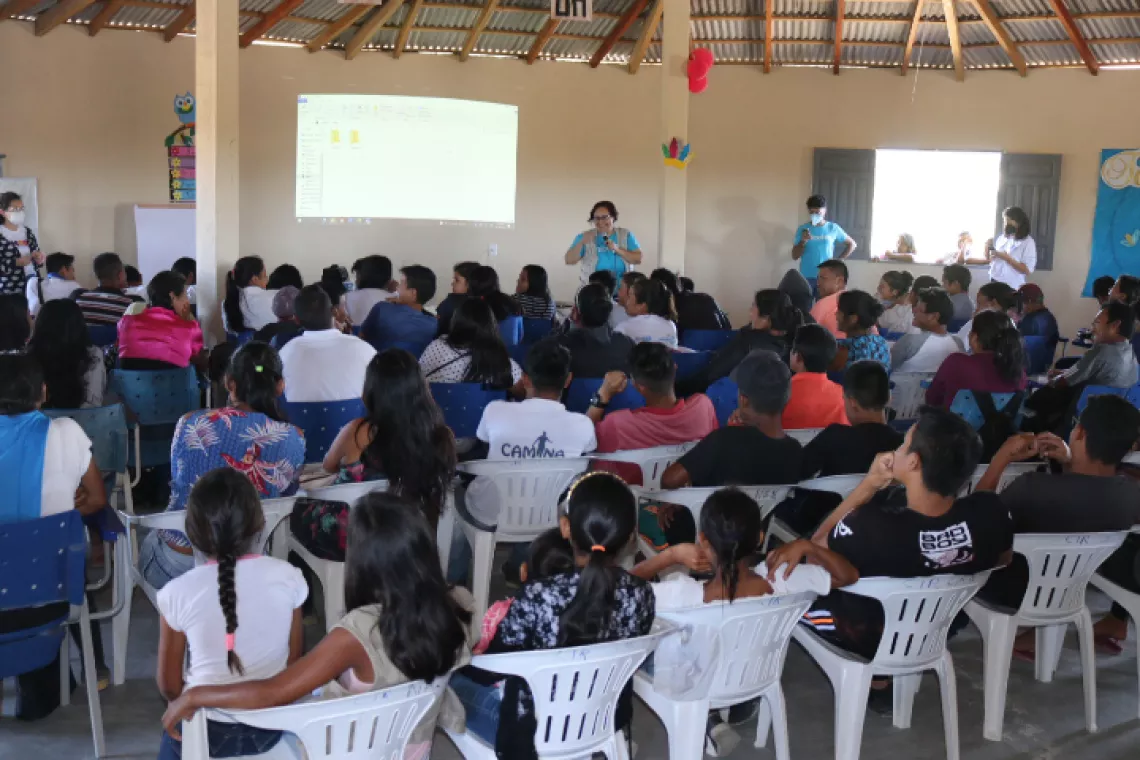
The result was a success: almost 200 indigenous, Venezuelan and Brazilian adolescents and young people participated in the lecture “Health of indigenous youth”, a moment to reflect on their own health and the importance of taking care of themselves. “For me, it was a joy to see people participating,” recalls Flipper. “I talk to other young people and I always like to mention this subject, so they don't feel alone,” he says.
Keep on fighting
In addition to mental health, Flipper has faced many challenges since leaving his home in Venezuela to adapt to a new country and language. He walked for hours every day from Tarau Paru to Pacaraima – the closest Brazilian municipality to the community – to attend school and earn a high school diploma.
“I wasn't working, I was very shy and was afraid to go out and talk to people,” he says. When he decided to become the first CMAPS community mobilizer in Tarau Paru, Flipper began to receive training on topics such as mobilization, working with adolescents, monitoring and research techniques, combating “fake news” and how to access services and rights, such as vaccination, social assistance and more. All in order to be able to follow the mission of bringing quality information and listening to the community. “Through the trainings, I started to develop and learn, to lose my fears. My mindset opened up: today I believe I can easily act in any situation,” he says.
After almost two years as a CMAPS mobilizer, Flipper assures that this is just the beginning of his story. He dreams of going to university and following his life in Brazil. “I want to study and be a doctor, because I like to help people. A true hero is measured not by his physical strength, but by the strength of his heart and humility. It's worth fighting for what we want”, he says.
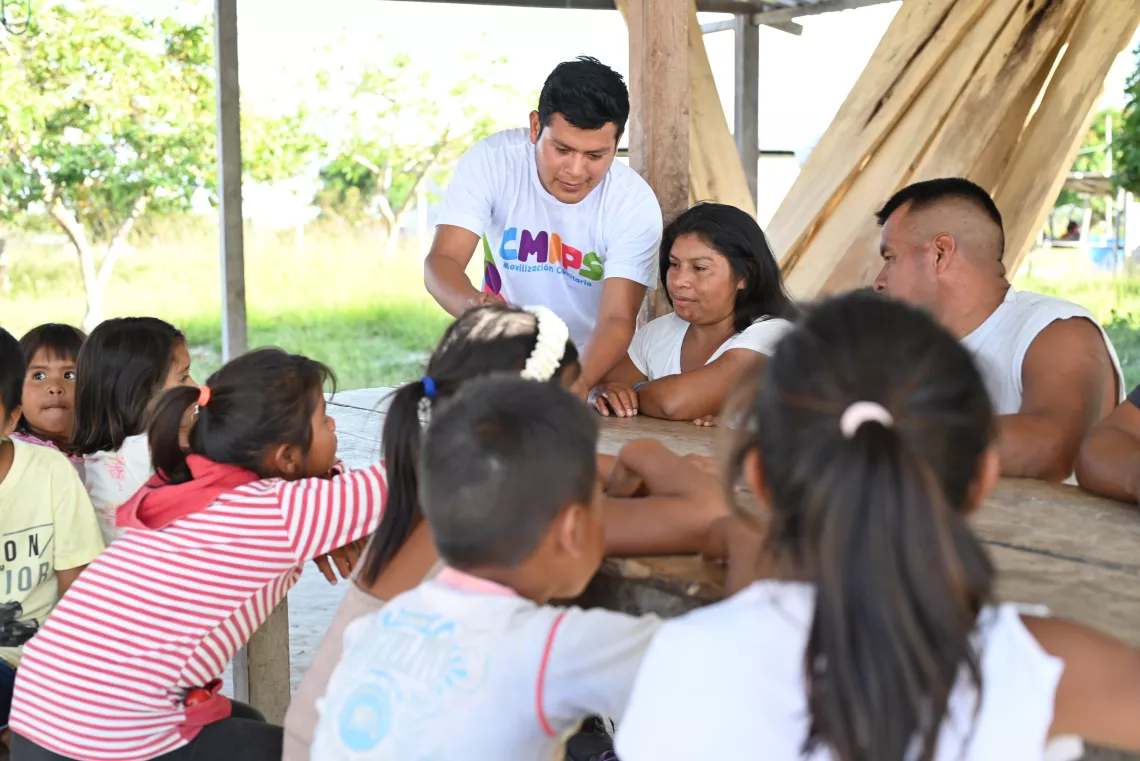
About the Community Mobilization Strategy with Adolescent Participation (CMAPS)
CMAPS is an initiative of UNICEF, in partnership with the Pirilampos Institute and Adra, to involve young people in the co-creation of solutions to the problems they identify in the places where they live, in the context of the migratory flow from Venezuela in the state of Roraima. These volunteer mobilizers (between 18 and 24 years old) receive a tablet and a grant (to acquire mobile data) to work within their communities, between official shelters, spontaneous occupations and indigenous communities in Boa Vista and Pacaraima. It is currently formed by 25 young people who carry out surveys of the families' needs, disseminate reliable information, mobilize the community and collect suggestions for interventions in the places where they live. A strategy created to overcome the lack of access to communities during the beginning of the covid-19 pandemic, CMAPS soon became a network that aims to develop the skills of young participants, who receive periodic training while integrating the strategy, including mobilization of the community, leadership, rights, monitoring and evaluation, among other topics.
The strategy is made possible by financial support from the United States, through the Bureau of Population, Refugees, and Migration of the Department of State (PRM), and the Europen Union, through the European Civil Protection and Humanitarian Aid Operations (ECHO) and the Access to COVID-19 Tools Accelerator on vaccines, treatments and diagnostics.