“I feel a deep connection with the Yanomami people, as if they were my own”
Nara Martins, a nutritionist of the Macuxi indigenous community, works diligently to provide care and support to malnourished Yanomami children in Roraima.

- Português
- English
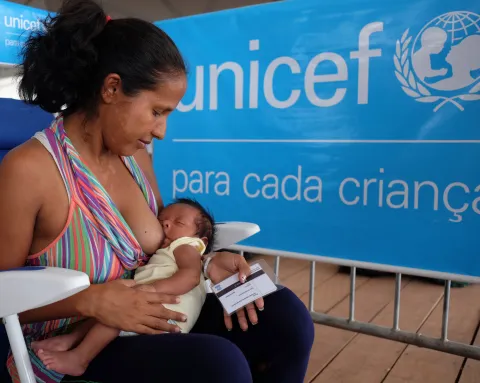
Anyone observing the connection between 25-year-old Nara Martins and her young patients would hardly guess they do not speak the same language. This young nutritionist, who is of Macuxi descent, uses a different form of communication to soothe the Yanomami children who travel hundreds of kilometers, from their remote lands, to receive treatment for malnutrition in Boa Vista, Roraima. Their communication is built on affection, eye contact, hugs, and smiles.
"As an indigenous woman of the Macuxi ethnicity, I feel extremely privileged to practice my profession caring for people like who are like me. I see it as my mission to care for these little ones because I regard them as if they were my own people. This is my calling," affirms Nara, who now bears the responsibility of tackling child malnutrition at the Nutritional Recovery Center of the Yanomami Indigenous Health House (Casai in Portuguese). Casai is where individuals with the most severe health conditions residing in the Yanomami Indigenous Territory (TIY) are brought when treatment isn't feasible there."
Since January 20, Brazil has been grappling with a Public Health Emergency - declared by the Ministry of Health - due to the dire situation faced by the people living in the Yanomami Territory, which has seen an increase in malnutrition and malaria cases. The United Nations International Children's Emergency Fund (UNICEF) collaborates with the Brazilian Government and partners at the Public Health Emergency Operations Center (COE-Yanomami), which is the mechanism managing the response.
Nara’s efforts and those of dozens of other healthcare professionals at Casai have already borne fruit. Ministry of Health data from February reveals that approximately three out of every four children with severe acute malnutrition have managed to transition to a moderate state of the disease.

"It's about being human and putting love for others into action. Here, I'm living in a context entirely different from anything I've experienced because I'm dealing with a people whose language and culture I did not know," says Nara. One of the most challenging aspects for her was the collaborative creation of a standardized care protocol, due to the cultural and dietary specificities of the Yanomami population. To achieve this, the Nutrition Task Group at the Emergency Center made adaptations to the Ministry of Health's Manual for Severe Child Malnutrition Hospital Care.
Preventing more Yanomami children from losing their lives to malnutrition is not a task Nara undertakes alone. Treatment relies on a rigorous monitoring routine by health and nutrition supervisors. Therapeutic feeding takes place five times a day during the initial days of treatment, and the children are weighed and clinically assessed every day.
Born and raised in the indigenous community of Barata in Roraima, and the daughter of an indigenous mother who was a refugee from Guyana, Nara became aware at an early age, of the challenges faced by indigenous peoples. She notes that healthcare needs in these communities are often met by doctors or nurses, with few nutritionists in remote communities. This inspired her to pursue a career in nutrition. Being able to support the Yanomami response is a source of pride for her.

Implemented in partnership with the Adventist Development and Relief Agency (ADRA), UNICEF's response to the Yanomami emergency is made possible through the contribution of the European Union, provided by the Department of Civil Protection and Humanitarian Aid (ECHO).
Endangered Territory
Over 30 years after being officially declared as indigenous land - in 1992 - the Yanomami Indigenous Territory - the largest in the country, spanning 9.6 million hectares across the states of Amazonas and Roraima - faces a humanitarian crisis due to a significant increase in illegal mining and timber extraction activities. This has resulted in reported acts of violence by intruders against the indigenous population, disease outbreaks, and increased infant mortality.
It is estimated that around 20,000 miners once occupied the territory inhabited by 31,000 indigenous people from 376 groups, some of whom still maintain voluntary isolation. Following the declaration of a state of emergency and coordinated efforts by the federal government, the miners began to vacate the indigenous land.
However, challenges, including territorial invasion, persist.
"No Yanomami child should be deprived of access to healthcare, nutrition, clean water, sanitation, and hygiene. Therefore, UNICEF's response, implemented with the support of the European Union and under the leadership of the Brazilian Federal Government, through national and local management mechanisms, primarily focuses on life-saving interventions but also aims to strengthen long-term system needs," states Gregory Bulit, UNICEF's Emergency Coordinator in Brazil.
In 2019, UNICEF released data from a survey on the social determinants of malnutrition in indigenous children under the age of 5 in eight villages within the Yanomami Indigenous Special Sanitary District (DSEI). According to the study, eight out of every ten children under the age of 5 have chronic malnutrition in the two research bases.