Partner with UNICEF to shape the future of climate
Play an active role in creating climate-resilient communities
Investing in climate solutions for children: A win for all
At UNICEF, we’re already taking action to protect the next generation from climate impacts. Now, we’re teaming up with forward-thinking leaders to scale solutions for a better world.
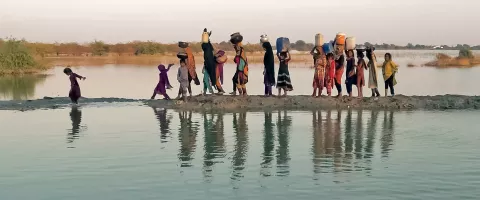
Climate change is no longer a distant threat; it's a present reality. Nearly half of the world’s 2.2 billion children are already facing extreme risks, from natural disasters to disruptions in education and worsening health.
But there is hope. Climate-smart solutions don’t just protect children — they set the foundation for more stable and sustainable societies.
Our data shows us that:
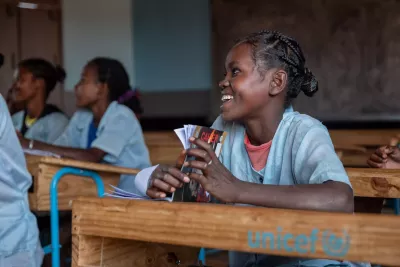
Investing in schools that can withstand climate impacts helps children stay in school, while equipping communities with skills to adapt to economic challenges.
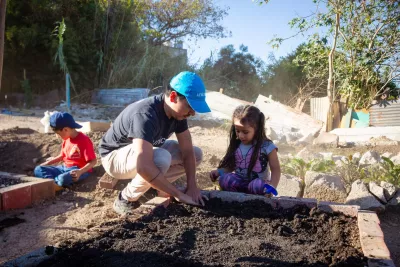
Investing in sustainable agriculture reduces malnutrition, while strengthening local economies and livelihoods and creating a buffer against crop failure.
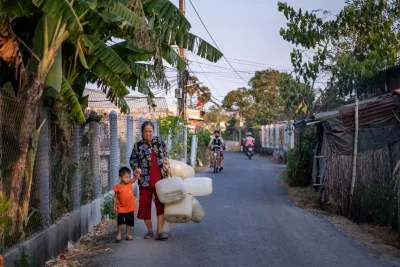
Investing in reliable water systems guarantees clean water for children and reduces health risks, while empowering communities to manage resources.
Learn about how UNICEF is already supporting innovators across the globe
Our work spans large-scale, multi-sector approaches — from vulnerability mapping and multi-hazard early warning systems to comprehensive disaster management strategies.
Together with your expertise, resources and influence, we also develop and implement child-sensitive policies. We work to ensure children are at the heart of climate action, going beyond emissions reduction to drive adaptation efforts for communities around you.
Because the full picture includes everyone, every child, everywhere.
Examples
Prithviraj Pramanik (CEO) and Christina Last (CTO) are co-leads of AQAI, developing multi-modal data-driven machine learning models to assess exposure to climate-related pollutants in order to identify at-risk demographic groups, including children. They aim to understand the impact of air pollution at every location on the planet by creating an open-source global model using data from government sensors and satellites, enabling organizations and governments to make data-driven policies for air pollution interventions with transparency and accountability. Through investment and technical assistance from the UNICEF Venture Fund – a collaborative fund – AQAl gained deeper understanding of the challenges of air pollution strategic monitoring and setting mitigation goals and is testing models for health effect measurement of air quality in Ulaanbaatar, Mongolia.
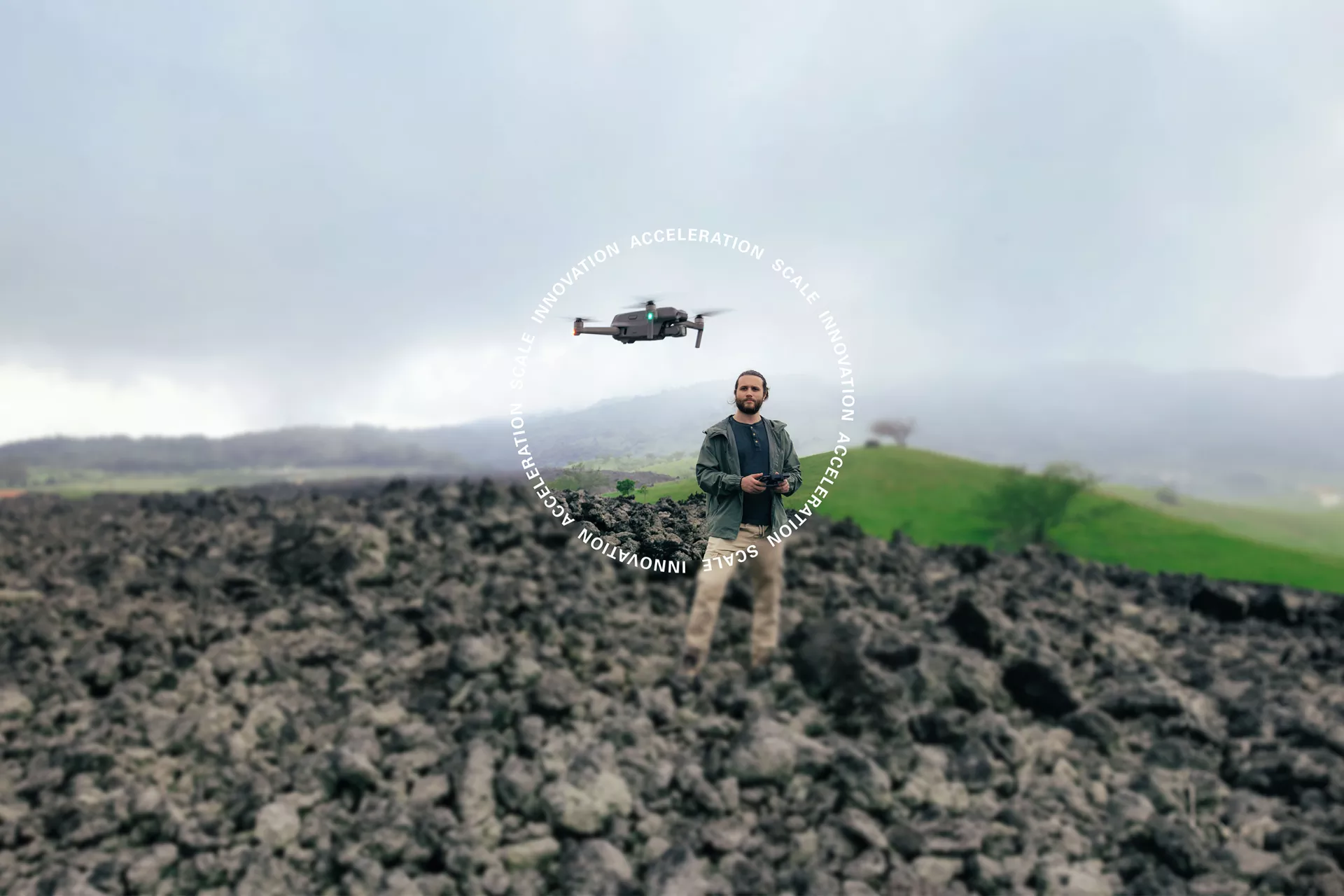
Guatemala is a high-risk country for climate change and extreme weather events. Aerobot's team of engineers, including Daniel Alvarez, in partnership with UNICEF Guatemala, developed a drone-enabled solution to relay real-time data during climate disasters and extreme weather events, to help emergency response teams make informed decisions. Supported by a collaborative climate fund, the Innovation 30 climate portfolio led by UNICEF Office of Innovation, Aerobot's drones can run independently of existing infrastructure, such as internet connectivity, which is often unavailable during climate emergencies. This innovative approach has improved response times for post-disaster recovery by 80%.
Soigel was founded by a group of 20-22 year olds from Egypt, who took part in UNICEF's imaGen Ventures initiative, which provides young people with entrepreneurial skills training. The team wanted to address the challenge of managing sugarcane waste, of which 10 million tonnes are burned annually in their country, contributing to GHG emissions and deteriorating air quality. They developed a range of high-efficiency organic fertilizers made from recycled sugarcane waste that can absorb CO2 from the atmosphere, as well as trap moisture from the air, which additionally reduces water consumption in agriculture.
Bui My Nhat (Linda), who took part in UNICEF's UPSHIFT programme, is now the Project Manager at Green River, an initiative focused on providing technology-based solutions to the country's water pollution problems. Green River also promotes youth action to address the environmental challenges in Can Tho City, in the Mekong Delta region in Viet Nam. In 2020, Green River Viet Nam won first prize in the Youth Innovative Ideas for an Ocean Without Plastic competition held by UNESCO for their innovative remote-controlled vehicle which collects garbage from the waterway, designed by the project founders.
Quebrada Agroecológica is a Brazilian start-up, supported by UNICEF's Generation Unlimited programme, that tackles water scarcity by developing cistern models that can be replicated throughout communities to capture rainwater. More than 8,000 families have been positively impacted across 5 states and 10 cities in Brazil, with 44 cisterns built, adding more than 25,000 liters of collection capacity and providing drinking water to communities facing water shortages as a result of the climate emergency.
Ndapile Mkuwu is a national instructor in Malawi at the African Drone and Data Academy (ADDA), which was established in 2020 with support from UNICEF. Drone imagery has helped national authorities and the humanitarian community in Malawi to monitor and assess the impact of disasters, such as floods, and inform response decisions to access and support affected areas. To lessen the impact of the floods on vulnerable families, UNICEF initiated a pilot project enabling flood forecasting and an early warning system. This detailed forecasting has helped at-risk communities to minimize loss of life and property during floods. It also informs decisions regarding the optimal locations for infrastructure development, such as schools, hospitals, homes and farms.
Are you ready to shape the future?
UNICEF's Sustainable and Climate Programmes
UNICEF accelerates and integrates innovation into programmes, built on over 75 years of experience driving the systemic change that's necessary for more climate-resilient communities today.
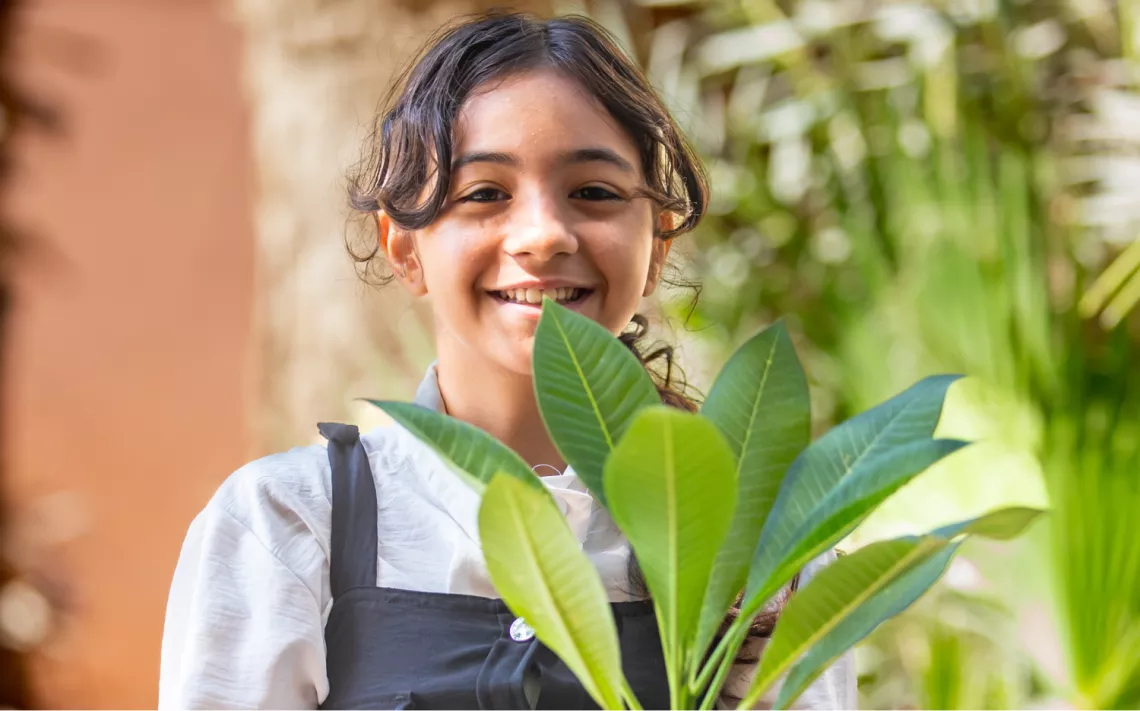
Climate, Energy, Environment and Disaster Risk Reduction (CEED)
UNICEF is uniquely positioned to make an impact on climate change response by working at the systems level across the sectors that communities depend upon – water security, healthcare, education and sustainability policy. This requires perseverance and the flexibility to innovate, create and adapt. Through the CEED Fund, UNICEF ensures that investments from partners go to support the latest, most effective interventions that will transform lives across districts, countries or entire regions.
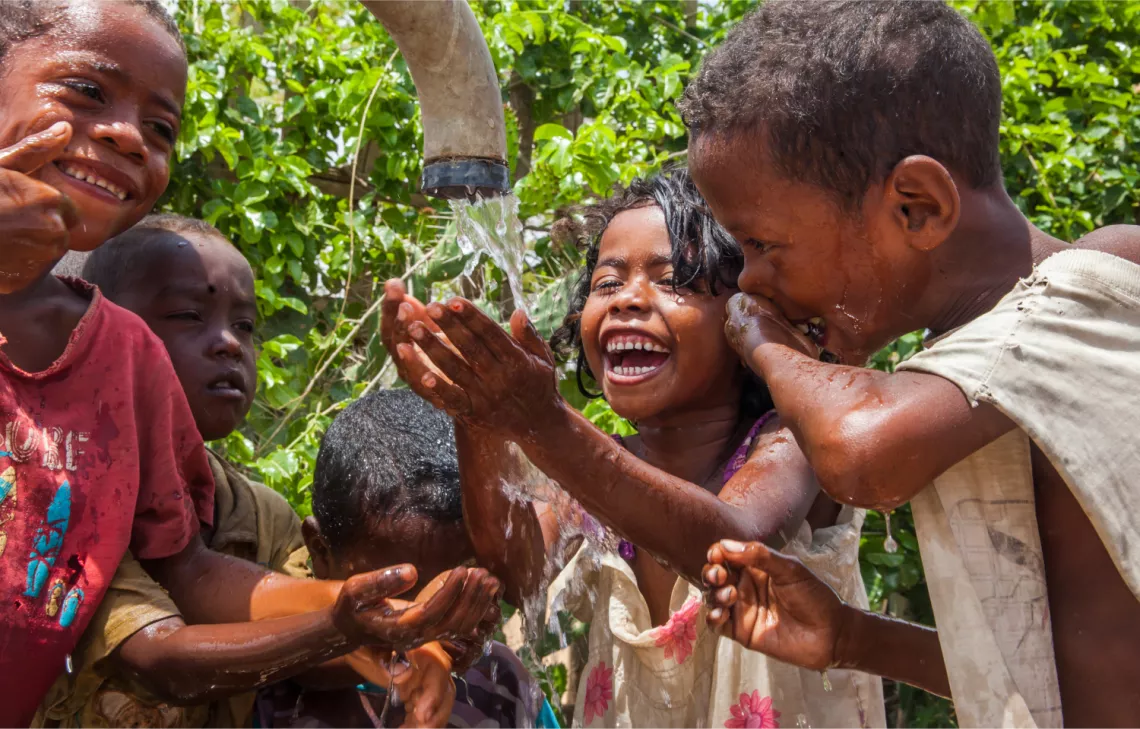
Water Security for All
UNICEF works to ensure safe and affordable drinking water, and that water services can resist climate-related events such as droughts and floods. We support water resource assessments, sustainable groundwater abstraction, efficient water use and drought warning systems, which help to prevent situations where water supplies are fully depleted.
The Today and Tomorrow Initiative
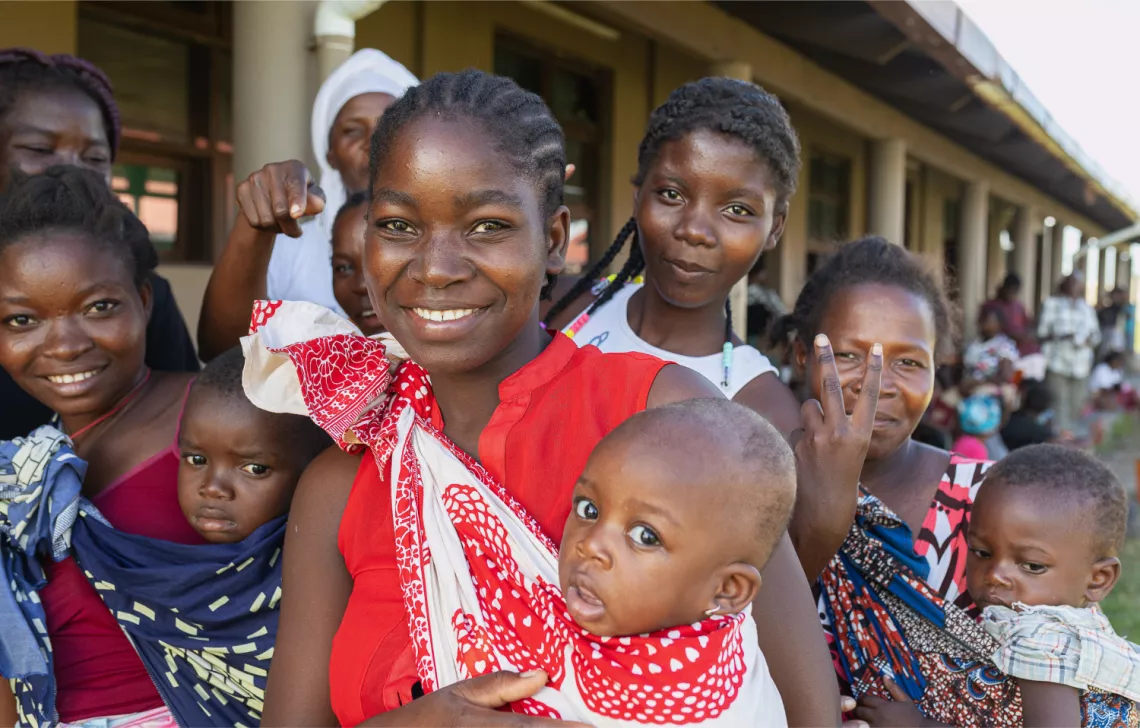
This initiative is the world’s first integrated climate and disaster risk finance mechanism specifically designed to deliver rapid finance for relief and recovery, with an explicit focus on children and young people. It provides support for climate change adaption, disaster risk reduction and preparedness today, while strengthening government and stakeholder capacity to build longer-term resilience for tomorrow.
Green Rising
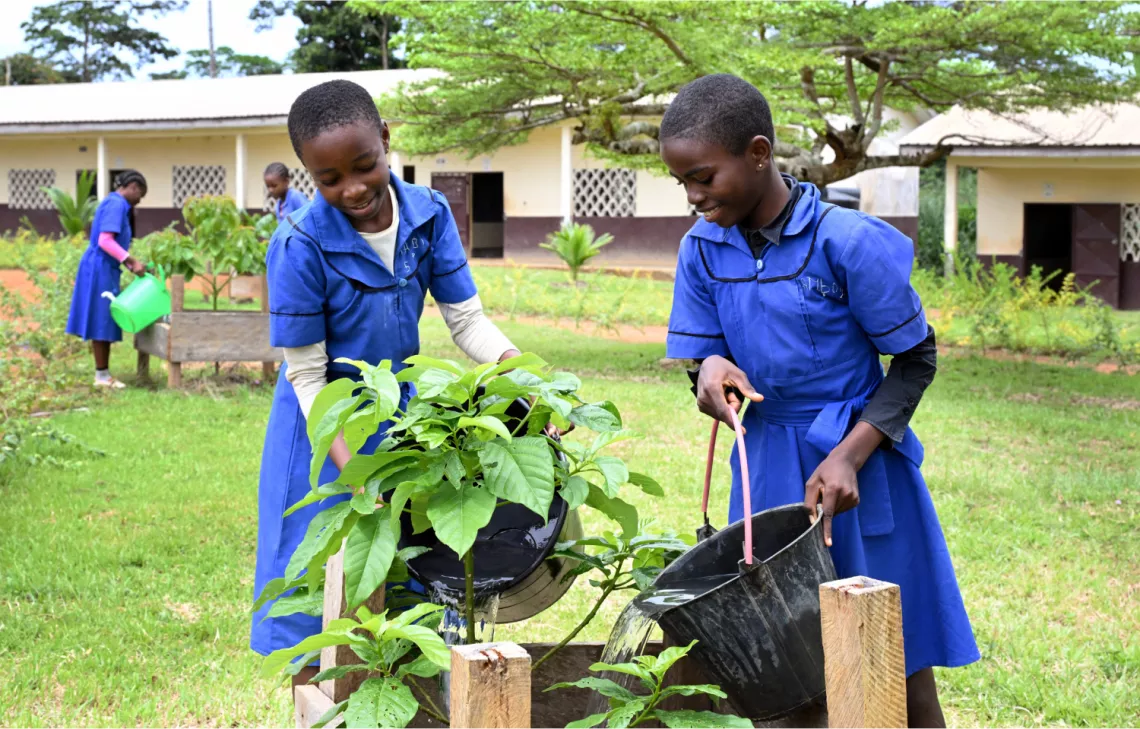
With the launch of The Green Rising, UNICEF and partners have put an ambitious plan in motion: to mobilize 10 million young people to take concrete climate actions in their communities and countries by 2025. The idea is to help activate and support youth-led climate action on a number of fronts, from community volunteerism to advocacy to skills development, jobs and entrepreneurship.
This is how we can create transformational change together
Find out more about partnering with UNICEF
Why talk to UNICEF?

- We offer multi-year relationships that have an impact, with ongoing guidance and support from our expert teams to ensure continuous alignment with your goals.
- We are the curators and data owners of seven of the UN’s Sustainable Development Goals, providing access to the world’s metrics for progress.
- We work with governments and world leaders to innovate and operate at a global scale, bringing positive change to entire countries and continents.
- We have more than 75 years of proven experience in creating sustainable impact across 190 countries.
- We focus on the world’s biggest problems, improving the lives of the most vulnerable children with a proven track record of success.
Together, we'll build an incredible legacy by investing in children now, for a better future for all.
Carla Haddad Mardini, UNICEF's Private Fundraising and Partnerships Director
Can’t see or use this form? Email [email protected] directly and we’ll be in touch shortly.
This contact form is intended for individuals or institutions potentially interested in building a partner relationship with UNICEF. A member of the team will be in touch with you personally in the coming days to discuss potential partnership options. Thank you for your interest. View our privacy policy.