A threat to progress
Confronting the effects of climate change on child health and well-being.
Highlights
Climate change is impacting almost every aspect of child health and well-being from pregnancy to adolescence. Children are disproportionately affected by climate change because they are uniquely vulnerable to environmental hazards compared to adults.
While the evidence on the impact of climate change on children’s health and well-being is growing, research often focuses on the effects of individual hazards. This report aims to provide a comprehensive ‘stocktake’ of the impacts of climate change on children across six major hazards that impact their health and well-being: extreme heat, droughts, wildfires, floods and storms, air pollution and ecosystem changes.
This report makes three recommendations with accompanying specific actions:
- Reduce emissions to meet 1.5°C degree threshold ensuring the best interest of the child
- Protect children from the impact of climate change
- Prioritize child health and well-being in climate policy, investment and action
Files available for download
The lives of children are being shortened and altered by the climate crisis.
From pregnancy to adolescence, climate change is impacting almost every aspect of child health and well-being.
Children are disproportionately affected because they are uniquely vulnerable to climate-related hazards that often overlap.
Climate-related hazards that impact children the most
Young children and infants are more vulnerable than adults to the short- and long-term effects of heat stress. Extreme heat can affect their sleep quality, which impacts mental health and contributes to poorer cognitive and physical development.
>> Read more on heat waves and how they impact children.
Droughts often negatively impact crop production and livestock management, causing household incomes to fall and food prices to increases. The health impacts on children can arise from the resulting food insecurity, water scarcity and risk of undernutrition.
>> See how children are facing deadly drought in the Horn of Africa and read how UNICEF is responding to drought in Somalia.
Wildfires pose an immediate risk to anything in their path, while the smoke from wildfires presents a far-reaching and long-lasting risk, particularly to children. Exposure to wildfire smoke can be more hazardous than ambient air pollution alone.
>> Read the technical note on the impacts of wildfire smoke on child health and well-being.
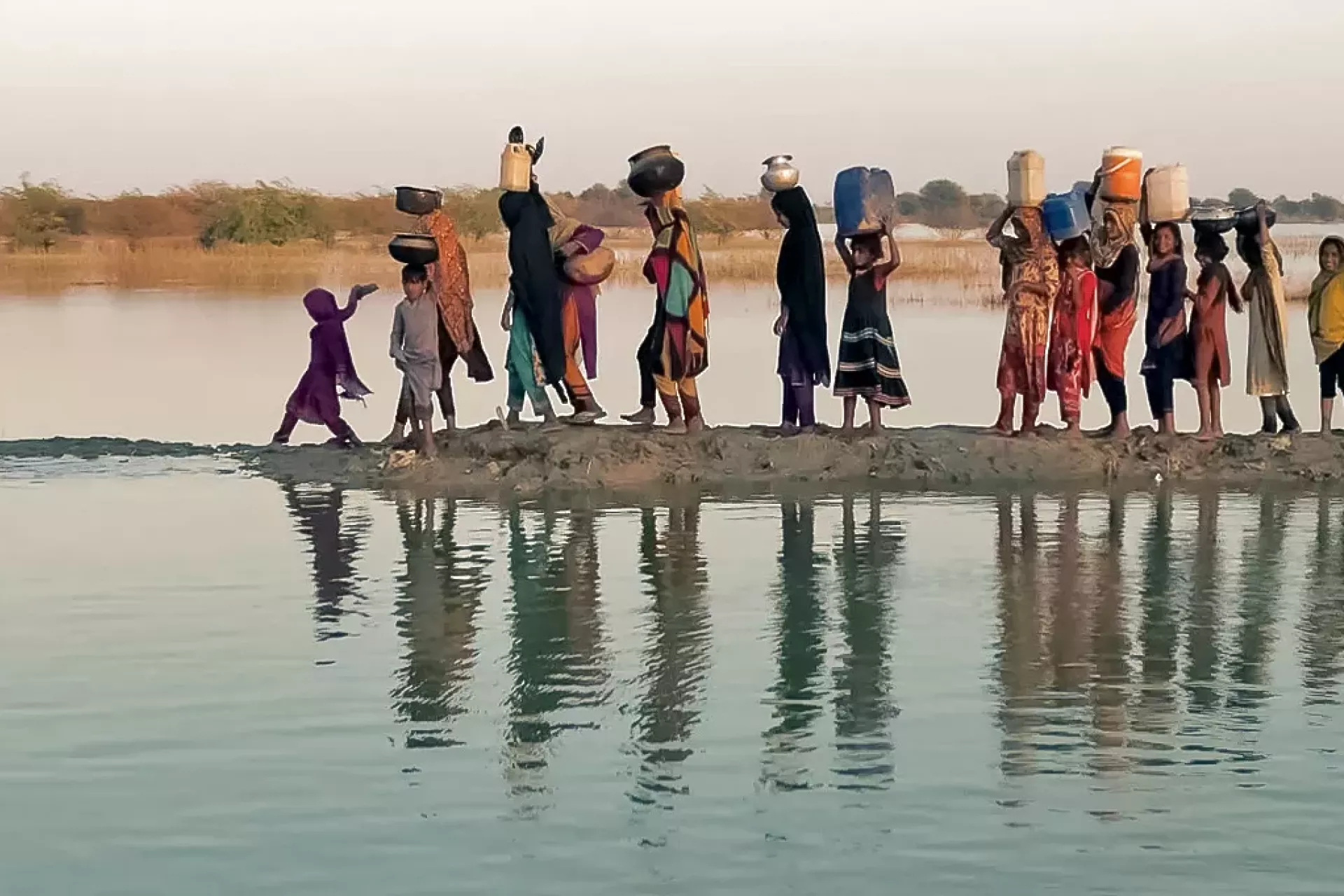
Floods and storms can be traumatic for children as they can cause families to be displaced and loss of a safe environment. Breakdown of infrastructure can hamper health and social services, leading to increased risk of infections and even mental health challenges.
>> Read more about flood safety information.
Children who breathe polluted air are at higher risk of acute respiratory infections. Those that live in polluted environments can have their lung capacity reduced by 20 per cent. Air pollution is associated with pneumonia, which is the largest infectious cause of death in children globally.
>> Read more about air pollution as a threat to children’s rights.
A changing climate threatens to disrupt the delicate balance of the world’s ecosystems, leading to changes that impact all living things. This can create numerous serious consequences for children’s health, arising from changing patterns of infectious diseases including food- and water-borne diseases, and respiratory diseases.
The world is at a crossroads, as climate change threatens to reverse the hard-won progress on child health and the world becomes a more dangerous place for children.
As countries strengthen their efforts towards climate action, children’s rights need to be at the centre of the response, so that current and future generations have the opportunity to survive and thrive.