Greatest hits for humanity: A history of music and giving
Celebrating music legends who lend their voices to UNICEF’s mission for children
What do George Harrison, Ravi Shankar and ABBA have in common? Over the years, they, along with Jon Batiste, Fleetwood Mac and countless other musical artists, have helped change the lives of millions of children.
From rock and pop stars to jazz, cabaret and funk prodigies – these musicians, in partnership with UNICEF, have proven that music-led advocacy can drum up compassion for causes once tuned out. And the appeals resonate.
Together, musical artists have raised over $53.5 million in royalties for UNICEF’s work to protect children’s rights.
Raising the curtain
In 1962, Marlene Dietrich moved audiences with her rendition of Pete Seeger’s anti-war ballad "Where Have All the Flowers Gone" at a UNICEF Gala in Düsseldorf. Her performance marked the start of UNICEF’s pioneering role in partnering with the music industry to raise funds for children.
A few years later, in 1967, UNICEF’s Variety Gala in Paris built upon this momentum, featuring The Beach Boys, Ravi Shankar, Johnny Hallyday and Lena Horne. Hollywood legends Marlon Brando, Elizabeth Taylor and Richard Burton also took the stage, while John Lennon and George Harrison watched from the audience.
Fast forward to 1971. Ravi Shankar teamed up with George Harrison to stage the first major rock benefit concert in New York City, galvanizing global support and raising funds for the humanitarian crisis in East Pakistan, now known as Bangladesh.
As the first notes of George Harrison’s “Wah-Wah” rang out and artists including Eric Clapton, Badfinger and Bob Dylan joined in, few could have imagined that this live concert would go on to raise tens of millions in life-saving funds for children.
"Now I'm asking all of you to help and save some lives. We’re trying to relieve the agony. Any war is bad," George Harrison told a packed audience.
The Concert for Bangladesh, held before a sold-out crowd of over 40,000, became a defining moment in both music history and humanitarian action.
Music from the concert is now available on all major global streaming platforms. All net proceeds from the streams are still donated to UNICEF to support programmes not only in Bangladesh, where children continue to face risks from ongoing violence and unrest, but anywhere children are in need.
Setting the stage for something bigger
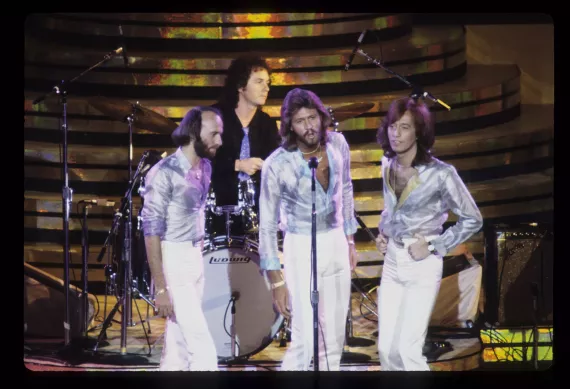
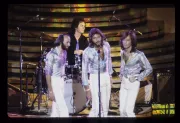
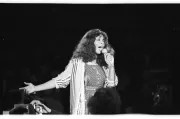
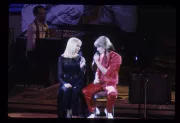
Less than a decade later, the Bee Gees, their manager, Robert Stigwood, and British television host David Frost organized the Music for UNICEF: Gift of Song concert, held in 1979 at the United Nations General Assembly.
This event brought together some of music’s biggest names like ABBA; Donna Summer; Earth, Wind & Fire; Rod Stewart; Olivia Newton-John; Kris Kristofferson and Rita Coolidge. In a groundbreaking move, these artists pledged to donate the royalties from their hits, including “Chiquitita,” “Do Ya Think I’m Sexy?” and “Too Much Heaven” to UNICEF.
This commitment marked a groundbreaking moment, with musicians pledging to donate intellectual property rights and royalties from their iconic hits to UNICEF.
Every time a donated song is streamed, purchased or played, it generates funds for UNICEF.
"We've made a lot of money in the past two years," Barry Gibb, chief Bee Gee songwriter, explained, "and now we'd like to give some of it back.”
His brother Robin Gibb added, "We knew there were enormous problems with starvation and with medicine and education for children. And the more money these people could get in a hurry, the better."




The spirit of giving extended beyond the concert itself, with the Music for UNICEF programme playing a key role in formalizing and expanding the rights management process. This ensured UNICEF retained publishing rights to select songs, securing long-term funding through royalties.
Stevie Nicks and Lindsey Buckingham of Fleetwood Mac, inspired by the event but unable to attend, donated the royalties from their lullaby “Beautiful Child” in 1979. Similarly, George Clinton and the members of Funkadelic took a bold stand for children by transferring the ownership of their song “One Nation Under a Groove” to UNICEF.
In 1981, building on this wave of artist-led fundraising and formal industry support, the world rallied together for the people of Kampuchea, now known as Cambodia.
UNICEF, as one of the first organizations to return after the fall of the Khmer Rouge regime in 1979, led emergency response efforts on the ground.
To support these efforts, the Concert for Kampuchea, held in London, brought together a lineup featuring The Clash, Elvis Costello & The Attractions, Ian Dury & The Blockheads, Paul McCartney & Wings, Queen and The Who.

UNICEF Archives, UNICEF-HIS-AUD-0427
Reflecting on the impact of UNICEF, Paul McCartney later told Rolling Stone: “If you can’t trust UNICEF, who can you trust?”
Proceeds from the sale of the album from the Concert for Kampuchea raised over $1.4 million for UNICEF and the UN Refugee Agency (UNHCR), supporting humanitarian efforts in the region.
A new rhythm
In step with shifting global humanitarian needs, UNICEF-led music fundraising initiatives pulsed forward.
UNICEF partnered with Goodwill Ambassador Selena Gomez, who hosted the third Annual Acoustic Charity Concert in 2013, raising nearly $400,000 for the organization.
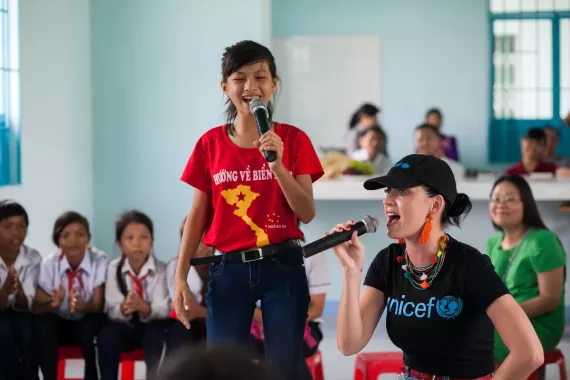
In 2014, Katy Perry raised over $1 million for UNICEF through her World Tour, donating $1 from every ticket sold during the North American leg of the tour.
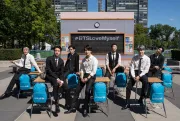
From 2017 to 2025, BIGHIT MUSIC, BTS, and its fan base worldwide have contributed around US$ 6.7 million through the LOVE MYSELF campaign, which includes the sale of LOVE MYSELF merchandise and album profits.



The legacy echoes
Over the years, as our collection of music royalties has grown, so has our ability to reach more children, through both music-led fundraising and music-based programming.
Since the first royalties were donated to UNICEF, more children are attending school and enjoying access to safe and clean water. Record numbers of children are reaching their fifth birthday.
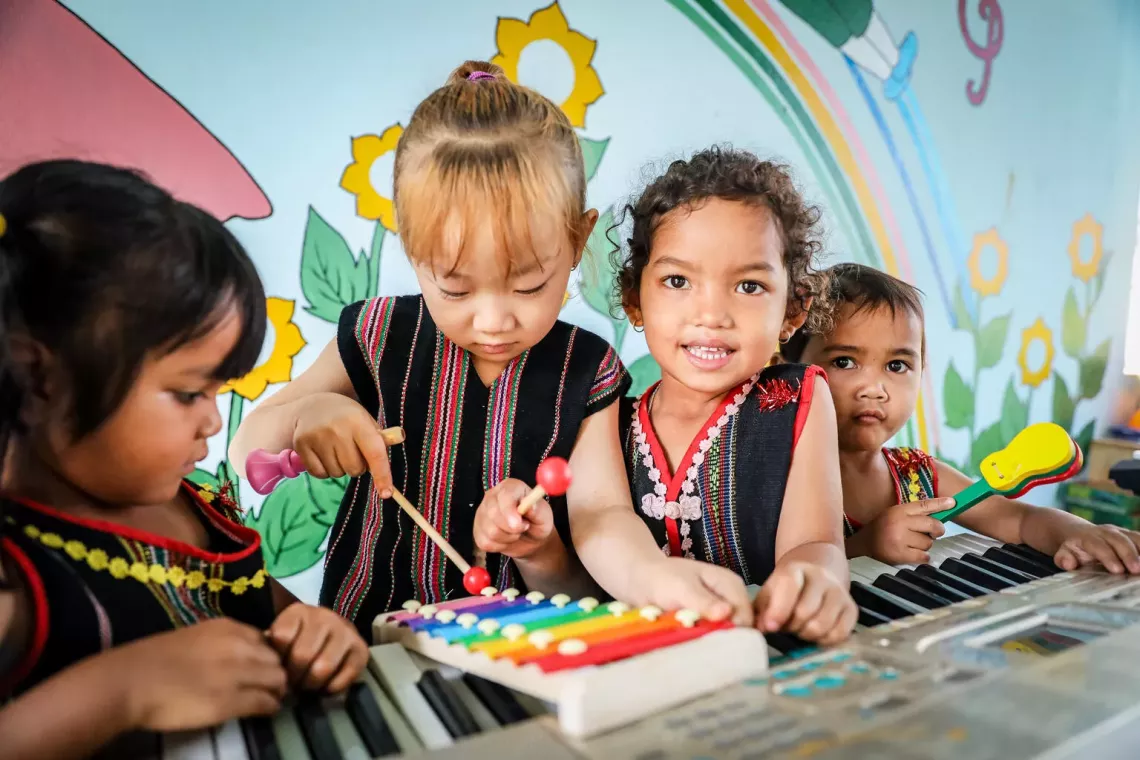
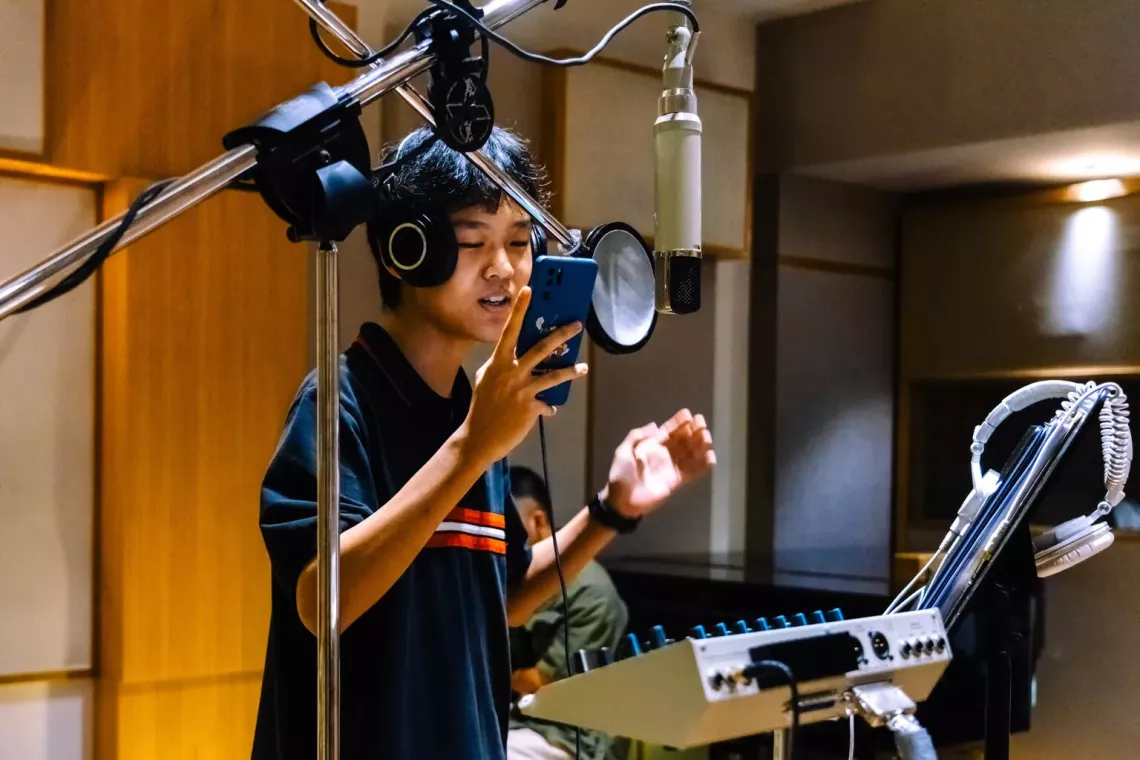
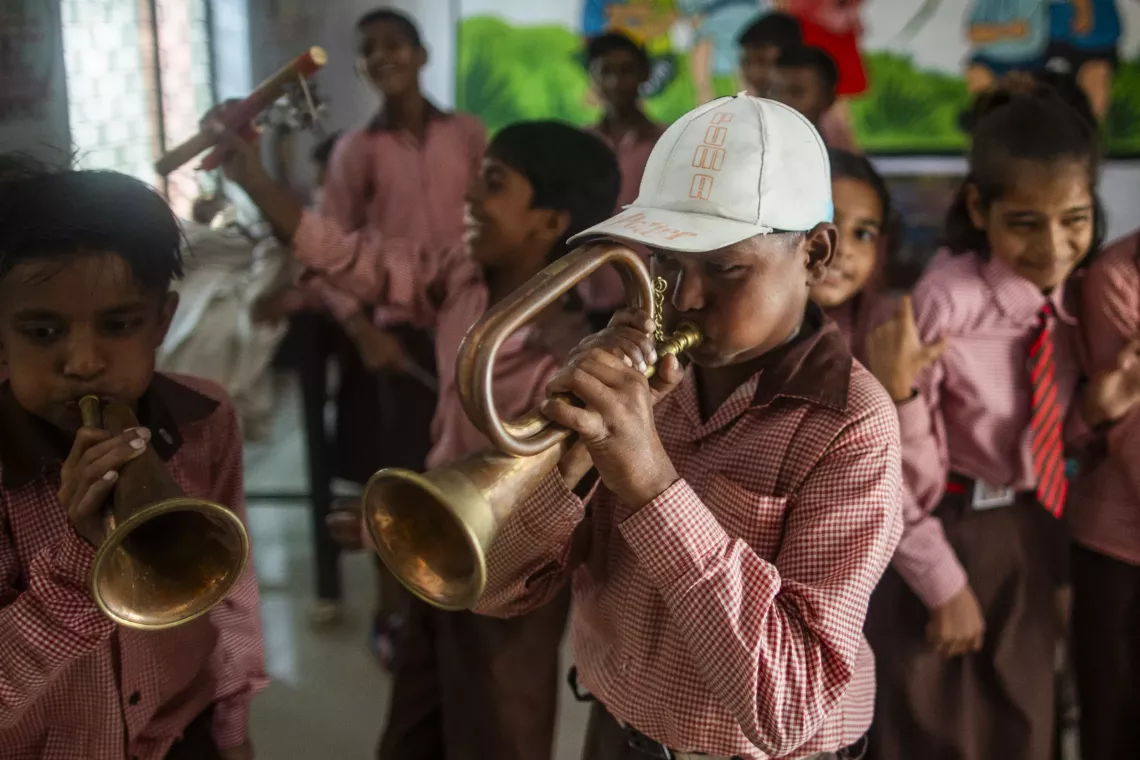
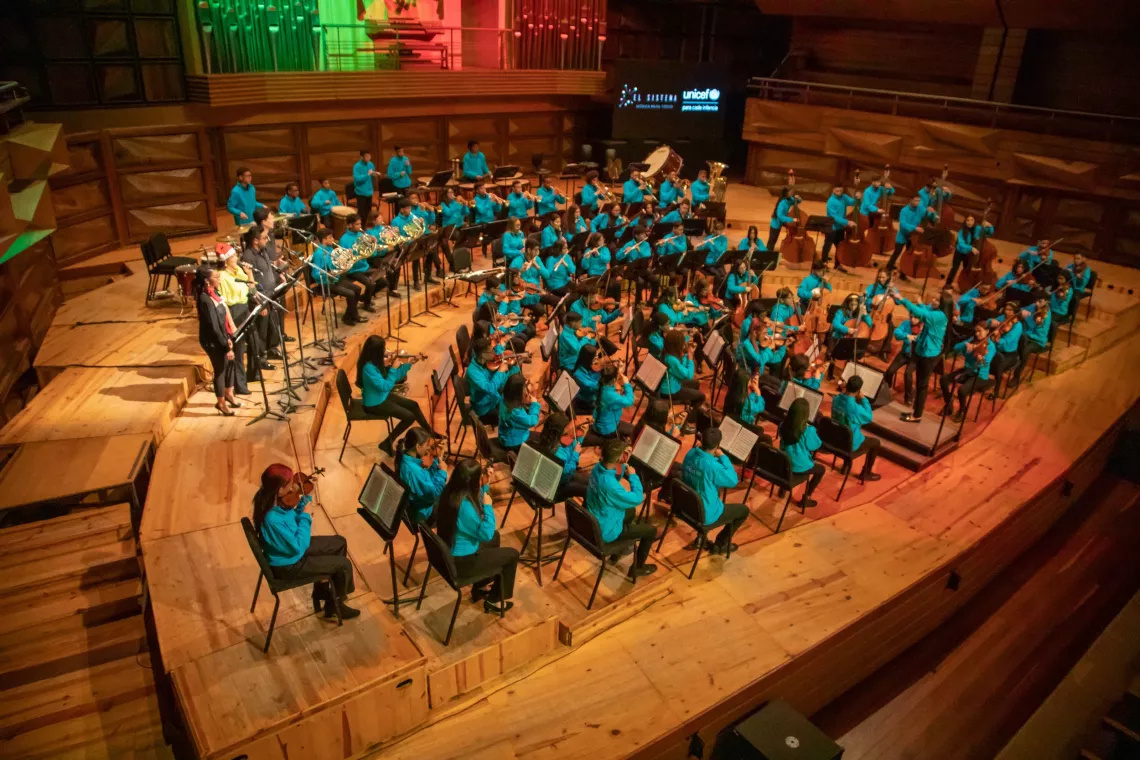
Our story doesn’t stop here. Music is constantly transforming, and with every new artist who partners with us, new possibilities come to life. UNICEF’s music-based programming continues to help improve children's mental well-being and cognitive development and provides inclusion and safety.
As new genres emerge and more talented musicians join the movement, music remains at the heart of UNICEF’s story, a universal language that has the power to change the world.