ABBA's gift continues to transform children's lives 45 years later
In 1979, ABBA gave UNICEF the rights to their hit song Chiquitita. Forty-five years later, the investment continues to shape the future for children.

- Español
- English
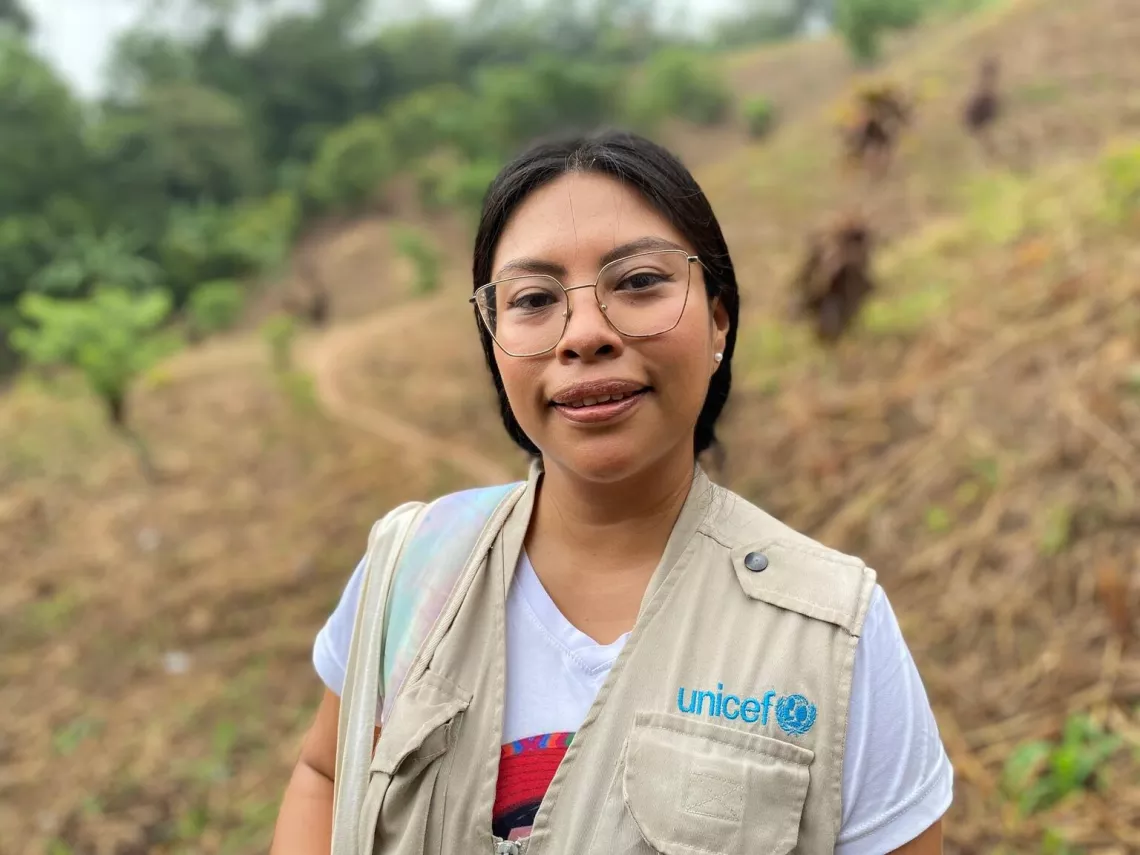
LA TINTA, GUATEMALA – The sound of boots squelching in the mud cuts through the pattering rain as Andrea Beatriz Calisto trudges up a small mountain path. Mugginess mingles with the acrid smell of burning trash hanging heavy in the air.
The 33-year-old psychologist specializes in sexual abuse therapy for children; she is on her way to give a one-on-one therapy session.
It is a 40-minute hike outside the small town of La Tinta in northern Guatemala. There is limited cellular service in these mountains – the first time she went to Ana’s* house, Andrea got lost. She spent four hours looking for it.
“We always know when we start the day, but we never know when we will finish,” she says.
Music royalties supporting child psychology & protection services
Andrea is part of a team of psychologists and social workers who work with indigenous Mayan communities in the Verapaz region to treat sexual abuse survivors and prevent sexual abuse.
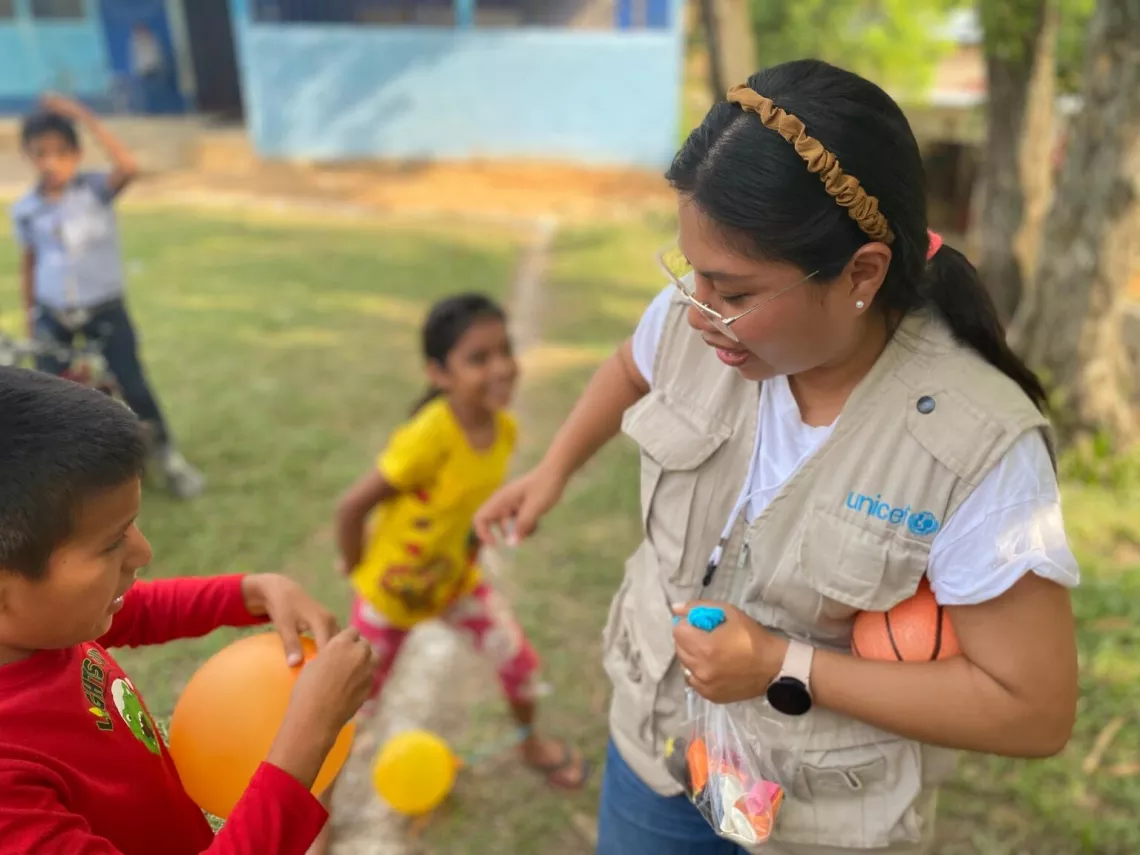
Royalties from ABBA’s hit song Chiquitita have been supporting UNICEF’s protection work in Guatemala. The funds cover salaries and training for teams of psychologists and social workers in the departments of Alta Verapaz and Baja Verapaz, a total of 19 psychologists and 11 social workers.
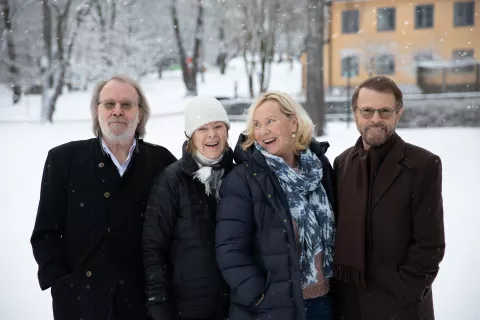
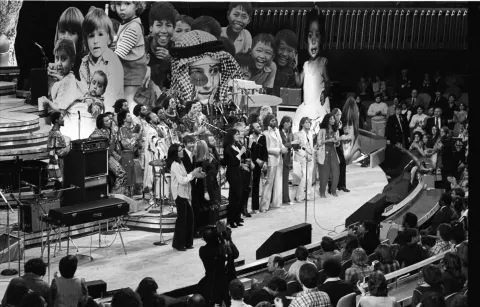
ABBA gave UNICEF the rights to the song to UNICEF in 1979 so that the royalties from the song could be invested in children’s futures. Since then, Chiquitita royalties have brought in more than US $5 million to UNICEF.
“Never in my wildest dreams could I have expected that it would be so long lasting and bring in so much money,” ABBA bandmember Björn Ulvaeus said in 2022. “It’s the best legacy anyone could wish for.”
In 2023 alone, UNICEF was able to use the Chiquitita royalties to provide assistance to 1,000 abuse survivors in remote areas and offered treatment and preventative support to over 10,000 people in Guatemala.
Andrea is part of the Asociación de Amigos del Desarrollo y la Paz (ADP), which helps identify and connect children to the social services that will support them best. ADP’s psychologists specialize in supporting children who are victims of sexual abuse. Andrea and her colleagues come from these communities and speak the local language of Qʼeqchiʼ in addition to Spanish. Andrea lives with her husband and children in Coban, a city three hours away, but rents a small room in La Tinta during the week. Her passion for the work is clear and her professionalism keeps her calm and collected despite the heartbreaking things she regularly sees and hears.
Sometimes Andrea is accompanied by one of her social worker colleagues, but more often than not they split up to cover more ground. Some days she does home visits, some days she meets with the hospital, and some days she runs group therapy in town.
National endemic of violence
“My job shouldn't exist because sexual abuse shouldn't exist,” Andrea says matter-of-factly.
Violence against women and girls is a wide-spread and significant problem in many places around the world, including Guatemala. Girls are seen as objects in Guatemala – often abused and forced to work or get married at a young age. One in 10 women consider spousal physical abuse a justifiable practice.1 This violence has devastating consequences in the lives of children. It affects family structures and hinders the economic development of communities in this lower middle-income country. Global data estimate that violence against children has economic costs of up to five per cent of GDP.2
“The situation in statistical terms is very dramatic,” says Justo Solorzano, UNICEF Guatemala’s Chief of Child Protection. “The reports we have at the moment on sexual violence show that 55 per cent of sexual violence cases in this country are against girls and boys. The reported cases are few, and therefore, the level of impunity is quite high.”
A rare case of abuse
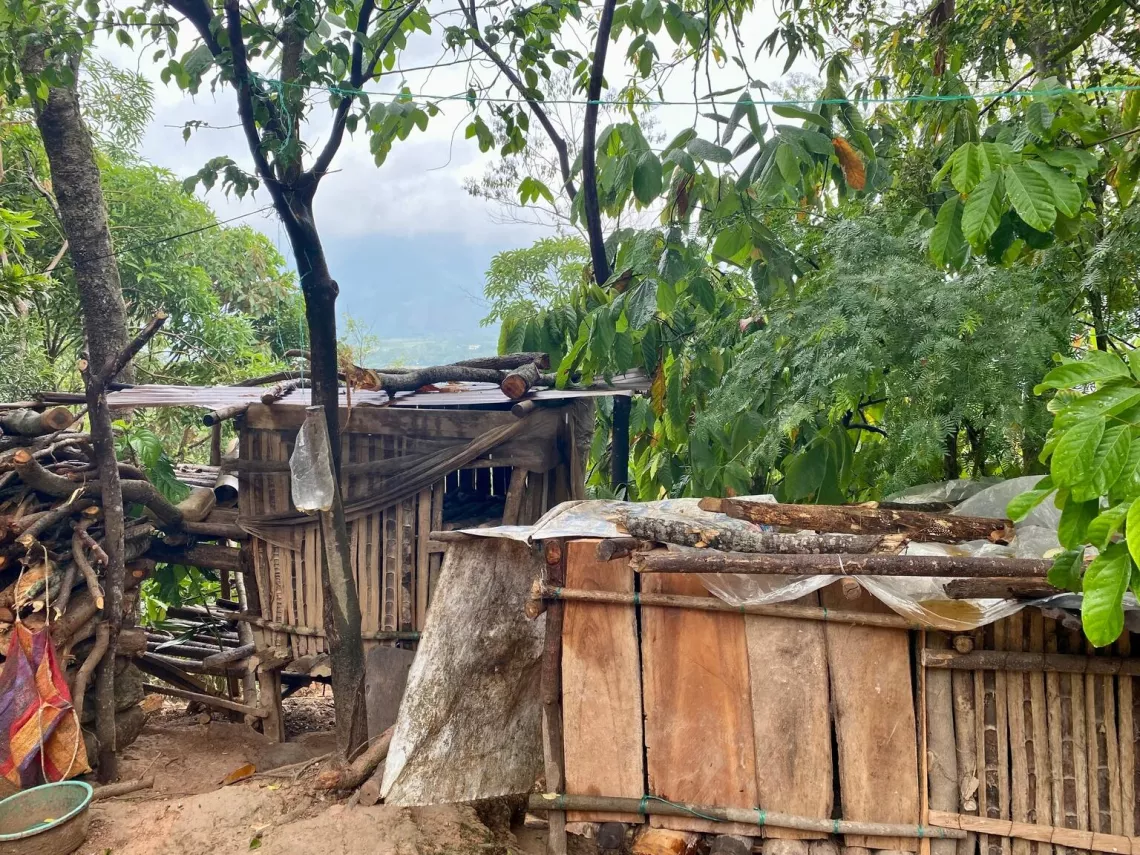
Hidden amongst banana, jackfruit and mango trees, Ana’s house is part of a small mountain community. A hospital in La Tinta referred Ana to Andrea after Ana was raped in the corn fields by a masked man passing by on a motorcycle. Ana did not tell anyone about it for months – until she started showing as pregnant. She did not understand she was pregnant, and she did not know the two events were connected. Her child is now 1 year old.
Ana says she is 16 years old but is most likely younger, as her family doesn’t know her age. She is impish and childlike – extremely petite and slim, her growth stunted from malnutrition as a young child, her baby on her hip seems half her size. Despite the violence inflicted upon her in the past, Ana has bright, curious eyes and a shy smile that turns into a full grin whenever she sees Andrea.
To be sexually abused by a stranger in La Tinta is rare – in 70 per cent of cases, the abuser is the father, stepfather or grandfather in the home. In Mayan culture, pervasive machismo creates a grim cycle of violence, abuse and neglect for girls and women. This is often compounded by the impact of poverty. Girls usually start working from an early age and end up pregnant as teenagers. Many become grandmothers by the age of 40.
Andrea works with Ana in her home, using materials to guide activities that range from breathing exercises to basic pictograms – many of the girls cannot read or write, having dropped out of school at an early age. Today, Ana and Andrea review the parts of the body to practice Ana’s emotional management and to help her understand how to exercise her rights. The goal is to give her vocabulary for self-expression and to build her self-confidence as she matures into adulthood.
A more common case
Later in the day, Andrea goes on another home visit – this time to 16-year-old Caro,* who lives in the town of La Tinta. Caro visibly carries the weight of her trauma, with intense and ongoing suffering. She witnessed her father beat her mother to death in public, as not a single passerby intervened. In a rare case of justice, he went to jail. Guatemalan law dictates that children go to the custody of the father’s family, so Caro moved in with her uncle – her father’s brother – who went on to rape her. Only after that was she able to live with her maternal side of the family. Fortunately, Caro did not become pregnant, but she is deeply psychologically scarred.
Caro’s family lives in a compound that features a stone house, painted a cheery blue, accompanied by two lean-tos made of small tree branches. The house is the one Caro shared with her parents. Nobody lives there anymore – the family only uses it during the day for children to play in. It is too painful for Caro and the others to sleep there. They sleep in the lean-tos.
Earlier in the week, both Ana and Caro had come to the ADP centre. At the beginning of Caro’s session, she slumps in her chair; she thinks everyone is looking at her. Andrea introduces square breathing – breathe in for four counts, hold for four, breathe out for four, repeat – guiding Caro through the exercise to help her calm down. Andrea then pulls out a jewelry making kit and Caro makes a bracelet, carefully choosing the pattern of beads. As they make their way through the session, Caro starts to sit up straighter. She makes eye contact with Andrea and eventually starts to talk animatedly. During Andrea’s home visit, Caro is still wearing the bracelet.
Building trust in the community, from within
UNICEF works to strengthen the social system in Guatemala, both at the national and local levels, and works hand-in-hand with local associations.
“We are very pleased with the commitment of the team we have at La Tinta,” says Dora Muñoz, UNICEF’s head child psychologist in Guatemala. “They are dedicated women who are psychologists, social workers and advocates who have a perfect understanding of the environment, the context, the social reality. And, of course, they speak the language.”
UNICEF trained Andrea and continues to support and guide her as well as her colleagues and other teams across the country. Dora’s team closely monitors the development of their skills.
“They have brought light and hope to these communities,” Dora adds.
Beyond direct psychological support and social services, UNICEF takes a wholistic approach to social protection. Recently, the organization built a new wing as part of La Tinta’s hospital especially for sexual abuse screenings and referrals, also partially funded from the royalties of ABBA’s song. UNICEF also works on behavior change as a key lever and partnerships with the local radio is key, pushing out prevention messages in Qʼeqchiʼ. From UNICEF’s point of view, it is critical to invest in the local system by equipping the community to support itself, while pushing for national-level legislation. You cannot have one without the other – it is the only way to create long-term, sustainable change at scale.
The meaning of the song Chiquitita, renewed
The Spanish word “chiquitita” means “little girl”. The real, tangible social impact of Chiquitita for children in Guatemala is undeniable.
“For UNICEF, especially for UNICEF Guatemala, these royalties have been of immeasurable value,” Dora says, “because they have transformed lives. I just cannot imagine not having them.”
Justo agrees. “I would like to tell ABBA that UNICEF is using the money well. We are investing directly with girls, with boys. We are reaching out to the most vulnerable girls, because they are the ones suffering the most violence in this country. We are reaching places that are difficult to access.
"The investment made in UNICEF will reach a girl and change a life, which will also bring about change in society.”
Because ABBA had the foresight to invest their music in social good, the song – about a little girl who has sorrow – has taken on a renewed meaning. It has transformed from pop hit alone to a consistent source of support that helps prevent the same pain and sorrow its lyrics discuss.
“We all have a responsibility towards our children to let them grow up in a safe, loving and peaceful environment, to let them prosper and thrive and believe in a good future!” ABBA band members Agnetha, Björn, Benny & Anni-Frid proclaim together.
That legacy is personified by Ana’s bright eyes. Her quick smile stretches across her face as she tells Andrea: “I get incredibly happy when you come. I like what you do with me, what you teach me. It is up to me now to learn. Thank you for visiting me.”
Although an historically inequitable society, there is a path forward for Guatemala. It just requires more scalable investments.
*Names have been changed to protect identities – the girls chose these pseudonyms for themselves.
In 2021, ABBA expanded on their investment in children by giving 100% of the royalties to their song Little Things to UNICEF for five years.
Both songs continue to raise funds for UNICEF and are available to listen on the following platforms: iTunes, Spotify, YouTube.