

Child health and HIV/AIDS
UNICEF strives to keep every child in Rwanda alive, healthy, and free from HIV and AIDS.

- English
- Kinyarwanda
The challenge
Globally, most newborn deaths are due to preventable and treatable causes. In Rwanda, UNICEF is committed to ensuring that every child receives quality care that meets international standards.
Rwanda has reduced deaths among children under five by more than three quarters since 2005.
In 2005, 152 out of every 1,000 children did not survive to their fifth birthday. By 2025, this had declined to 36 deaths per 1,000 live births.
Just as impressive is the decline in maternal deaths: from 750 for every 100,000 live births in 2005 to 149 in 2025.
Although these improvements are impressive, the numbers are still unacceptable. Almost half (47 per cent) of under-five deaths in Rwanda occur in the first month of life.
Surprisingly, a very high number of these newborn deaths occur in health facilities, which often lack the equipment or skilled professionals to save lives. Children from the poorest families are more likely to die before their fifth birthday than those from the wealthiest families.

Rwanda could be one of the first African countries to achieve elimination of mother-to-child transmission of HIV.
The country has made great progress responding to the HIV epidemic. HIV prevalence among adults aged 15–49 is 2.2 per cent, and nearly 97 per cent of people living with HIV receive antiretroviral therapy.
Almost all (99.9 per cent) pregnant women living with HIV receive antiretroviral therapy to prevent transmitting HIV to their children. As a result, the mother-to-child transmission rate is just 1.1 per cent.
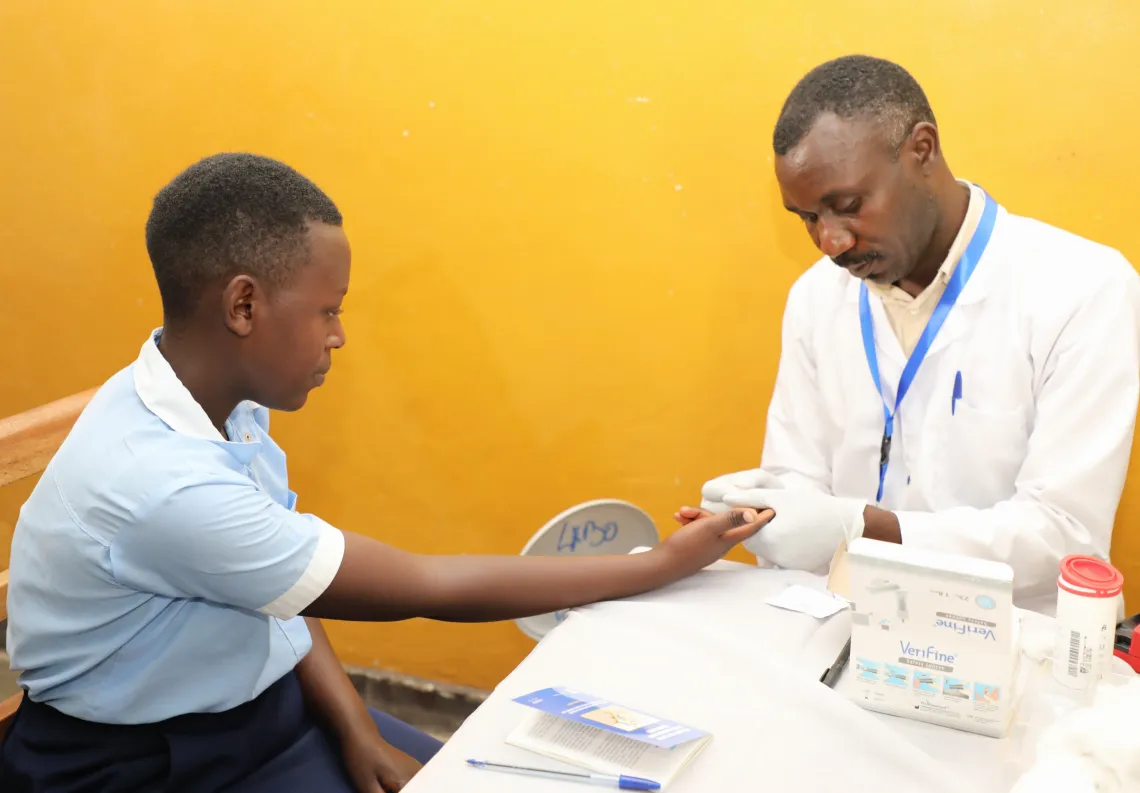
However, young people in Rwanda still struggle to understand HIV prevention and treatment. They often face stigma and do not go for regular HIV testing, and very few young people use condoms to prevent HIV.
These young people have specific needs and barriers that must be addressed, and communities must be supported to provide treatment and peer-support services for adolescents living with HIV.
The solution
To ensure that every child in Rwanda survives and thrives, UNICEF focuses on reducing mother and child deaths, new HIV infections, and AIDS-related deaths among women and children, including adolescents.
To tackle these challenges, UNICEF focuses on four priority areas:

Reducing maternal and newborn deaths

Reducing deaths among children aged 1–59 months

Reducing new HIV infections and AIDS-related deaths
Strengthening health systems
Maternal and newborn mortality
To reduce the number of maternal and newborn deaths, UNICEF focuses on improving the quality of health care in Rwanda, especially intrapartum care – when the baby is being delivered – and care of small and sick newborns.
UNICEF provides life-saving medical equipment to health facilities which serve over 4 million people in Rwanda.
But bringing equipment alone will not save precious lives. UNICEF also brings highly qualified neonatal care specialists from both outside and within the country through partnerships with the Royal College of Paediatrics and Child Health (RCPCH) and the Rwanda Paediatrics Association (RPA). These specialists mentor Rwandan doctors, nurses and midwives, improving their skills in caring for newborns. The mentors not only train staff, but also establish important systems like case management and patient records.
Young child mortality
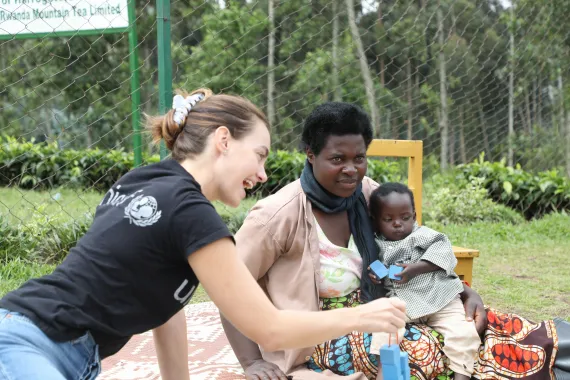
Children aged 1–59 months often die of preventable and treatable diseases simply because their parents do not seek timely medical care. UNICEF works to change these behaviours among families and children’s caregivers and helps train health professionals to treat common illnesses such as diarrhoea, pneumonia or malaria.

Preventing HIV and AIDS
UNICEF strives to improve HIV prevention, treatment and care services in Rwanda, especially for pregnant women, young children and adolescents. This includes linking treatment services with peer support networks so that people living with HIV receive care and continue seeking this care, especially in districts and urban areas with higher burdens of HIV.
Strengthening health systems
UNICEF supports the Government to strengthen national health systems, helping ensure greater availability of quality services, equity-focused programmes, and better use of real-time data and policies, especially in low-performing areas.
Backed by UNICEF's global expertise
Our child health and HIV work in Rwanda draws on UNICEF's technical expertise worldwide. This includes our Centres of Excellence, which give country offices specialist support across sectors, our research and evidence office, UNICEF Innocenti, and our Office of Innovation. Explore more:
- UNICEF's global work on health
- Immunization
- HIV and AIDS
- UNICEF Supply Division – vaccines and essential supplies
- UNICEF Innocenti – Office of Strategy and Evidence
- UNICEF Office of Innovation
- UNICEF in Eastern and Southern Africa
Follow our work for every child
See our work with children, families and partners across Rwanda as it happens, and share it with your networks: LinkedIn · Facebook · Instagram · X · YouTube.