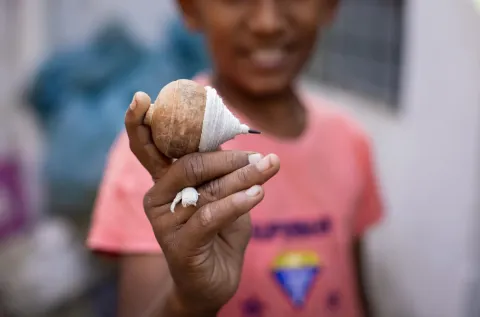
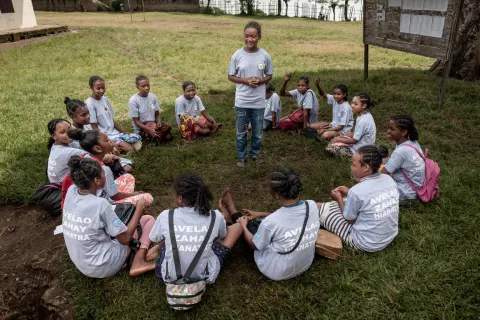
In the heart of Nairobi’s sprawling informal settlements, I met children who were full of joy and smiling despite the dire poverty they were facing. Amid the daily challenges of limited access to clean water and safe play areas, these children dream of becoming teachers, doctors, and nurses. Their resilience and optimism are a testament to the potential that thrives even in the harshest conditions. Yet, these children often remain invisible in national statistics and are seldom prioritized in mainstream poverty reduction programmes.
As I lead a global evaluation of UNICEF’s efforts to reduce multidimensional poverty in slums and informal settlements, I am reminded of our collective obligation to uphold the rights of every child, especially those in the most marginalized urban areas. This evaluation seeks to assess how effectively UNICEF’s interventions address the unique and complex challenges faced by children and families living in these environments. Our goal is to generate evidence that will inform and enhance UNICEF’s global programming and advocacy efforts, particularly in contexts where vulnerabilities are extreme and essential services are often inadequate or absent.

Recently, I conducted comprehensive data collection missions across various countries, including India, Colombia, Cambodia, and Kenya. These missions involved field visits during which I engaged in comprehensive discussions with community members, and consultations with key government and civil society partners. Our aim was to capture a holistic understanding of the challenges and realities of the children and families living there and identify best practices and gaps in service delivery.
A key barrier I observed is that many development initiatives focus solely on prevalence—the percentage of children affected by poverty—while overlooking the burden—the total number of deprivations that children living in slums bear. This approach risks masking the intensity of their hardships, where each dimension of deprivation compounds the next, resulting in a cycle that is nearly impossible for families to break without targeted support.
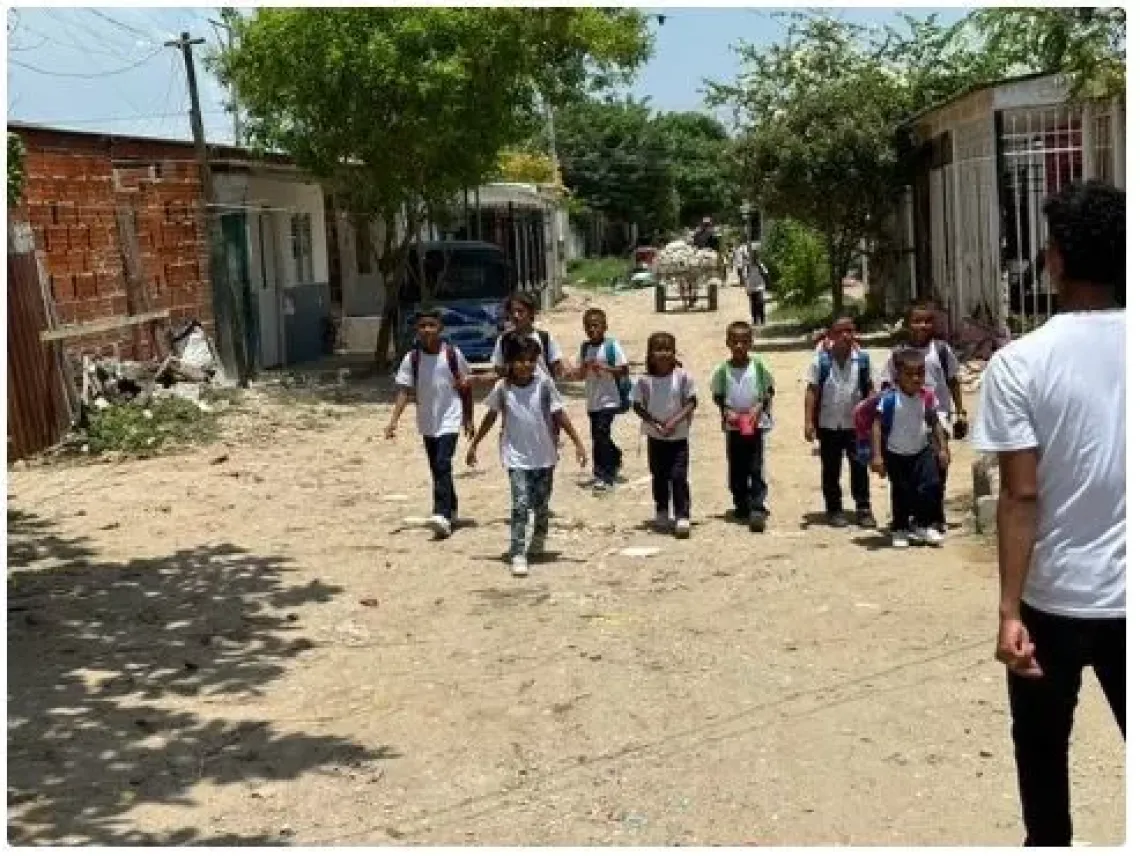
Unlike those in rural settings, children in slums are frequently excluded from broader poverty reduction efforts due to the perception that their numbers are less significant. This “out of sight, out of mind” mentality results in many children being left behind.
In India, there are several entities working to improve the conditions for the children and communities living in these environments. The Ward Health Action Plan (WHAP) stands out due to its strong local ownership and alignment with municipal priorities, each responsible for specific aspects of slum upgrading, sanitation, and housing.
The formal systems often overlap with informal power structures, where local leaders hold considerable sway over daily life, access to essential services, and even employment opportunities. This interplay between formal and informal governance can make it challenging for organizations like ours to implement standardized interventions, as navigating these layers requires careful engagement with local actors and an understanding of each slum’s unique social dynamics.
Currently, over one billion people live in slums, and this figure is expected to reach three billion by 2050, with a large proportion being children. As these populations grow, so too will the number of children living in extreme poverty. Without sustained interventions, millions more children will be at risk, amplifying existing vulnerabilities and widening the gap in access to essential services like health, education, and protection.
Reflecting on my experiences, it is evident that we need a paradigm shift in our programming—moving from siloed, sectoral approaches to multidimensional strategies that can capture and address both the prevalence and burden of deprivation these children face. Promising multi-sectoral approaches show the potential for impact when we take an integrated approach. However, scaling these interventions - up and down, at the local level, and informal settlements - will require a shift in priorities, stronger partnerships and advocacy, and a commitment to adapting our models to the complex reality of slum life.
Witnessing these challenges firsthand has reinforced my conviction that we must prioritize children living in slums in our global poverty reduction efforts. This includes improving data collection, challenging conventional poverty metrics, and amplifying the voices of vulnerable and marginalized communities. Addressing multidimensional poverty in slums is not just about understanding its prevalence; it’s about recognizing and alleviating the profound burdens these children bear every day. Only by doing so can we accelerate progress toward achieving the Sustainable Development Goals (SDGs) and ensure no child is left behind.