How bringing services together helped reduce stunting in Sofala
New evidence from Sofala shows how bringing health and nutrition, water, sanitation and hygiene, and behaviour change interventions together in the same communities can achieve greater impact for children.

Sofala, Mozambique - A child does not develop stunted growth for one reason.
Poor diet can limit growth. Repeated illness can prevent the body from absorbing nutrients. Unsafe sanitation and poor hygiene increase exposure to disease. Feeding and care practices, access to health services and conditions in the home all affect whether a child grows and develops as they should.
Yet programmes addressing these problems often operate separately, even when they are trying to reach the same children.
In cyclone-affected communities in Sofala Province, UNICEF and the Government of Mozambique took a different approach. Health and nutrition, water, sanitation and hygiene, and social and behaviour change interventions were deliberately brought together in the same communities so they could reinforce one another.
An impact evaluation found that this convergent approach was associated with a 6.7 per cent relative reduction in severe stunting among children under five in communities where the full package of interventions was implemented, compared with communities receiving only part of the package.
“What stands out from the evaluation is that convergence works: in communities receiving the full package of support, severe stunting was reduced by 6.7 per cent,” says Francesco Iacoella, who was part of the UNICEF evaluation team. “Interviews with programme participants shed light on how this result was possible, showing how the combination of model families and community health workers helped turn advice on feeding, hygiene and care into everyday habits for families.”
Three approaches, the same communities
Cyclone Idai struck central Mozambique in March 2019, severely disrupting access to food, safe water, sanitation and health services. In response, a multisectoral programme was implemented from 2020 to 2025 in six districts of Sofala: Buzi, Chibabava, Dondo, Gorongosa, Muanza and Nhamatanda.
At community level, three approaches were central.
The Nutrition Intervention Package, known as PIN, brought nutrition services closer to families with children under two through trained community health workers, including breastfeeding and complementary feeding counselling, growth monitoring, micronutrient supplementation and deworming.
Community-Led Total Sanitation, or CLTS, supported communities to eliminate open defecation and improve sanitation practices.
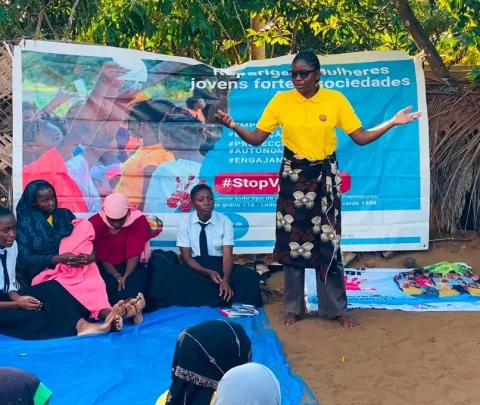
The Model Family Programme encouraged families to adopt recommended practices related to nutrition, health, hygiene, sanitation and caregiving, while enabling families demonstrating these behaviours to influence others.
None of these approaches alone could address all the causes of stunting. The difference in Sofala was the effort to make sure they reached the same places.
Communities selected for PIN were prioritised according to factors including distance from health facilities, the availability of active community health workers and the number of young children who could benefit. Teams also considered whether WASH and Model Family interventions were already present or planned.
This meant different teams increasingly organised their work around many of the same communities.
“When communication and community engagement platforms work together, their impact goes far beyond individual interventions,” says Angelo Ghelardi, UNICEF Social and Behaviour Change Specialist. “The convergence of multiple approaches helped increase the adoption of recommended practices and contributed to a significant reduction in severe stunting.”
Making convergence happen
Bringing programmes together required more than putting activities in the same district.
In Sofala, district coordination platforms were revitalised and local sanitation and nutrition forums were established. Communities were mapped so teams could identify where nutrition services were operating and prioritise WASH and social and behaviour change activities in many of the same locations.
Priority communities were shared through these coordination structures, with regular meetings and joint monitoring. This helped different sectors understand what others were doing, where they were working and where gaps remained.
The approach evolved as services expanded. When new community health workers were trained and nutrition sites opened, those communities could be added to areas prioritised for convergence.
In some locations, Model Family certification was also incorporated into the wider WASH community certification process, helping sanitation, hygiene, nutrition and caregiving practices reinforce one another.
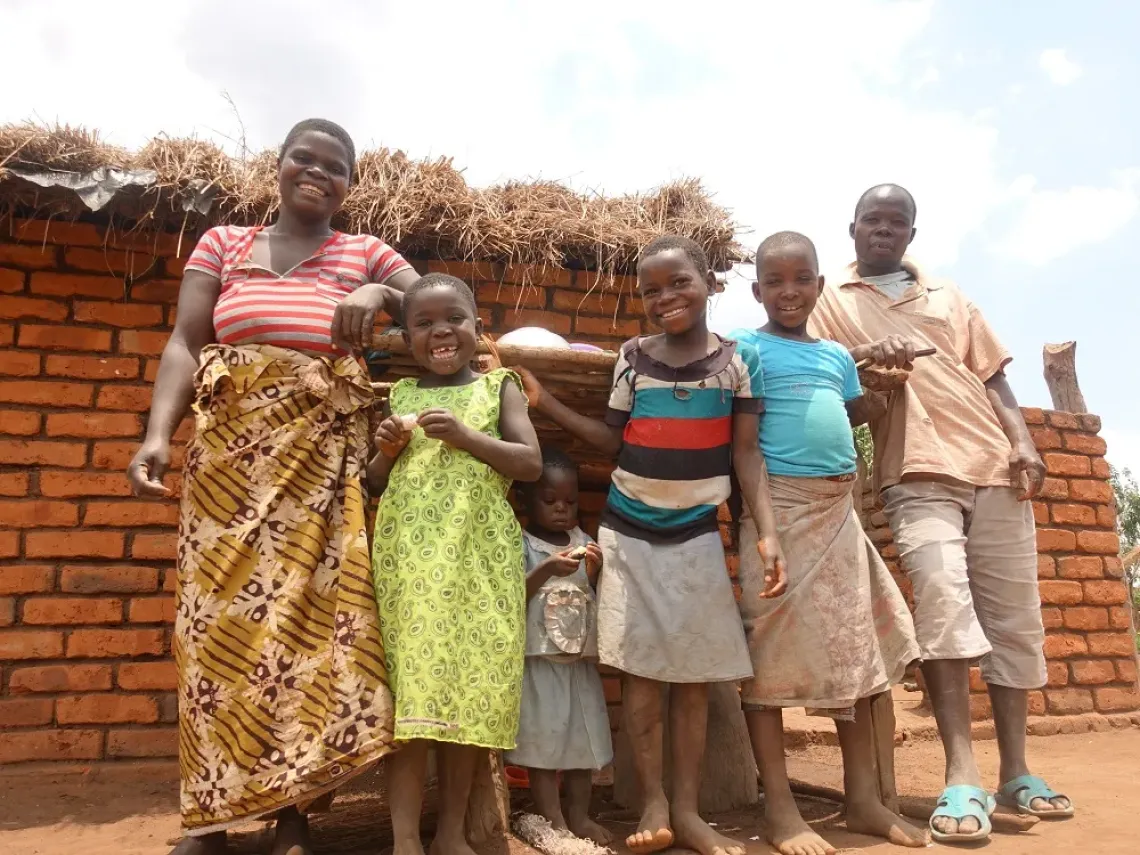
For families, convergence was much simpler than the programme terminology suggests. A caregiver might receive support on breastfeeding and preparing nutritious food while the household also improved sanitation and handwashing practices. Community health workers and Model Families reinforced similar messages during household visits, while growth monitoring helped identify problems early.
The interventions were different, but the child at the centre of them was the same.
Many small changes add up
The impact evaluation surveyed more than 9,000 households across 13 districts in Sofala. Using quasi-experimental and natural-experiment approaches, it compared outcomes in communities with different levels of programme exposure, including those receiving the full package of interventions.
Interviews and focus group discussions also helped explain how these changes happened in practice.
One participant described how several practices became part of everyday family life:
“Things have changed. We learned about hygiene, washing dishes and children's clothes, bathing children, using a drying rack, building latrines and making a Tippy Tap for handwashing. We are also feeding our children better. I prepare porridge with peanuts, beans and moringa leaves.”
No single practice provides a complete solution to stunting. Together, however, these changes create a healthier environment in which a child can eat, grow and be cared for.
Social and behaviour change played an important role. Services can make healthier choices possible, while repeated communication and community engagement can help families turn information into practices they maintain at home.
A wider lesson for reducing stunting
The causes of stunting cross institutional boundaries. Nutrition is linked to health, sanitation, water, food security and caregiving. Addressing them therefore requires different sectors to coordinate their work rather than treating each problem separately.
In Sofala, this meant involving government and technical structures at different levels, jointly identifying priority communities and monitoring implementation together.
“One of the key aspects of coordination during the programme in Sofala was ensuring involvement and accountability at every level, from directors, administrators and technical staff to local leaders and coordination forums,” says Adassane Chidimbue Maparage, Head of the Agriculture and Food and Nutrition Security Unit and Provincial SETSAN Focal Point for Sofala. “Another important lesson was to plan and monitor activities together. By bringing interventions from different sectors into the same communities, the results were more consistent and visible, contributing directly to improved child nutrition.”
The lesson from Sofala is not that one intervention has solved stunting. It is that approaches addressing different parts of the problem can achieve more when they are organised around the same children, families and communities.
Mozambique has set a national target to reduce stunting among children under five to below 30 per cent by 2030. Evidence from Sofala can help inform efforts to accelerate progress towards that goal.
Building on the results in Sofala, UNICEF has expanded the convergent community-based approach to nine additional districts in northern Mozambique.
For a child, nutrition, health, sanitation and caregiving are already interconnected. The programmes designed to support that child should be too.
UNICEF supported the programme in partnership with the Government of Mozambique, with generous support from the European Union.