UNICEF Representative
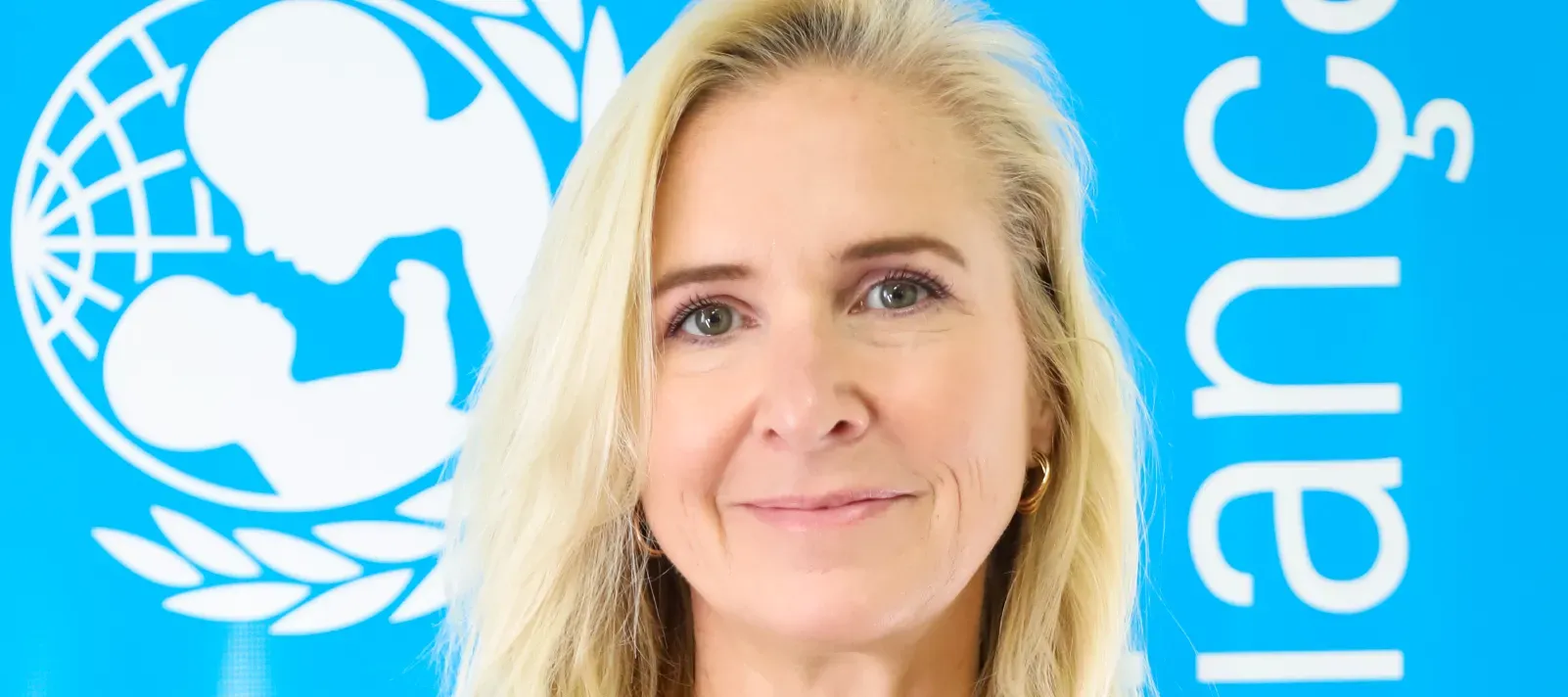
Mary Louise Eagleton is a seasoned humanitarian aid and development professional with over 25 years of experience in organizations such as UNICEF, USAID, the International Rescue Committee (IRC), and UNOPS.
- Português
- English
Mary Louise Eagleton – UNICEF Representative, Mozambique
11 November 2024
Mary Louise is a seasoned humanitarian aid and development professional with over 25 years of experience in organizations such as UNICEF, USAID, the International Rescue Committee (IRC), and UNOPS. Her career began with UNOPS in Bosnia in 1996 and has since taken her to diverse roles across the globe.
At the IRC, Mary Louise held various programme management positions in New York, Burundi, Congo-Brazzaville, the Democratic Republic of the Congo (DRC), and Nepal, focusing on programme management, planning, monitoring and evaluation (M&E), and child protection. From 2002 to 2006, she led USAID's efforts in the DRC in programme design, M&E, and child protection initiatives.
Mary Louise joined UNICEF in 2006, where she has served in several roles including Chief of Planning, Monitoring, and Evaluation (PME) in Iraq; Chief Field Office in Suriname; Deputy Representative in the Central African Republic; Chief of Social Policy, Planning, and M&E and later Deputy Representative in Lebanon; and Chief of Strategic Planning in Geneva. Most recently, she was the Deputy Representative Programmes in Sudan from 2021 to 2024 and she is now UNICEF’s Representative in Mozambique.
Mary Louise holds a Master of Arts degree in International Relations from the University of St. Andrews, Scotland, and a Master of Science in Public Policy and Management from SOAS.
No Pause for Children
May 21, 2025
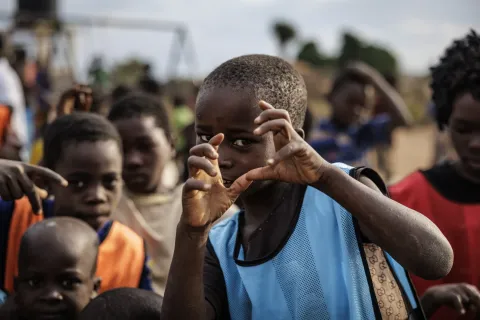
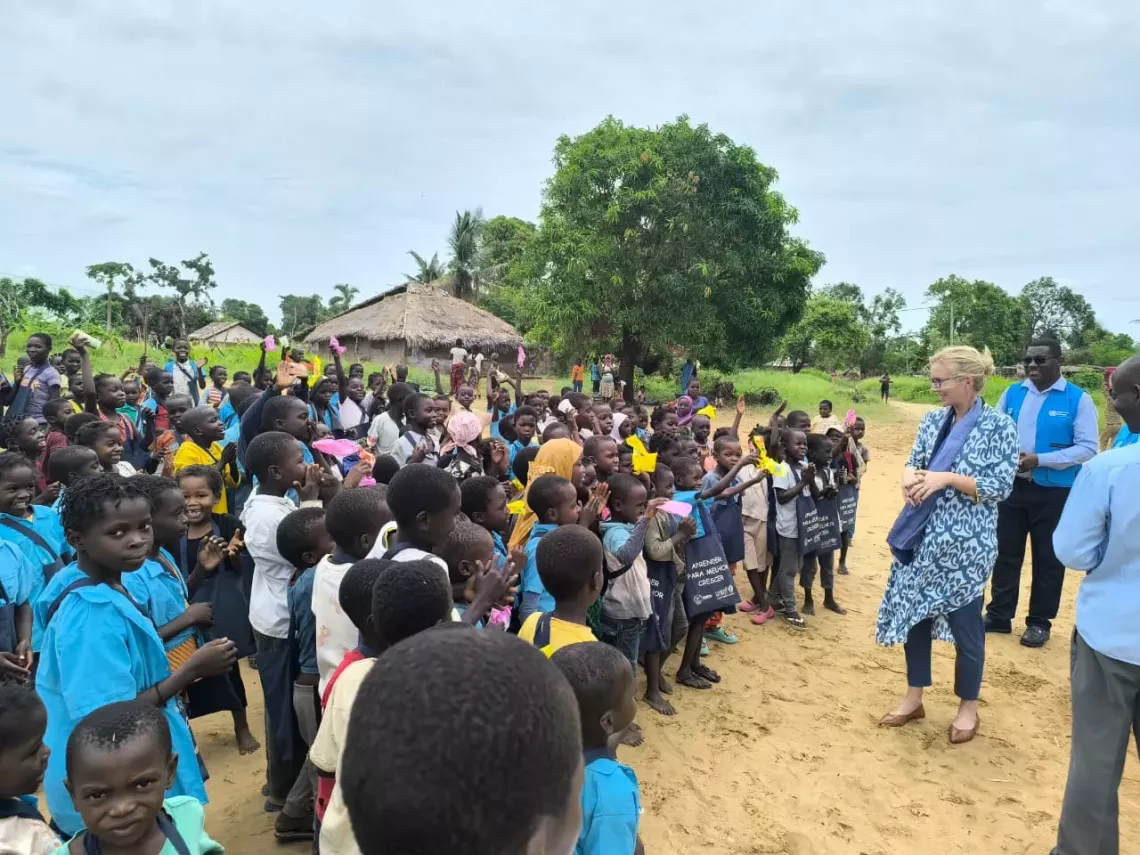
Since arriving in Mozambique as UNICEF Representative in November last year, I have seen firsthand the transformational impact of our work on children’s lives in some of the most challenging circumstances. From communities displaced by conflict in Cabo Delgado to health centres in Zambezia, schools in Nampula, and early warning systems in Sofala, the evidence is everywhere: children accessing clean water in the aftermath of cyclones, girls returning to school after escaping early marriage, babies receiving life-saving vaccines, and young people using their voices to shape their own futures.
In 2024 alone, UNICEF helped vaccinate over 4.1 million children against measles, provided safe water to more than 468,000 people in humanitarian settings, and supported nearly 830,000 children to obtain their birth certificates, an essential first step in accessing healthcare, education, and protection. More than 350,000 children affected by conflict and climate shocks were able to continue their education, and 585 child marriage survivors returned to school with support from UNICEF and our partners.
These are not just numbers. They represent real progress and lasting change in the lives of some of the most vulnerable children in the world. They are the result of tireless collaboration between dedicated colleagues, local communities, and committed government and development partners. It is deeply inspiring to witness this work in action and to see what is possible when we come together for every child.
The role of organisations like UNICEF has never been more critical. But like many in our sector, we are navigating an increasingly difficult financial landscape. Across the world, global aid is contracting. Public development assistance is in decline. UNICEF projects at least a 20 per cent drop in income by 2026, potentially with even deeper reductions for emergency programming in our region.
The far-reaching implications of cuts are real: fewer vaccines, reduced access to clean water, rising malnutrition, and interrupted learning, all of which risk reversing years of hard-won progress.
But let me be clear: UNICEF is not stepping back, we are stepping up and adapting with purpose. We are sharpening our focus on areas that can deliver the greatest impact, finding new efficiencies, and aligning our operations to ensure that the greatest share of our resources directly benefits children. We are rethinking how we work, with a renewed emphasis on localisation, digital innovation, and partnerships with government, civil society and the private sector.
We are not doing this alone. From Maputo to Mueda, we are working with committed government partners, ambassadors, children and young people, aid workers, civil society, champions for children, and community members, who are all united by a shared determination to build a Mozambique where every child survives and thrives.
UNICEF focuses on what delivers real impact, not what is easy. For nearly 80 years globally, and 50 years in Mozambique since the country’s independence, we have delivered for children - and we will continue to fulfil our vital mission to protect their rights and improve their lives. We are investing in early warning systems to mitigate climate the impact of climate shocks, supporting children affected by armed conflict with life skills and mental health care, and strengthening water delivery and health, education, and social protection systems to be more resilient, equitable, and sustainable.
The work of UNICEF and other aid organisations, in partnership with the Government of Mozambique, has significantly contributed to key improvements in recent years: child mortality dropped from 97 per 1,000 live births in 2011 to 60 per 1,000 in 2023[1]; maternal mortality more than halved from 532 deaths per 100,000 live births in 2000 to 233 in 2023[2]; the number of children in school has tripled since 2000[3]; the Child Grant programme for children under two has been introduced; and, since the devastating Cyclone Idai in 2019 which claimed over 600 lives, early warning systems have led to a sharp decline in deaths during subsequent cyclones.
That is why addressing this challenge must be a shared priority. While international support remains important, it is equally critical to strengthen the sustainable foundations of our child-focused systems. This means improving the management of domestic resources, increasing national public and private investment in social sector programmes, and leveraging innovative financing mechanisms to drive better outcomes for children.
Together, we must ensure that the progress made is not only protected, but accelerated through bold policy choices, sustained commitment, and collective action for every child in Mozambique.
[1] DHS 2022/23
[2] DHS 2022/23
[3] https://www.unicef.org/mozambique/en/learning-and-skills-future