

Context
Situation of the children in Mozambique
- Português
- English
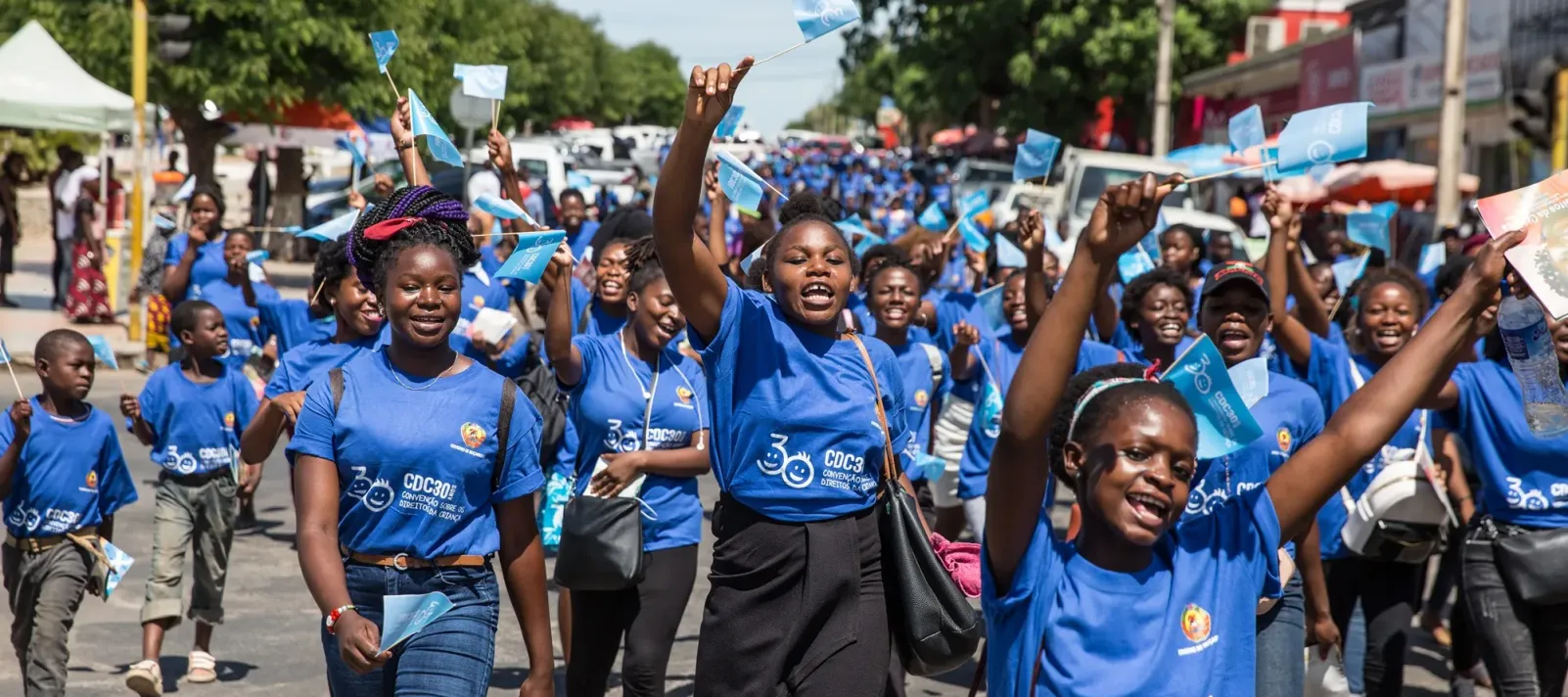
We often say that children are the future. In Mozambique, a country where children make up more than half the population, this is especially true. Harnessing the energy and drive of Mozambique’s children will be key to unlocking a bright and sustainable future for Mozambique.
We often say that children are the future. In Mozambique, a country where children make up more than half the population, this is especially true. Harnessing the energy and drive of Mozambique’s children will be key to unlocking a bright and sustainable future for Mozambique. Despite challenges, important progress is being achieved in improving the well-being of all children in Mozambique: infant and under-five mortality are falling, primary school enrolment has improved significantly, access to improved water has expanded, and important steps are being taken to prevent discrimination, child marriage and violence against all children. But significant challenges remain, including the impacts of the climate crisis, conflict and COVID-19.
UNICEF is working with the Government of Mozambique and partners to deliver programmes that save lives and create the conditions that children need to survive and thrive, in safety and security. This brief focuses on the priorities set out in UNICEF’s new Country Programme of Cooperation (2022-2026), highlighting our efforts across the spectrum of humanitarian, development and peacebuilding work.
Context
Mozambique is a country of great potential, with a young population and abundant resources. It is a country where, thanks to commitment, partnership and judicious investment, important progress has been made in improving the lives of children.
Mozambique’s most precious resource is its children. Their well-being and prosperity are inseparable from those of the country. The population of Mozambique is young: two thirds of the country’s 32.4 million people are under the age of 25 years, and more than half are children. Great strides have been made in their service, but there is still much work to be done to protect their rights and secure their present and future.
Poverty affects a large proportion of children and families in Mozambique. Even before the country was hit by major shocks including cyclones, conflict in the north, and the COVID-19 pandemic, 63.7 per cent of the population was living on less than US $1.90 per day and 55 per cent of the population was considered multidimensionally deprived. The same data showed that 45.5 per cent of children were both financially poor and also deprived of their basic rights and needs across multiple dimensions (health, education, nutrition, housing, etc.).
Although updated monetary and multidimensional poverty figures are not yet publicly available, macroeconomic volatility, extreme weather events and the COVID-19 pandemic are expected to have had significant negative impacts.
Maternal mortality, neonatal mortality and stillbirth rates remain high in Mozambique at over six times the global Sustainable Development Goal (SDG) target, with a high proportion of adolescent mothers and high rates of teen pregnancy. Fourteen per cent of teenagers had their first pregnancy before the age of 15, and 57 per cent before the age of 18. More than half of women aged 20-24 years were married before age 18.
Mozambique has the third largest burden of new HIV infections and the third largest population of people living with HIV globally. In 2020, 28,000 adolescent girls and young women were infected with HIV. A total of 210,000 children and adolescents are living with HIV in Mozambique, and AIDS is the leading cause of adolescent death. There is also a need to increase coverage of immunization services: the proportion of children receiving the first dose of the diphtheria, pertussis, and tetanus (DPT) vaccine fell from 91 per cent to 67 per cent between 2019 and 2022, and the country has been affected by polio, measles, and cholera outbreaks.
Mozambique has very high levels of chronic malnutrition (stunting) at 38 per cent among children under 5 years of age (28 per cent in urban areas and 42 per cent in rural areas). In 2022, more than 250,000 children below 5 years of age were estimated to be affected by severe acute malnutrition (SAM) with only 30 per cent estimated to have access to lifesaving services. Only 55 per cent of children under six months of age benefit from exclusive breastfeeding and 13 per cent of children aged 6-24 months receive a minimum acceptable diet.
The environment for early childhood development and nurturing care is extremely limited in Mozambique and lacks an overall comprehensive vision. Despite increased attention to child development and care, emphasis on early child development and nurturing care remains weak in Mozambique, and systems are not well established to promote responsive caregiving and parenting through engagement with caregivers. Accelerating progress in the continued reduction of maternal, child and neonatal mortality and improving the well-being of the population have been identified as strategic priorities in the Government's Five-Year Plan (2020-2024), but there is much unfinished business.
Important challenges persist around primary and secondary education. Less than 5 per cent of children at Grade 3 level are achieving sufficient competency in literacy and numeracy. Moreover, while approximately 2.6 per cent of children in Mozambique have a disability, fewer than 1 per cent of primary students have a disability, suggesting that many children with disabilities are not in school. Levels of access to education fall further in upper grades, with gross enrolment falling to 41.6 per cent for lower secondary education, and to 26 per cent for upper secondary education.
Mozambique faces a triple crisis of climate change, armed conflict, and the aftermath of COVID-19 – all of which are compounding systemic challenges which impact child well-being. Conflict in Cabo Delgado has had serious impact on the northern provinces, which are still recovering from cyclones Idai and Kenneth, and has displaced almost 1 million people, more than half of them children.
Despite these challenges, Mozambique has made steady progress in recent decades in promoting the survival and well-being of children. Primary school enrolment has significantly improved since 2000 and the share of budget allocation for education within the government budget remains high. In 2018, Mozambique made education compulsory for Grades 1-9 regardless of the age of children.
A newly implemented child grant allocating ‘cash and care’ support to children ages 0–2 years in vulnerable households has been incorporated into the Basic Social Subsidy Programme, and in 2022 was further expanded in Nampula, Zambezia and Cabo Delgado Provinces. The ‘Cash Plus’ programme, which features cash grants, coupled with care components, has led to reduction in poverty, increases in savings and household expenditures, as well as a sharp increase in birth registration, increase in dietary diversity and frequency of meals of target children, decrease in stress, depression, and experience of intimate partner violence among caregivers, and a reduction in pregnancies.
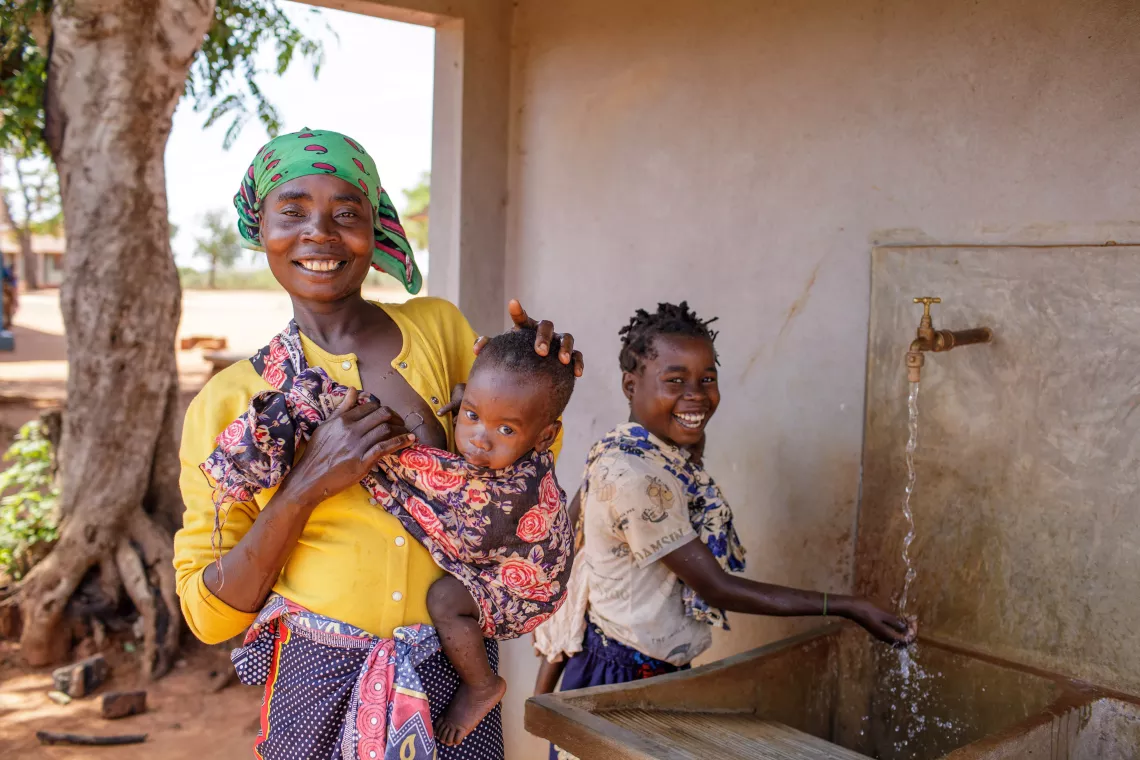
Access to improved water sources increased from 61 per cent of the population in 2015 to 73 per cent in 2020. To accelerate results towards the achievement of the SDGs, the Government of Mozambique recently approved the Rural Sanitation Strategy (2021-2030) which aims at eliminating open defecation and achieving universal access to basic sanitation by 2030 using Community-Led Total Sanitation (CLTS) as the core approach. The Government of Mozambique and partners have made significant efforts to eliminate open defecation. Some districts have made significant progress and have been declared Open Defecation Free (ODF)/LIFECA, namely Guro, Macossa and Manica in Manica province and Tsangano, Marara and Angonia in Tete province. Changara district (Tete province) is also likely to be declared ODF in 2023. There has also been an important shift towards the use of more climate-resilient water infrastructure, incorporating, for example, solar panels to ensure sustainability of power supply.
The Government has adopted laws that protect children from violence, abuse, exploitation and neglect. This includes laws that criminalize child marriage and domestic violence, protect children from the worst forms of child labour, and make education compulsory and birth registration mandatory. Thanks to investments and civil registration and vital statistics (CRVS), among others, birth registration has improved significantly from 31 per cent in 2008 to 49 per cent (as of 2017).
Increasingly, the interconnectivity of health, nutrition, education, water, sanitation and hygiene (WASH), child protection and other areas of intervention is recognized as critical for children. UNICEF sees the child as a whole and takes a cross-cutting approach, coordinating responses across sectors, working in close coordination with government, civil society, communities and engaging actively with the private sector, providing integrated programmes and service packages, and advocating for them to inform public policies and plans at all levels of government. Importantly, UNICEF is emphasizing inclusion and gender equality across all its interventions, supporting children from the most marginalized groups – including those living in extreme poverty, children with disabilities, and displaced communities – so that no one is left behind.
UNICEF’s 2022-2026 Country Programme clearly charts a path towards this vision and goals, working in close cooperation with the Government of Mozambique as it accelerates efforts to achieve the 2030 Agenda for Sustainable Development targets. Focusing on five programme areas, the Programme aims to create the conditions so that by 2026, more children, adolescents, and women in Mozambique realize their rights to live in safety, good health, equity, and inclusion.
Key Indicators

Population (total in millions): 32.4 million.
Child population: 16 million (56% of the population).
Percentage of population living in extreme poverty (in 2015): 46%.


Percentage of children stunted: 38%.
Percentage of population with access to clean water: 73%.
Percentage of population with access to improved sanitation facilities: 71%.

Percentage of children aged 3- 5 enrolled in pre-school: 3.5%.
Percentage of Grade 3 students with adequate reading and numeracy competency (2016): 4.9 per cent and 7.7 per cent respectively.


Child marriage prevalence (<18 years) in Mozambique is 48%
Gross enrolment rate (2022): 106.3 per cent (total), 102.8 per cent (girls).
Gross completion rate (2021): 49.6 per cent (total), 47.8 per cent (girls).


