In Monapo community leaders pledge to end child marriage
Traditional and religious leaders play a crucial role in changing the social norms that perpetuate child marriage.

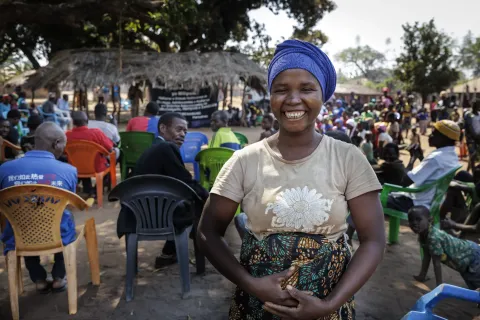
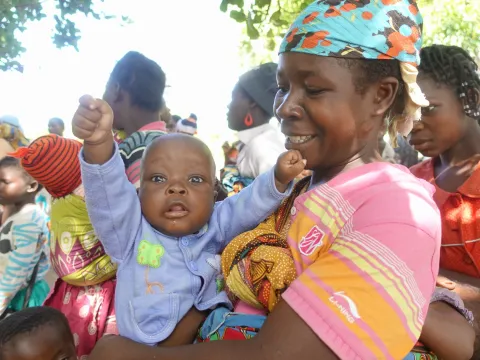
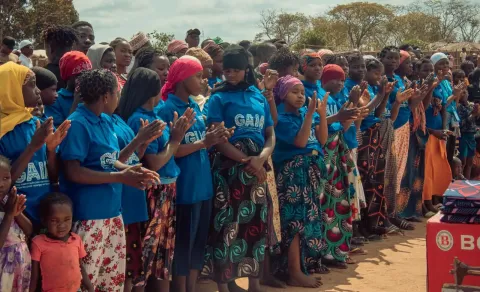
Monapo, Nampula - Under the shade of a large tree in Monapo district, Nampula Province, traditional and religious leaders, government officials, children and adolescents gathered to make a public commitment: to end child marriage and protect girls’ futures.
The ceremony followed a community march and brought together representatives of 30 communities from the administrative posts of Monapo Sede and Itoculo. Together, they signed a declaration pledging to challenge harmful practices, protect children from violence and support girls to remain in school.
The commitment is particularly significant in Nampula, which has one of the highest rates of child marriage in Mozambique. According to the 2022/23 Demographic and Health Survey, 55.9 per cent of women aged 20 to 24 in the province were married or in a union before turning 18.
Traditional and religious leaders play a crucial role in changing the social norms that perpetuate child marriage. Their influence can encourage families to reconsider long-accepted practices, support girls’ education and strengthen community mechanisms to identify and protect children at risk.
During the ceremony, leaders emphasised that protecting children and supporting girls’ futures is a collective responsibility. They committed to promoting laws that protect children, strengthening local protection networks and challenging practices that legitimise early unions.
The declaration is part of a broader community-led approach to preventing child marriage, in which dialogue among parents, adolescents, community leaders and local authorities helps translate awareness into collective action. Similar initiatives elsewhere in Nampula have led communities to establish savings groups to help vulnerable girls remain in school.
But a declaration is only the beginning. Lasting change depends on continued dialogue, families supporting girls’ education, adolescents participating in decisions affecting their lives and communities taking action when children are at risk.
Through these commitments, communities in Monapo are taking an important step towards a future where every girl can learn, grow and choose her own path.
This activity was supported by the UNICEF-UNFPA Global Programme to End Child Marriage, funded by the Governments of Canada, Italy, the Netherlands, Norway and the United Kingdom, and Zonta International.