Young voices keeping girls in school
“We are very proud of our work because we can see its impact in our schools. We are seeing a reduction in the number of adolescent girls dropping out.”

Nicoadala, Zambezia - Every Friday morning, before lessons begin, students at schools across Nampula and Zambezia provinces in Mozambique gather to hear an important message from their peers: girls have the right to stay in school, pursue their dreams and choose their own futures.
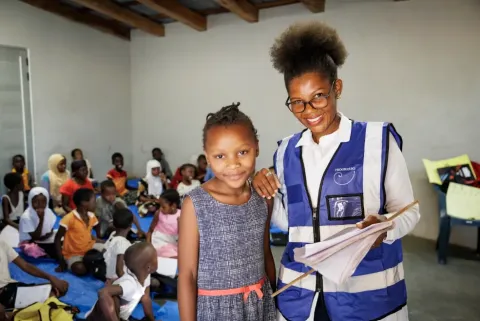
Delivering these messages are Child Rights Ambassadors, students who are helping to prevent child marriage and keep girls in education.
Across 49 schools, 128 ambassadors are raising awareness about children's rights, speaking with classmates and engaging parents and communities about the importance of girls' education and the harmful consequences of child marriage.
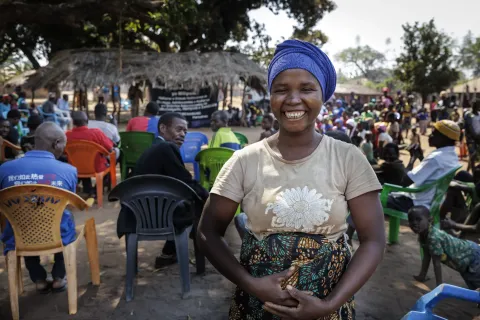
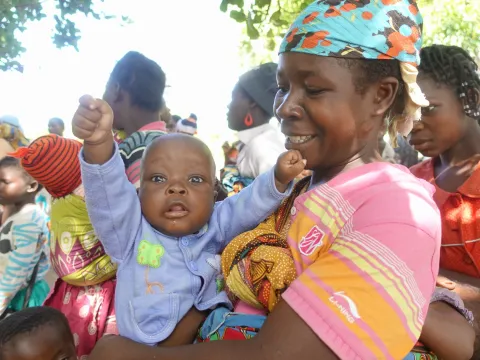
Their work extends beyond the classroom. At community gatherings, they encourage parents to support their daughters' education and challenge social expectations that put girls at risk of marrying before the age of 18.
But the ambassadors do more than raise awareness. They also look out for classmates who are missing lessons or at risk of dropping out, approaching them to understand their challenges and find ways to help.
At one school, the ambassadors discovered that a girl was struggling to continue her education because she lacked essential learning materials. They mobilised fellow students and teachers, who pooled their contributions to buy what she needed.
More than two years later, the girl is still in school and has reached Grade 10.
“We are very proud of our work because we can see its impact in our schools. We are seeing a reduction in the number of adolescent girls dropping out,” says Levi Armando, a Child Rights Ambassador.
“Our work also includes following up on girls who show signs of dropping out. We approach them to understand what is happening and see how we can help,” adds fellow ambassador Alcinia Bernardo.
The initiative has also gained the support of school leaders, who have incorporated the ambassadors' weekly awareness sessions into the school routine.
“The ambassadors' approach has been very well received,” says Mendes de Sousa, a school headmaster. “We have institutionalised their weekly sessions, giving them time every week to speak with other students. This has contributed to keeping girls in school.”
Challenges remain. In some communities, deeply rooted social expectations and harmful practices continue to put girls at risk of child marriage and school dropout. Challenging these attitudes takes courage, particularly for young people speaking to adults in their communities.
Yet the ambassadors are demonstrating that young people can be powerful advocates for change. Whether speaking to classmates, engaging parents or helping a girl remain in school, their actions are making a difference.
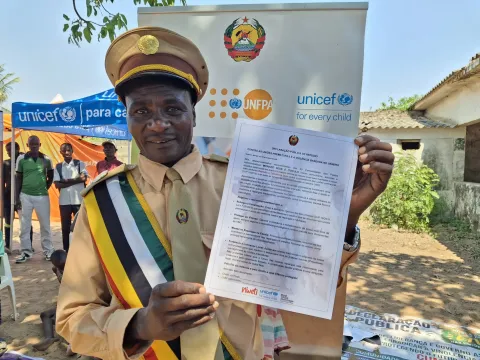
The Child Rights Ambassadors initiative is implemented by N'weti with UNICEF support through the Rapariga Biz programme and the UNICEF-UNFPA Global Programme to End Child Marriage, funded by the Governments of Canada, Italy, the Netherlands, Norway and the United Kingdom, and Zonta International.